How to Identify aIndigo Bunting
Passerina cyanea · 4.5–5.1 in (11.5–13 cm)
Male vs. female
Male
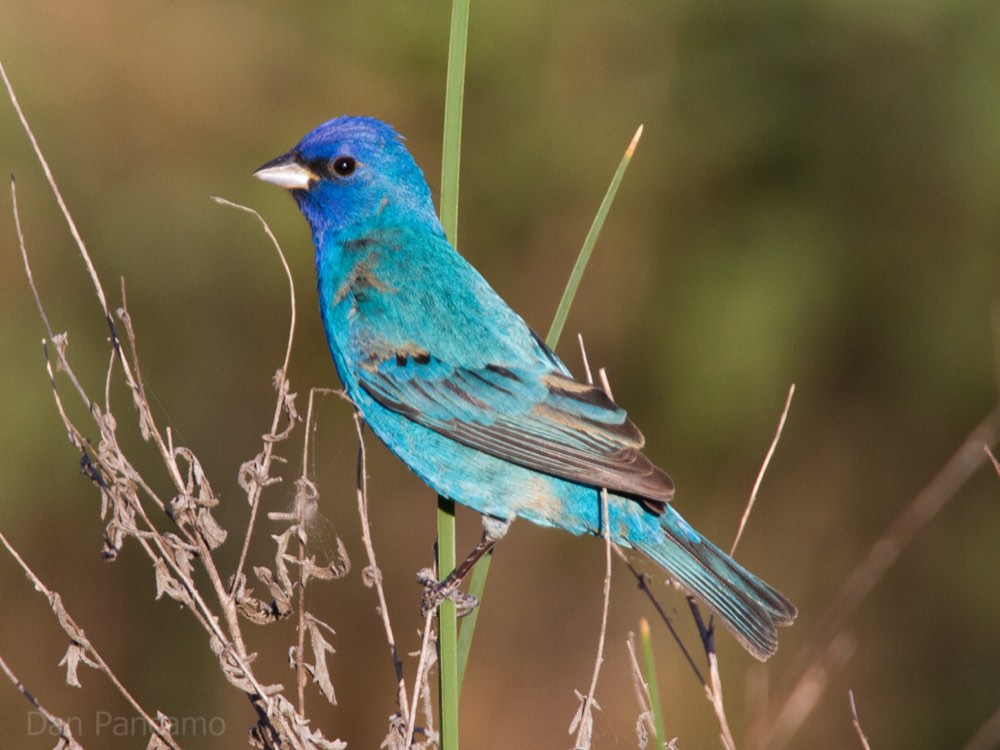
Uniform vivid blue, deepest on the head, with no wingbars or markings; can look black in poor light.
Female
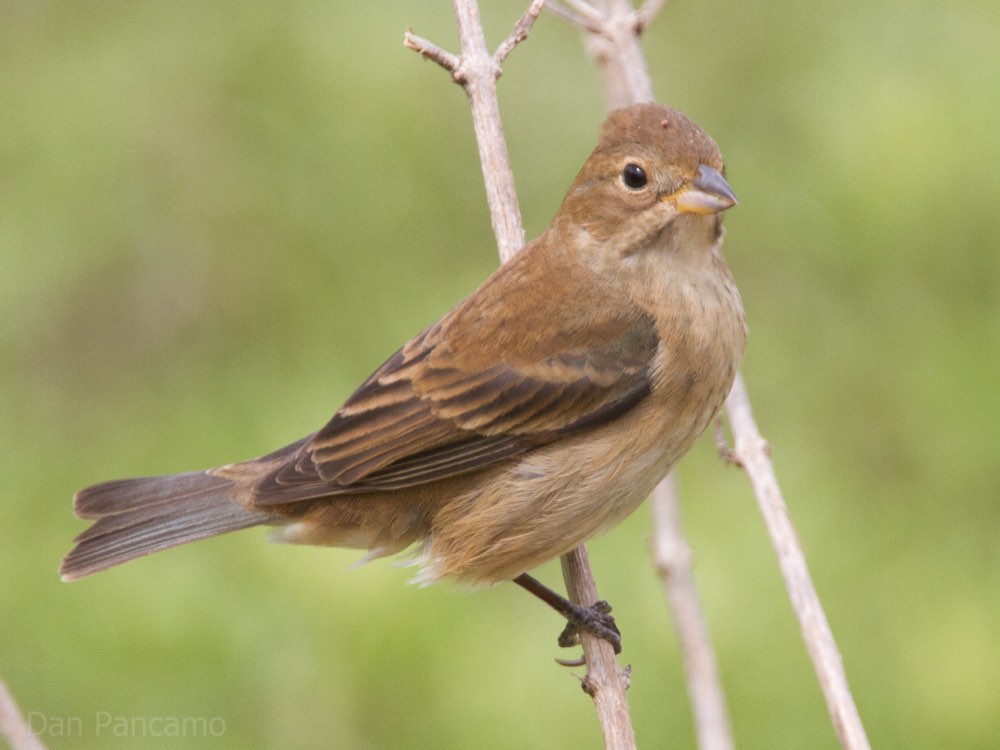
Plain warm brown, faintly streaked below, with no strong markings and a hint of blue in the wings and tail.
Male photo: Dan Pancamo / Wikimedia, CC BY-SA 2.0 · Female photo: Dan Pancamo / Wikimedia, CC BY-SA 2.0
Field marks
- Entirely blue with no wingbars or patches on the male
- Small, stubby, silver-gray conical bill
- Plain unmarked warm brown female
- Sings persistently from exposed high perches
Similar species
What it sounds like
A bright, high song of paired notes — "sweet-sweet, chew-chew, sweet-sweet" — carrying across open ground through the hottest part of summer.
Behaviour that gives it away
Sings through midday heat when most birds fall silent, and migrates at night navigating by the pattern of the stars.
Habitat & range
Brushy field edges, roadsides, powerline cuts and woodland clearings across the eastern United States in summer.
When you'll see it
A summer visitor that arrives to breed in eastern and central North America.
What it eats
Seeds, small grains and insects; sometimes visits feeders for nyjer and millet.
Did you know?
Young males learn their songs from neighbouring males rather than their fathers, so local song dialects build up and persist for years.
Spot one yourself?
Point your camera at any bird and Aviarist identifies it in seconds — then logs it to your life list.
Get Aviarist on Google Play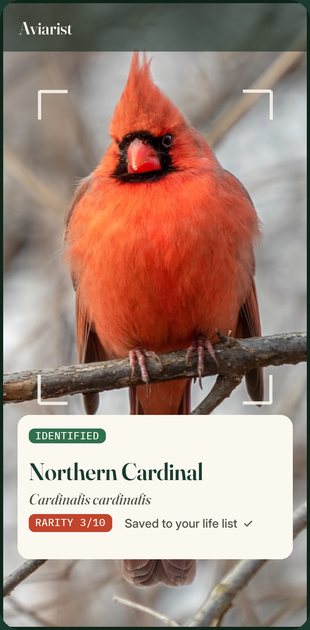
More backyard birds


Other apps we make