How to Identify aEastern Bluebird
Sialia sialis · 6.3–8.3 in (16–21 cm)
Male vs. female
Male
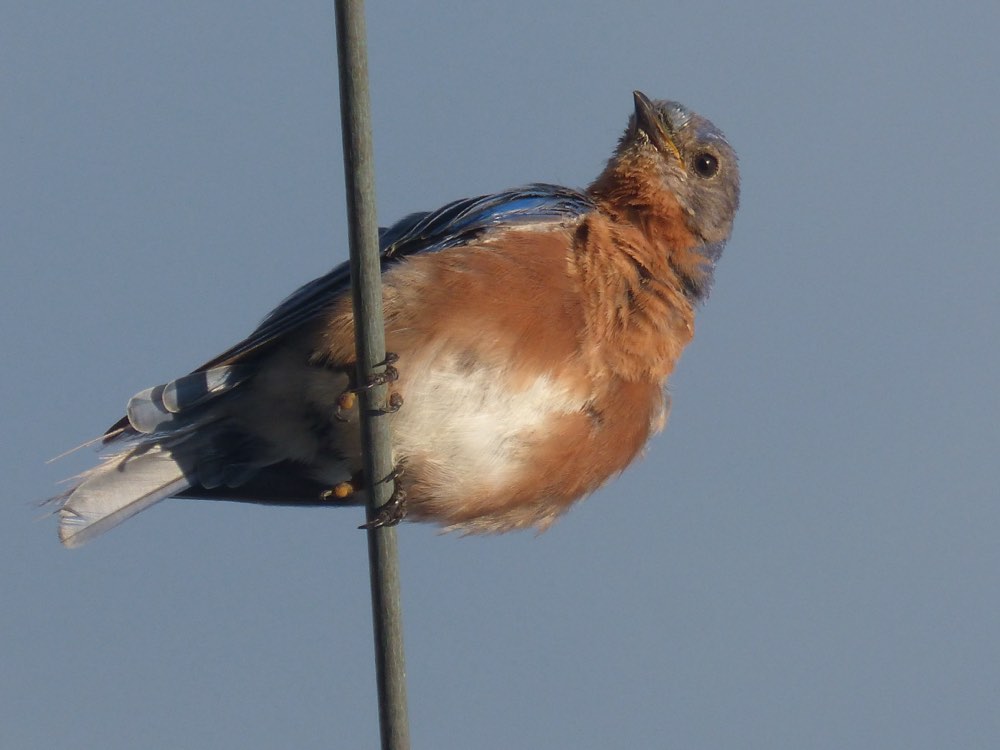
Vivid deep-blue head, back, wings, and tail with a warm rusty-orange throat and breast and white belly.
Female
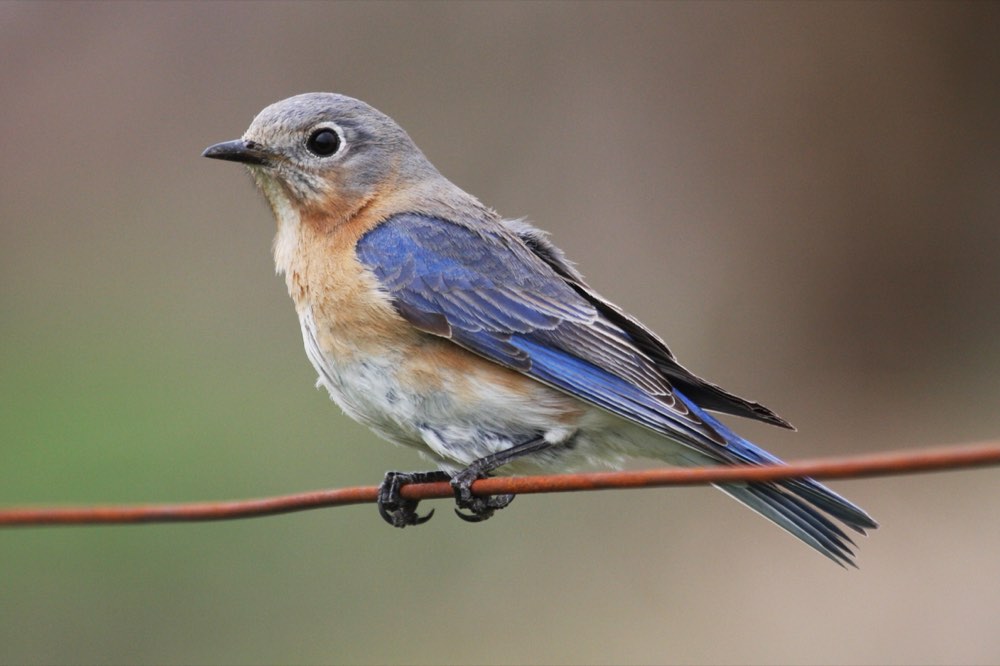
Grayish with blue-tinged wings and tail and a paler orange breast; subtler all around.
Male photo: Seán Pòl Ó Creachmhaoil / Wikimedia, CC BY-SA 4.0 · Female photo: Sandysphotos2009 / Wikimedia, CC BY 2.0
Field marks
- Royal-blue upperparts (grayer on females)
- Rusty-orange breast, white lower belly
- Round-headed, short-billed, hunched posture
- Perches on wires and posts, dropping to the ground
Similar species
What it sounds like
A soft, low, mellow "tu-a-wee", easily overlooked despite the bird’s brightness.
Behaviour that gives it away
Hunts from a low perch and drops straight down onto insects, which is why fence lines and mown edges suit it.
Habitat & range
Open country, farm edges, orchards, and parks with scattered trees and nest boxes across the eastern U.S.
When you'll see it
Present all year in eastern, central and southeastern North America.
What it eats
Insects caught on the ground; berries in fall and winter.
Did you know?
Nest-box programs pulled bluebirds back from a sharp 20th-century decline caused by lost nest sites.
Spot one yourself?
Point your camera at any bird and Aviarist identifies it in seconds — then logs it to your life list.
Get Aviarist on Google Play
More backyard birds
_in_Bermuda,_from_below.jpg)

Other apps we make