How to Identify aOrchard Oriole
Icterus spurius · 5.9–7.1 in (15–18 cm)
Male vs. female
Male
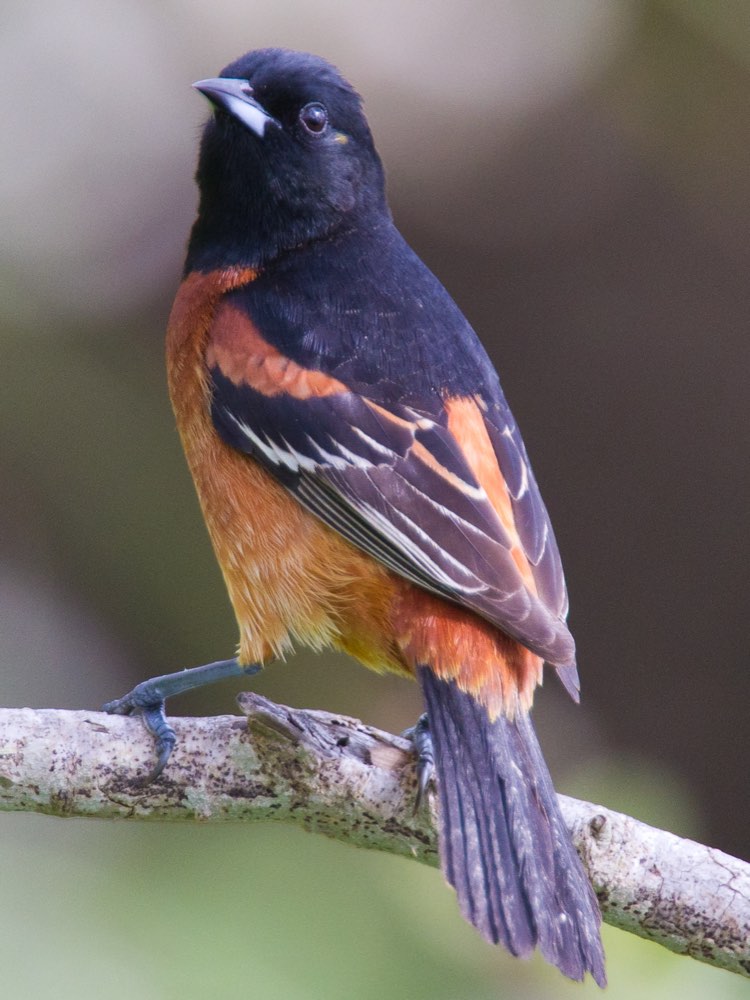
Dark chestnut or brick-red underparts and rump with a solid black hood, back, wings and tail.
Female
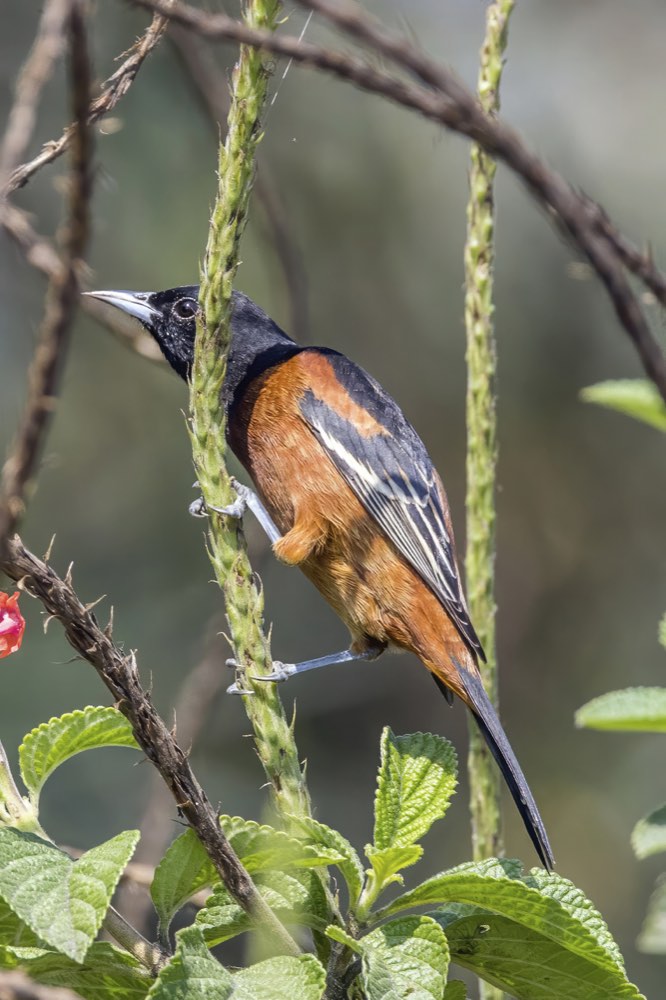
Greenish-yellow overall with two white wingbars and no black, plainer and yellower than a female Baltimore.
Male photo: Dan Pancamo / Wikimedia, CC BY-SA 2.0 · Second photo: Charles J. Sharp / Wikimedia, CC BY-SA 4.0
Field marks
- Deep brick-red rather than orange on the male
- Small and slim, noticeably smaller than a Baltimore Oriole
- Sharp, slightly downcurved pointed bill
- Females greenish-yellow with two clean white wingbars
Similar species
What it sounds like
A rapid, tumbling, whistled warble ending in a downslurred note, faster and more jumbled than a Baltimore Oriole’s.
Behaviour that gives it away
Often nests in loose neighbourly groups, with several pairs in adjacent trees — unusual among orioles.
Habitat & range
Open woodland, orchards, parks and riverside trees across the eastern and central United States in summer.
When you'll see it
A summer visitor that arrives to breed in eastern, central and southeastern North America.
What it eats
Insects, nectar and fruit; visits flowering trees and sometimes jelly or orange feeders.
Did you know?
It has one of the shortest stays of any North American migrant, with some birds heading south again by mid-July.
Spot one yourself?
Point your camera at any bird and Aviarist identifies it in seconds — then logs it to your life list.
Get Aviarist on Google Play
More backyard birds

_male_Los_Tarrales.jpg)
Other apps we make