How to Identify aBlue Grosbeak
Passerina caerulea · 5.9–7.5 in (15–19 cm)
Male vs. female
Male
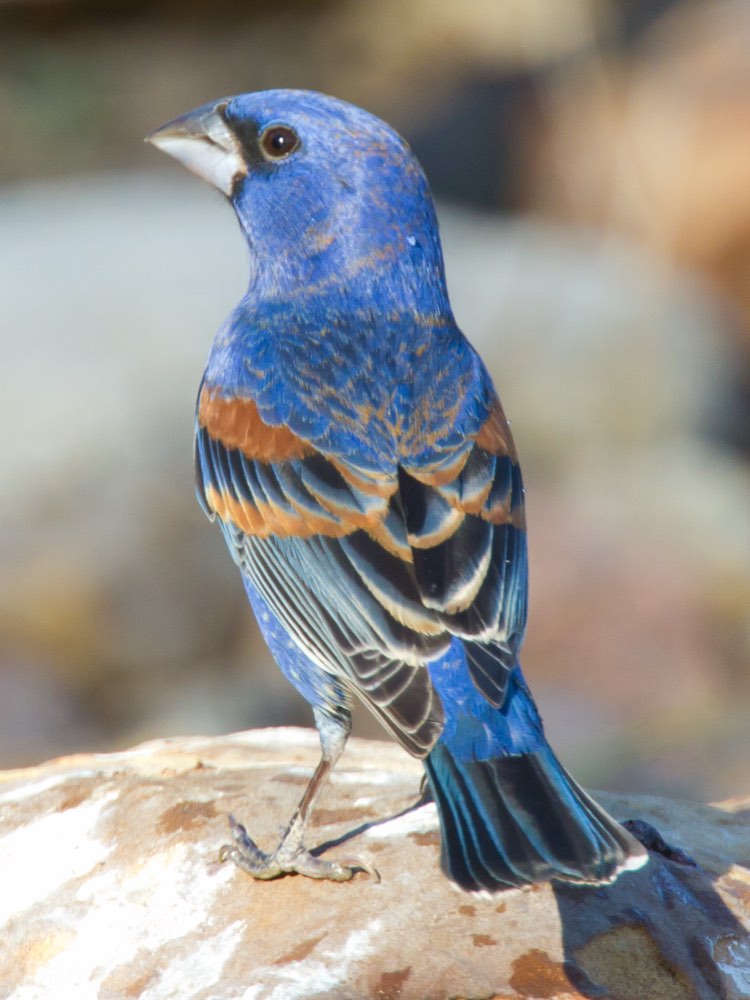
Rich cobalt-blue with chestnut wingbars, a small black face patch and a very heavy silver-gray bill.
Female
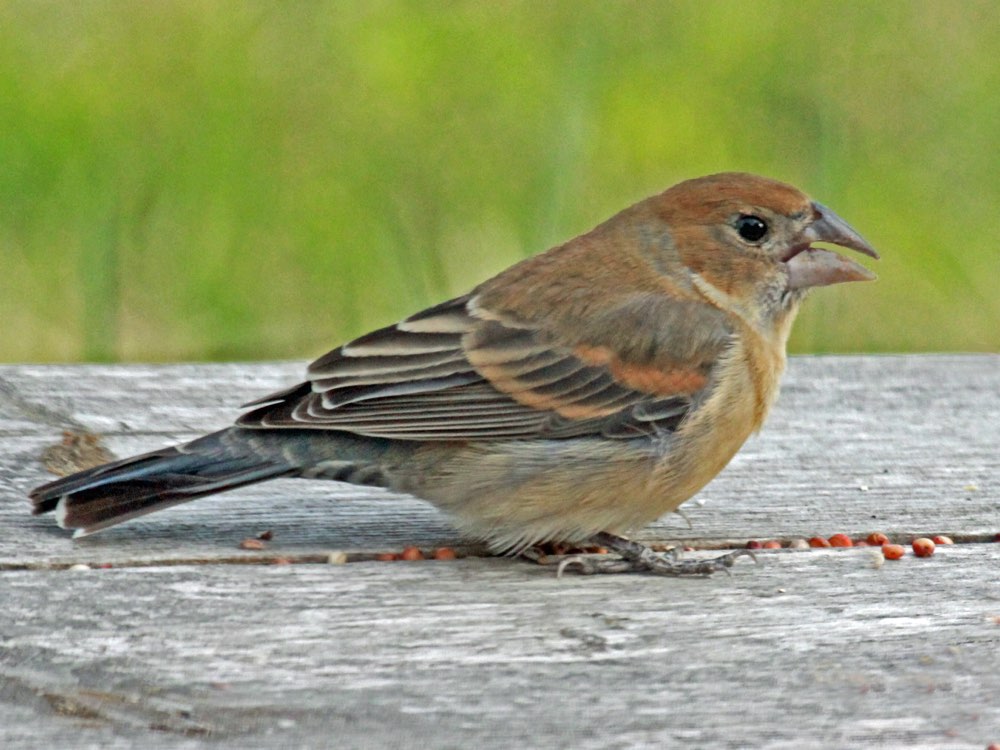
Warm cinnamon-brown with the same two rusty wingbars and heavy bill, and a blue tinge on the rump.
Male photo: Dan Pancamo / Wikimedia, CC BY-SA 2.0 · Female photo: DickDaniels (http://theworldbirds.org/) / Wikimedia, CC BY-SA 3.0
Field marks
- Two broad chestnut wingbars
- Very large triangular silver bill
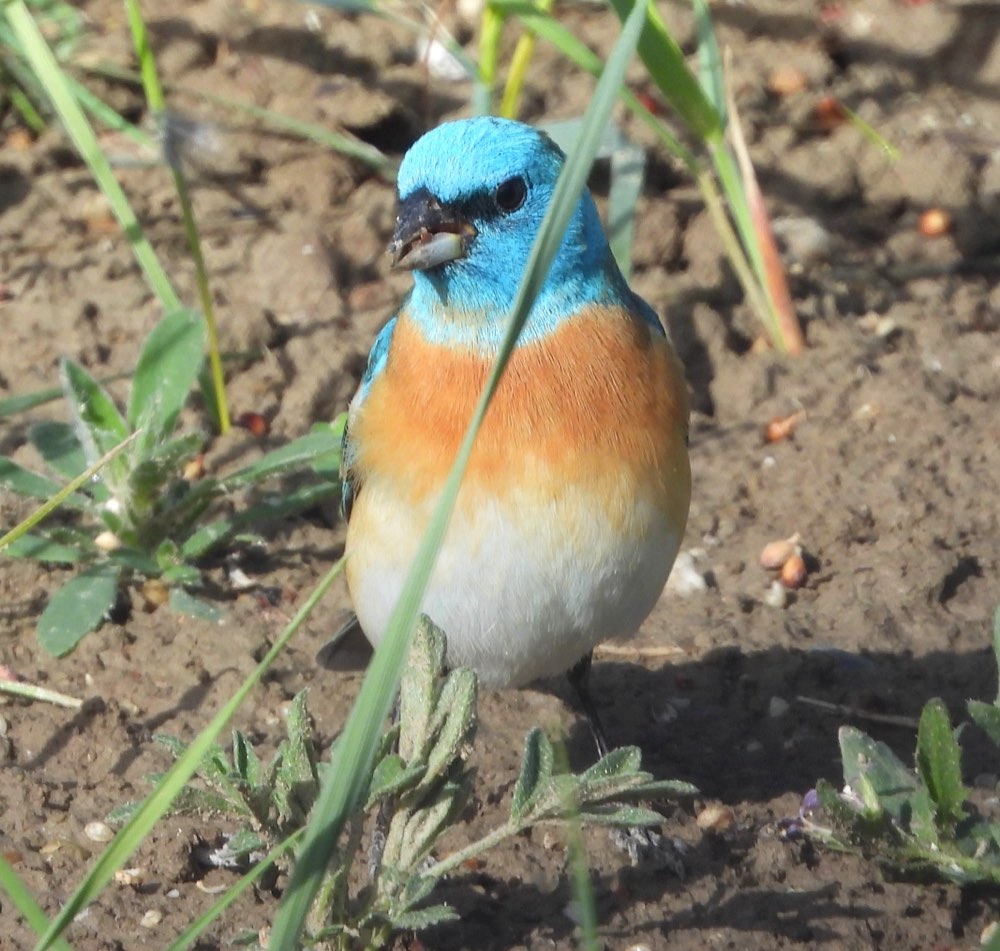
- Deep blue, darker than an Indigo Bunting
- Frequently flicks and spreads its tail sideways
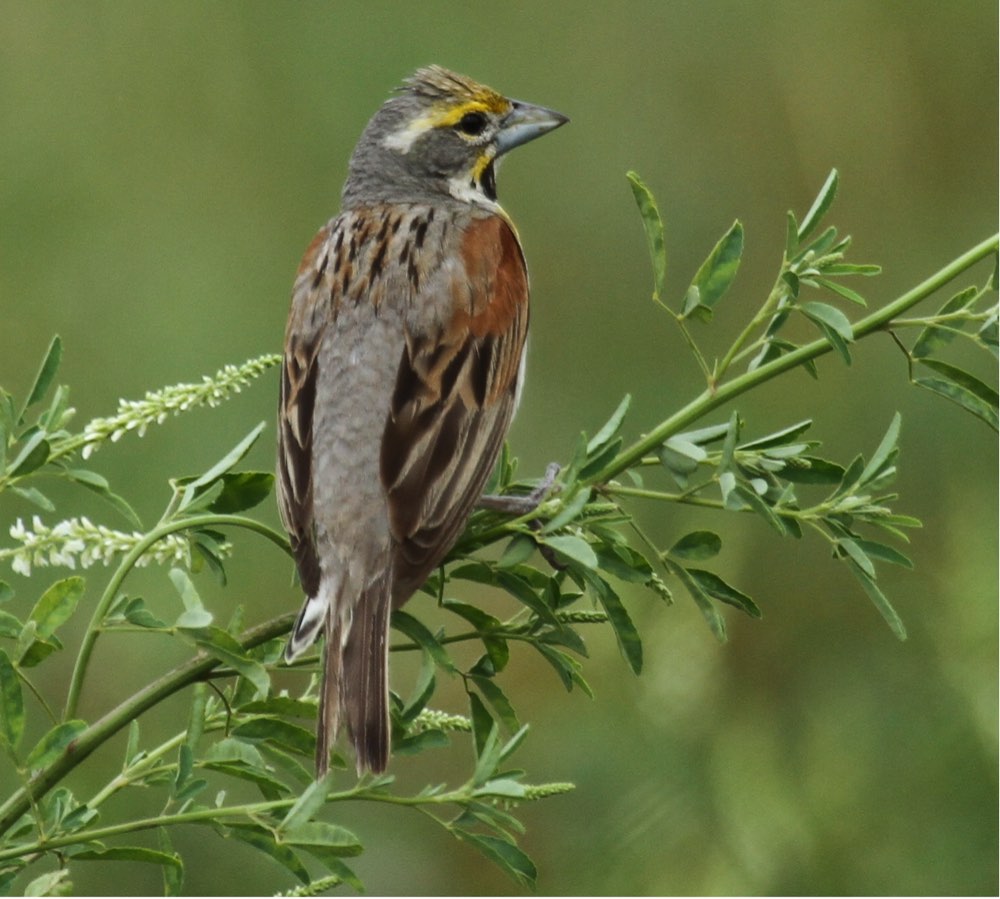
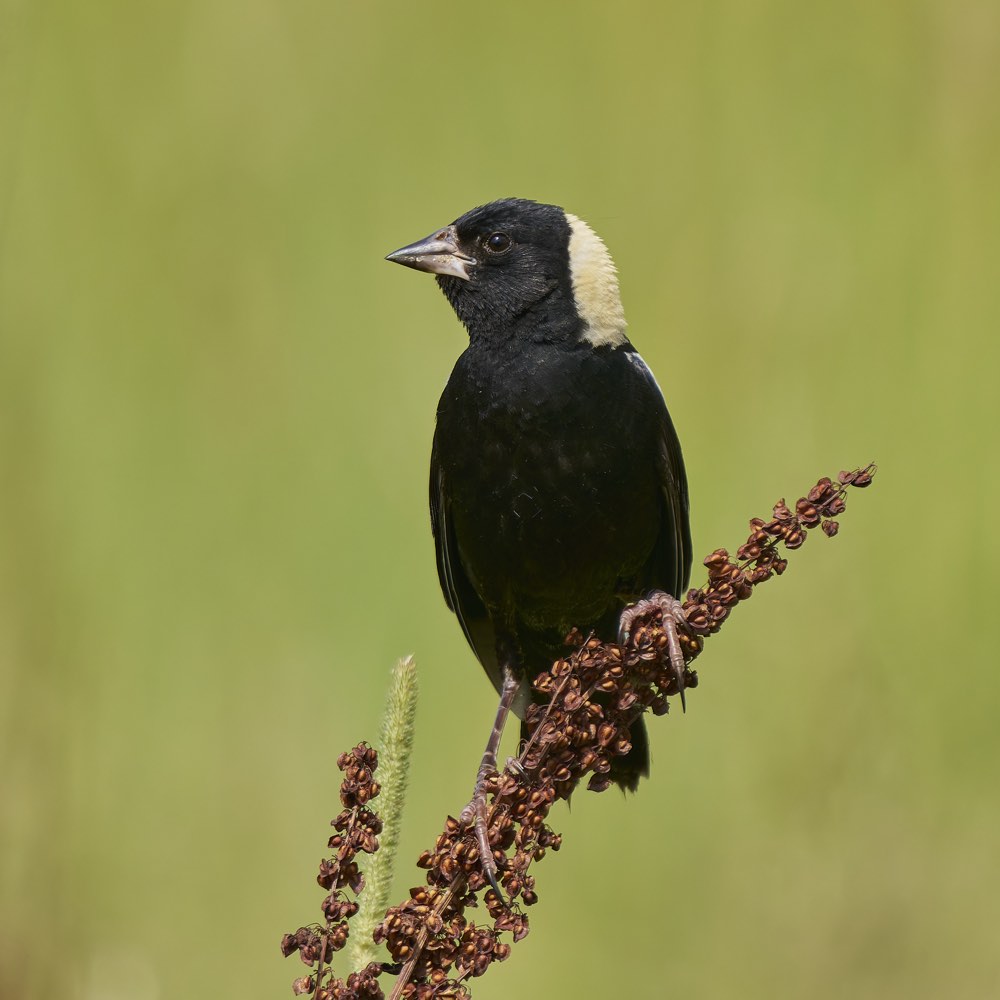
Similar species
What it sounds like
A rich rising and falling warble, husky and slightly buzzy.
Behaviour that gives it away
Twitches its tail sideways in a distinctive nervous flick while perched, unlike the buntings it resembles.
Habitat & range
Brushy field edges, hedgerows, old fields and streamside thickets across the South.
When you'll see it
A summer visitor that arrives to breed in North America.
What it eats
Insects, especially grasshoppers, plus seeds and grain.
Did you know?
Despite the name it is a bunting rather than a true grosbeak, and its outsized bill is built for large hard-shelled insects.
Spot one yourself?
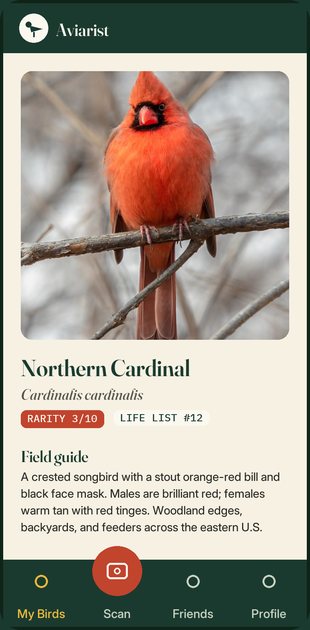
Point your camera at any bird and Aviarist identifies it in seconds — then logs it to your life list.
Get Aviarist on Google Play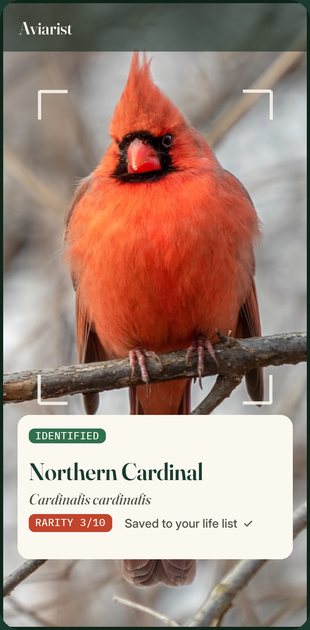
More backyard birds


Other apps we make