How to Identify aPine Siskin
Spinus pinus · 4.3–5.5 in (11–14 cm)
Male vs. female
Male
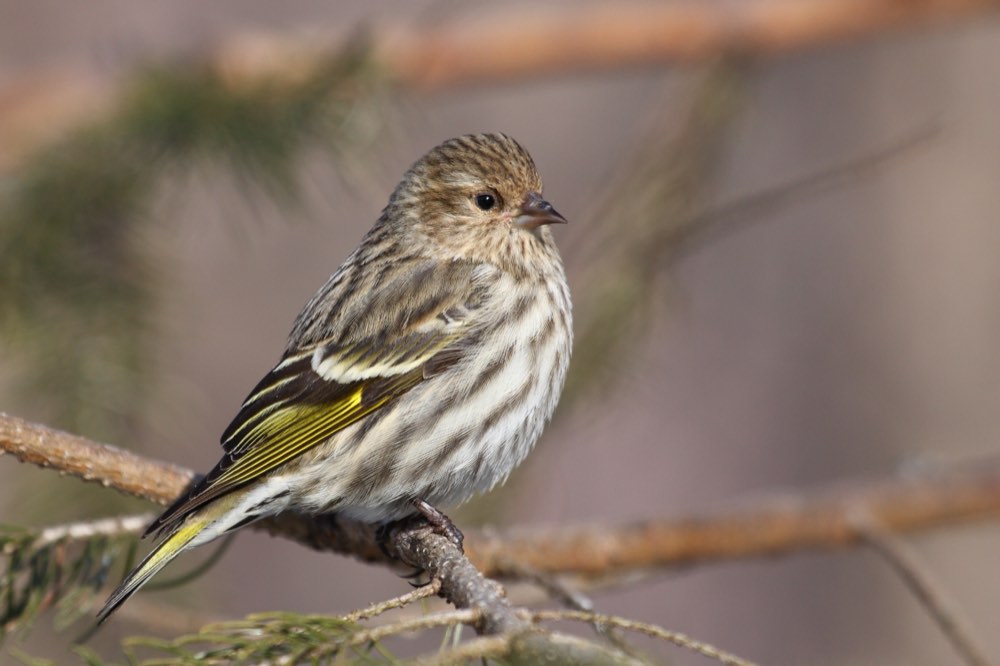
Heavily streaked brown and white with yellow edges to the wing and tail feathers; sexes look similar.
Female
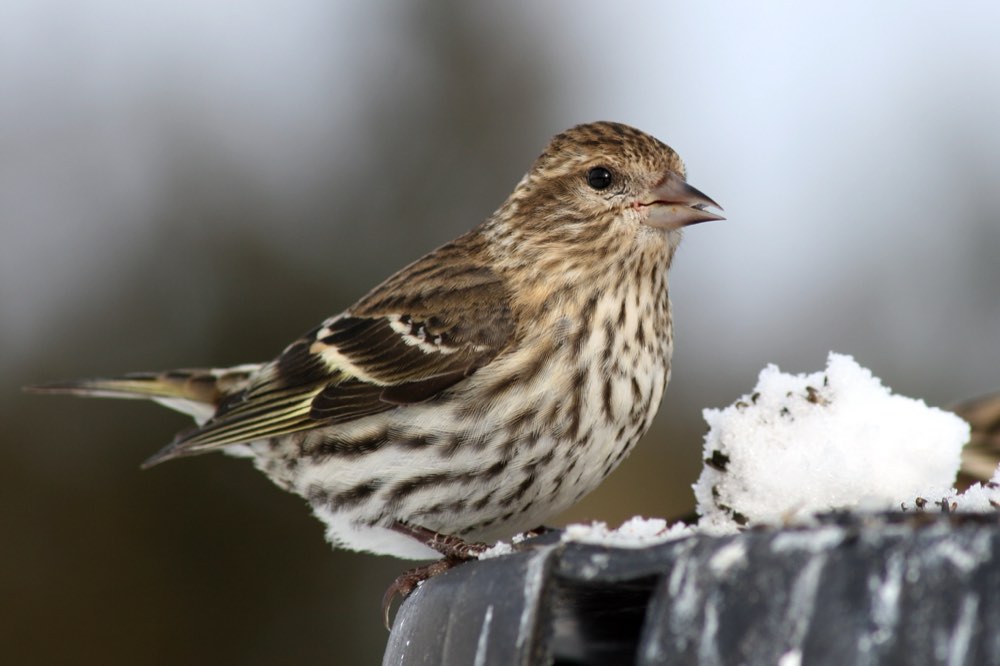
Like the male but with less yellow showing in the wing.
Male photo: Cephas / Wikimedia, CC BY-SA 3.0 · Female photo: Darren Swim / Wikimedia, CC BY-SA 3.0
Field marks
- Crisp dark streaking over the whole body
- Yellow flash along the wing, most obvious in flight
- Very thin, sharply pointed bill for a finch
- Notched tail
Similar species
What it sounds like
A rising buzzy "zzzzreeeee" like a question mark, mixed into a twittering chatter from the flock.
Behaviour that gives it away
Travels in restless flocks that swirl up together and settle again, and will feed hanging upside-down at the tips of conifer cones.
Habitat & range
Conifer and mixed forest across the north and the western mountains, moving far south to feeders in irruption winters.
When you'll see it
Depending on where in North America you are, it is present all year and a winter visitor.
What it eats
Conifer and thistle seeds, and nyjer or sunflower chips at feeders.
Did you know?
It can store enough seed in its crop overnight to survive temperatures far below freezing, and puts on extra winter fat that many finches do not.
Spot one yourself?
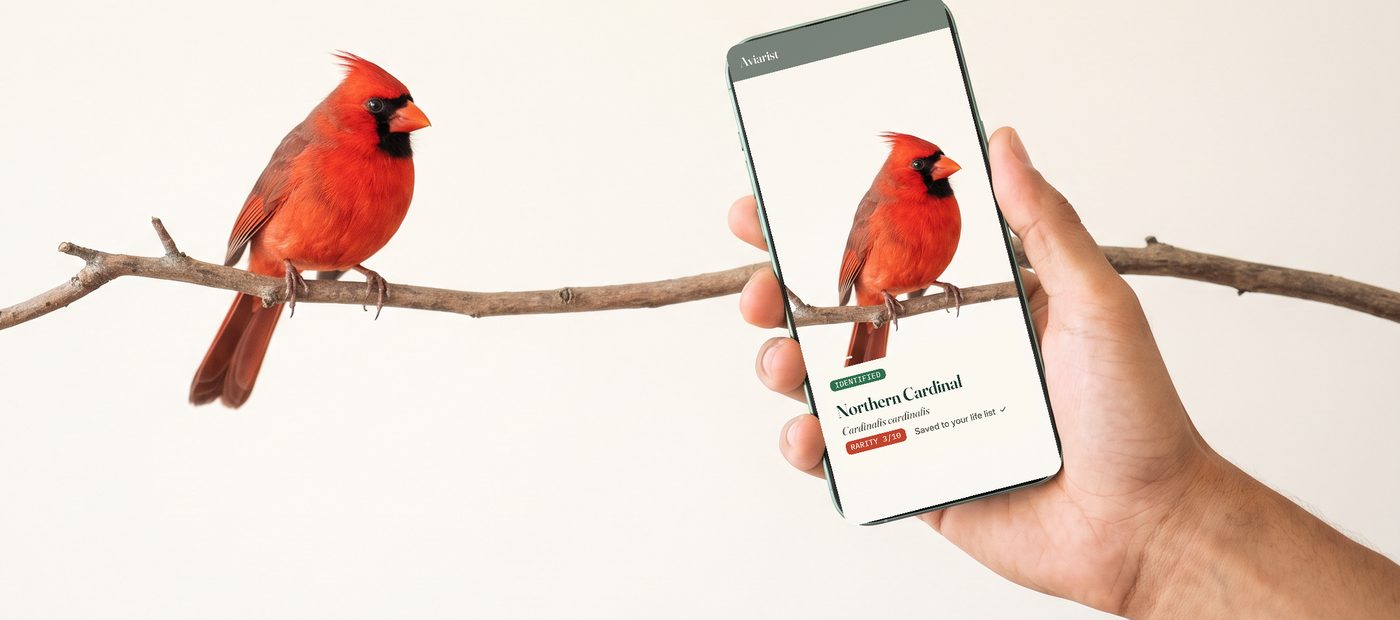
Point your camera at any bird and Aviarist identifies it in seconds — then logs it to your life list.
Get Aviarist on Google Play
More backyard birds

-Relic38.JPG)
Other apps we make