How to Identify aLazuli Bunting
Passerina amoena · 5.1–5.9 in (13–15 cm)
Male vs. female
Male
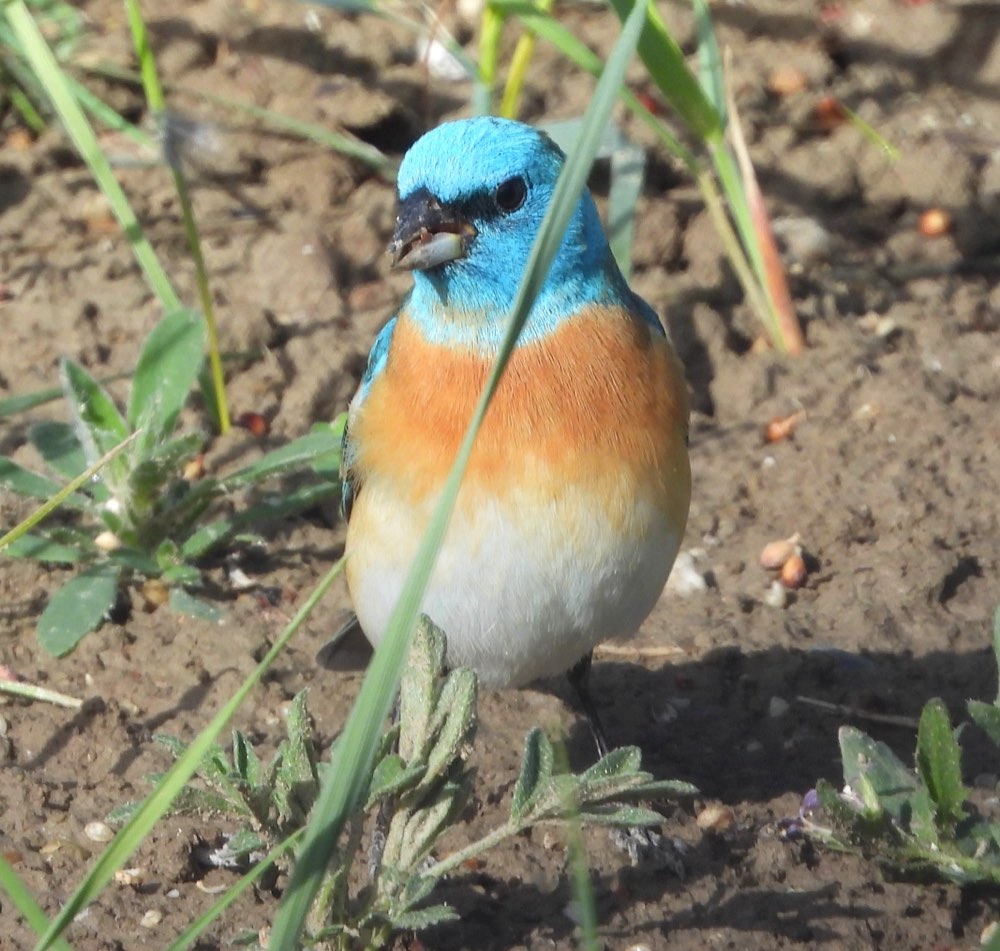
Bright turquoise-blue head and back, cinnamon-orange chest, white belly and two white wingbars.
Female
Warm gray-brown with a soft buff chest, a faint blue tinge on the rump and two pale wingbars.
Male photo: Tumbleweed1954 / Wikimedia, CC0
Field marks
- Turquoise head with an orange chest band
- Two clear white wingbars
- White belly cut sharply from the orange chest
- Small stubby bill
Similar species
What it sounds like
A fast, high, jumbled warble of paired phrases, similar to an Indigo Bunting’s but faster.
Behaviour that gives it away
Young males improvise a song by copying fragments from several neighbours, producing a local dialect unique to each valley.
Habitat & range
Brushy hillsides, chaparral, streamside thickets and open woodland across the West.
When you'll see it
A summer visitor that arrives to breed in western North America.
What it eats
Seeds and insects taken low in brush and on the ground.
Did you know?
Each young male assembles his song from pieces borrowed from several neighbours, creating song neighbourhoods a few hundred yards across.
Spot one yourself?
Point your camera at any bird and Aviarist identifies it in seconds — then logs it to your life list.
Get Aviarist on Google Play
More backyard birds

Other apps we make