How to Identify aPainted Bunting
Passerina ciris · 4.7–5.1 in (12–13 cm)
Male vs. female
Male
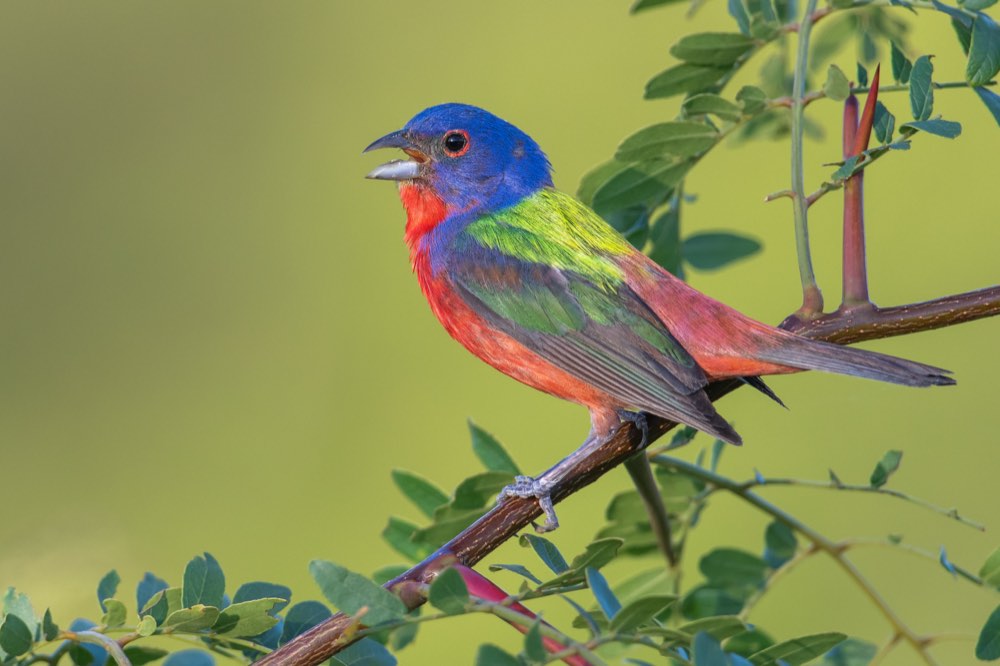
Vivid blue head, brilliant red throat, chest and rump, and a bright yellow-green back.
Female
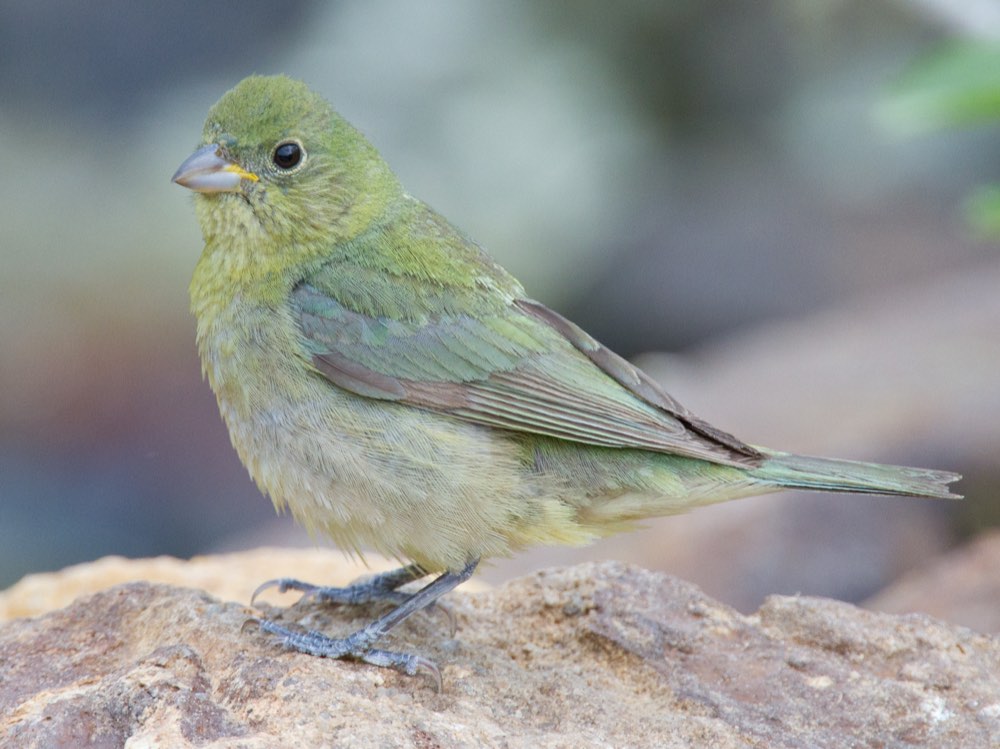
Uniform bright yellow-green above and paler lime-yellow below — the only truly green finch-like bird in the region.
Male photo: Dakota L. / Wikimedia, CC BY 4.0 · Female photo: Dan Pancamo / Wikimedia, CC BY-SA 2.0
Field marks
- Male’s blue head with red underparts and green back
- Female uniformly bright yellow-green
- Small stubby conical bill
- Skulks low in dense brush
Similar species
What it sounds like
A sweet, rambling, high-pitched warble of clear notes, given from a hidden perch.
Behaviour that gives it away
Males fight each other unusually fiercely over territory, sometimes to the death, and stay hidden in brush despite the colour.
Habitat & range
Brushy field edges, thickets and gardens in the Southeast and south-central states.
When you'll see it
A summer visitor that arrives to breed in southeastern and central North America.
What it eats
Seeds, plus insects during the breeding season.
Did you know?
Females are the only truly green finch-like birds in North America, which is often more useful for identification than the male’s colours.
Spot one yourself?
Point your camera at any bird and Aviarist identifies it in seconds — then logs it to your life list.
Get Aviarist on Google Play
More backyard birds


Other apps we make