How to Identify aBobolink
Dolichonyx oryzivorus · 5.9–8.3 in (15–21 cm)
Male vs. female
Male
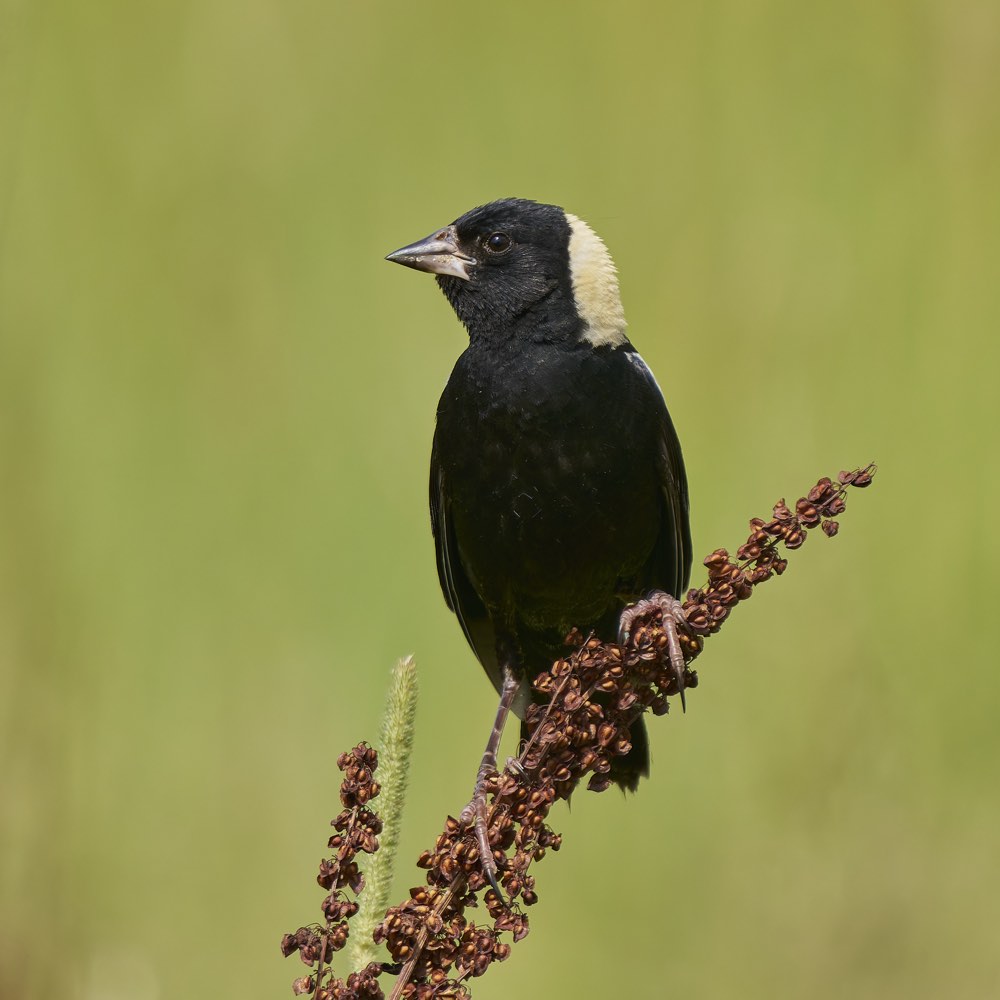
Black face and underparts with a straw-yellow nape and big white patches on the back and rump.
Female
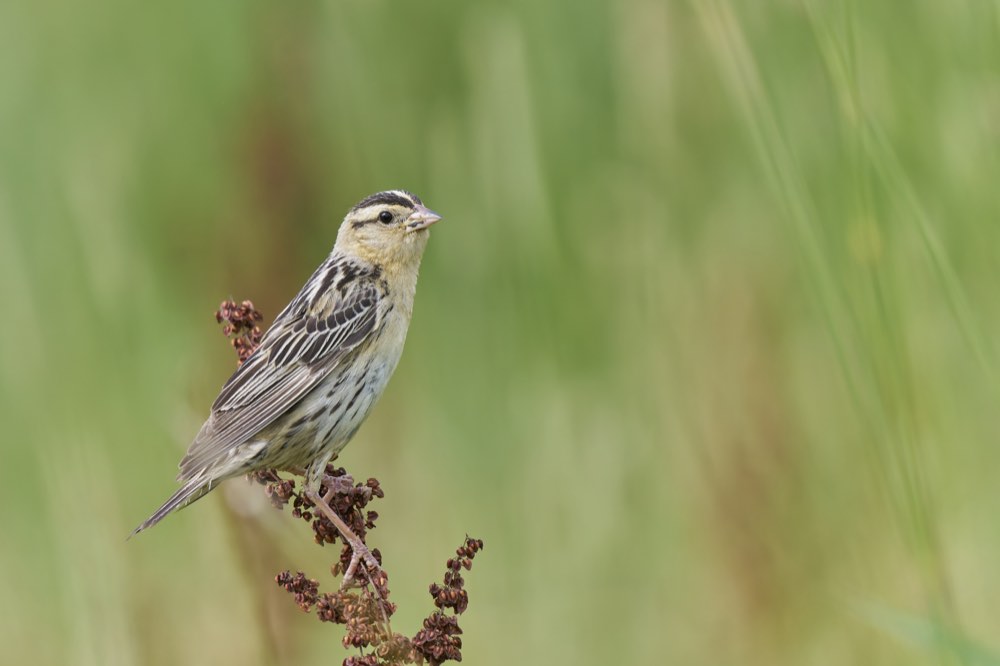
Warm buff with dark crown stripes and streaked flanks, looking like a large sparrow.
Male photo: Paul Danese / Wikimedia, CC BY-SA 4.0 · Second photo: Paul Danese / Wikimedia, CC BY-SA 4.0
Field marks
- Black underparts with white upperparts — an upside-down pattern
- Straw-coloured patch on the back of the head
- Sharply pointed tail feathers
- Bubbling song given in fluttering display flight
Similar species
What it sounds like
A long, bubbling, metallic jumble of notes delivered in flight, often likened to R2-D2.
Behaviour that gives it away
Migrates about 12,000 miles a year to Argentina and back, and can navigate using the earth’s magnetic field via iron in its nasal tissue.
Habitat & range
Hayfields, meadows and tallgrass prairie across the northern states and southern Canada.
When you'll see it
Depending on where in northern, eastern and central North America you are, it is a summer visitor that arrives to breed and a passage migrant, seen mainly in spring and autumn.
What it eats
Insects in summer, seeds and grain on migration and in winter.
Did you know?
It makes a round trip of roughly 12,000 miles each year, one of the longest migrations of any North American songbird.
Spot one yourself?
Point your camera at any bird and Aviarist identifies it in seconds — then logs it to your life list.
Get Aviarist on Google Play
More backyard birds


Other apps we make