How to Identify aDickcissel
Spiza americana · 5.5–6.3 in (14–16 cm)
Male vs. female
Male
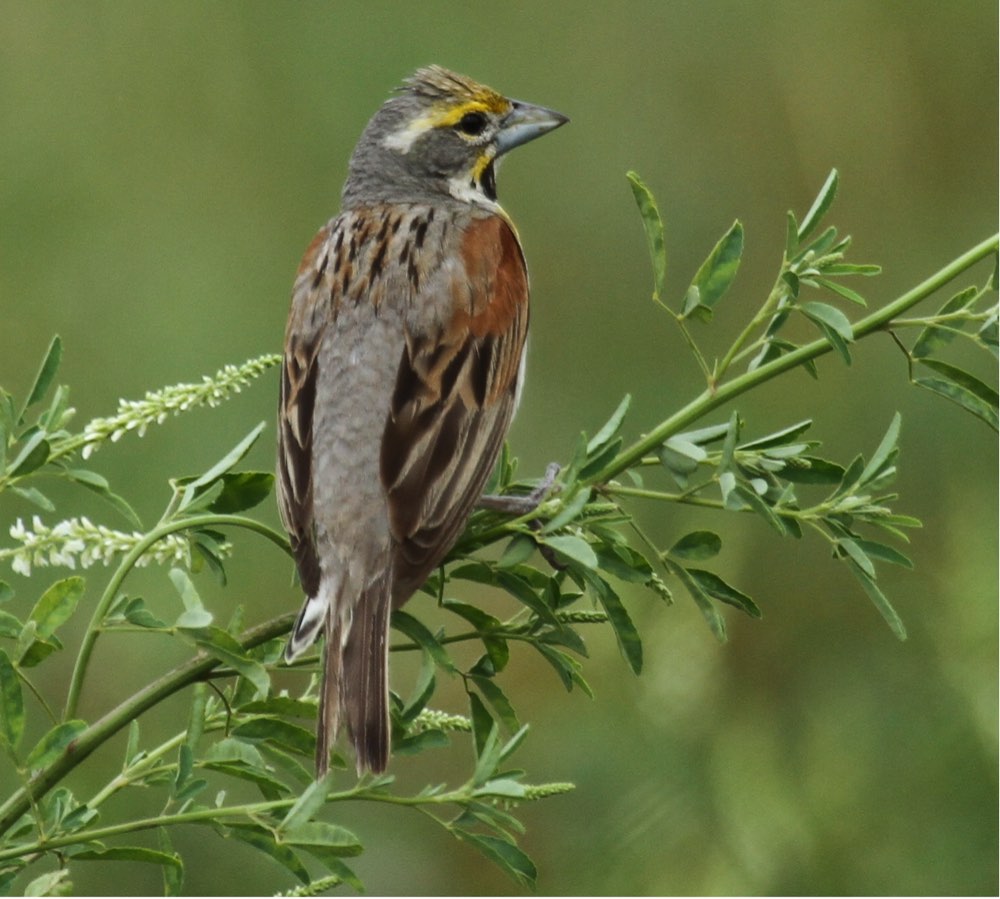
Gray head with a yellow eyebrow and chest, a black V-shaped throat bib, rusty shoulder patch and a heavy bill.
Female
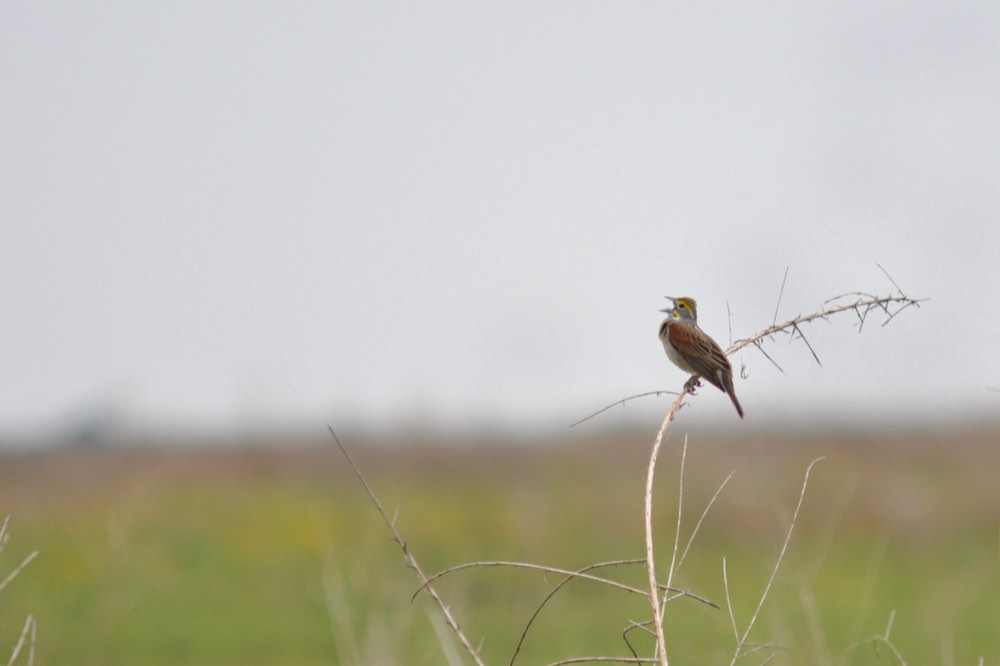
Similar but much duller, with no black bib and only a faint yellow wash.
Male photo: TonyCastro / Wikimedia, CC BY-SA 4.0 · Second photo: William L. Farr / Wikimedia, CC BY-SA 4.0
Field marks
- Black V bib on a yellow chest
- Rusty-chestnut shoulder patch
- Heavy conical bill
- Sings persistently from fences and weed stalks
Similar species
What it sounds like
A dry, buzzy "dick-dick-cissel", which is exactly how it got its name.
Behaviour that gives it away
Its numbers swing wildly between years and regions, since flocks settle wherever grassland conditions happen to be good.
Habitat & range
Prairie, hayfields, weedy fields and roadsides across the Great Plains and Midwest.
When you'll see it
A summer visitor that arrives to breed in central North America.
What it eats
Insects in summer and seeds and grain the rest of the year.
Did you know?
It winters in enormous flocks in Venezuela, where a single roost can hold a large share of the entire world population.
Spot one yourself?
Point your camera at any bird and Aviarist identifies it in seconds — then logs it to your life list.
Get Aviarist on Google Play
More backyard birds

,_Attwater_Prairie_Chicken_National_Wildlife_Refuge.jpg)
Other apps we make