How to Identify aBlackburnian Warbler
Setophaga fusca · 4.3–5.1 in (11–13 cm)
Male vs. female
Male
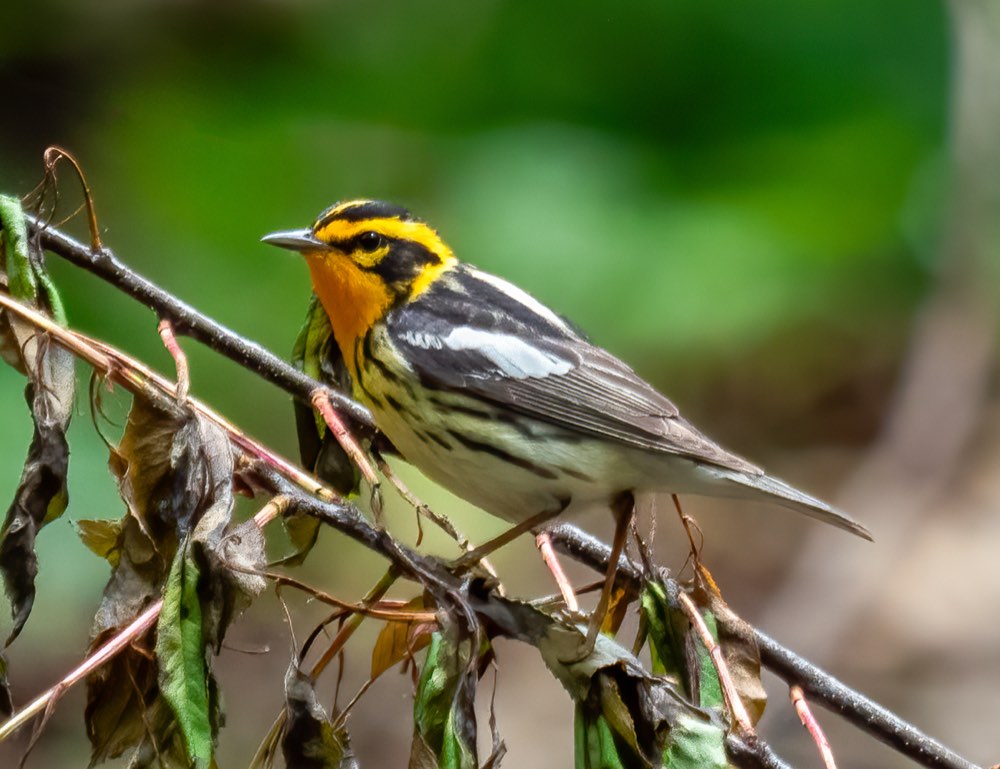
Fiery orange throat and face framed by a black triangular cheek patch and black crown, with a black-streaked back and big white wing patch.
Female
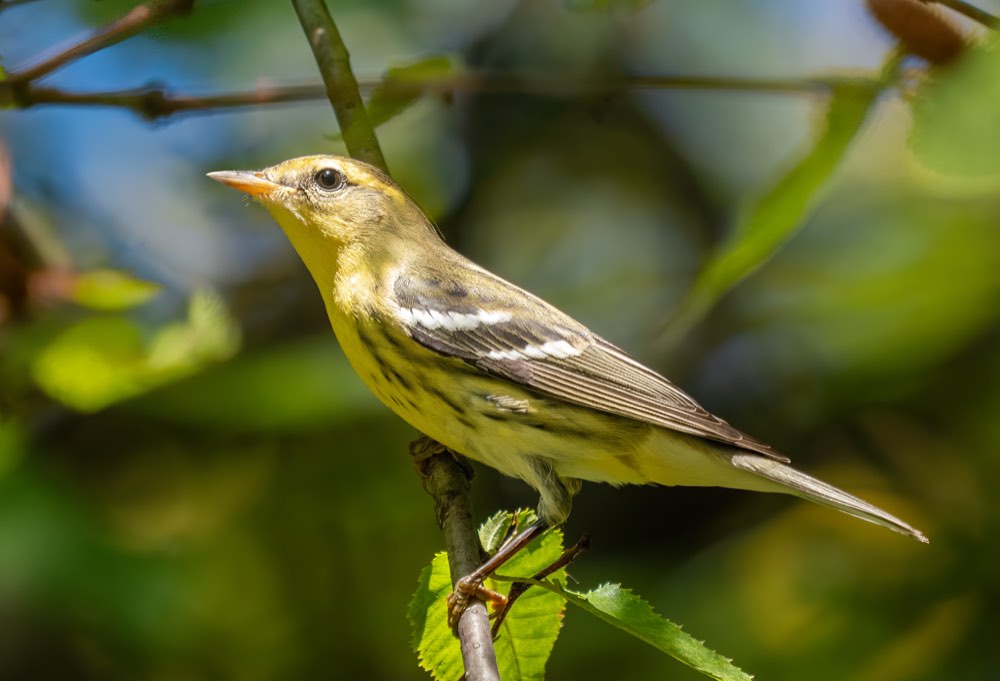
Same pattern in soft yellow and gray rather than orange and black.
Male photo: Rhododendrites / Wikimedia, CC BY-SA 4.0 · Second photo: Rhododendrites / Wikimedia, CC BY-SA 4.0
Field marks
- Flaming orange throat on the male
- Black triangular ear patch
- Bold white wing patch
- Two white stripes down a dark back
Similar species
What it sounds like
An extremely high, thin, rising series ending in a wiry note near the top of human hearing.
Behaviour that gives it away
Feeds almost entirely in the tops of tall conifers, so it is usually seen only as a distant silhouette against the sky.
Habitat & range
Tall mature conifer and mixed forest across the Northeast and Appalachian mountains.
When you'll see it
Depending on where in eastern and northern North America you are, it is a summer visitor that arrives to breed and a passage migrant, seen mainly in spring and autumn.
What it eats
Caterpillars and other insects taken high in the canopy.
Did you know?
The intensity of the male’s orange throat is unmatched among North American songbirds, earning it the old name firethroat.
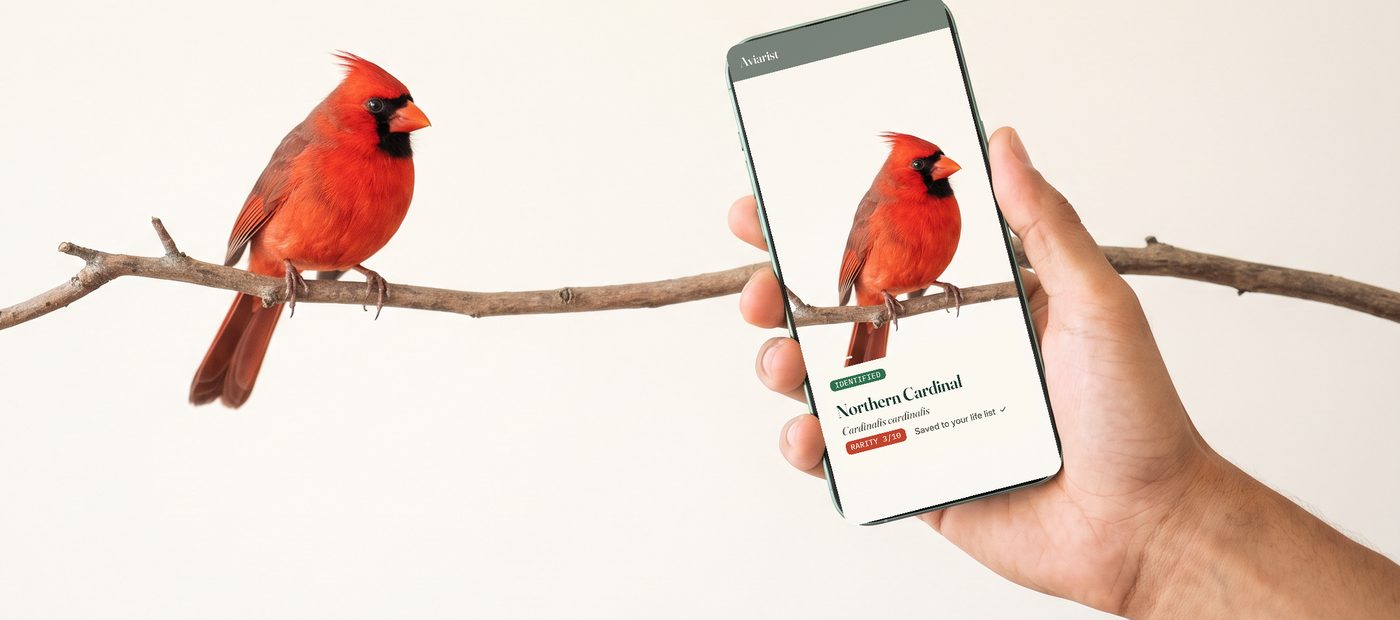
Spot one yourself?
Point your camera at any bird and Aviarist identifies it in seconds — then logs it to your life list.
Get Aviarist on Google Play
More backyard birds
.jpg)
.jpg)
Other apps we make