How to Identify aAmerican Redstart
Setophaga ruticilla · 4.3–5.1 in (11–13 cm)
Male vs. female
Male
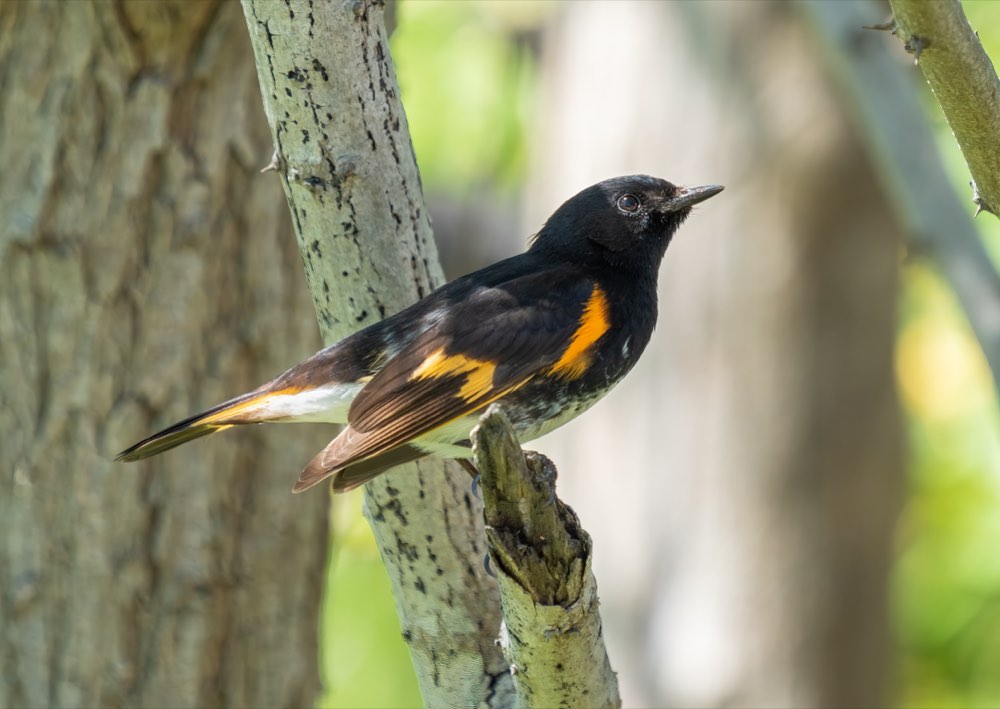
Glossy black with brilliant orange patches on the sides, wings and tail, and a white belly.
Female
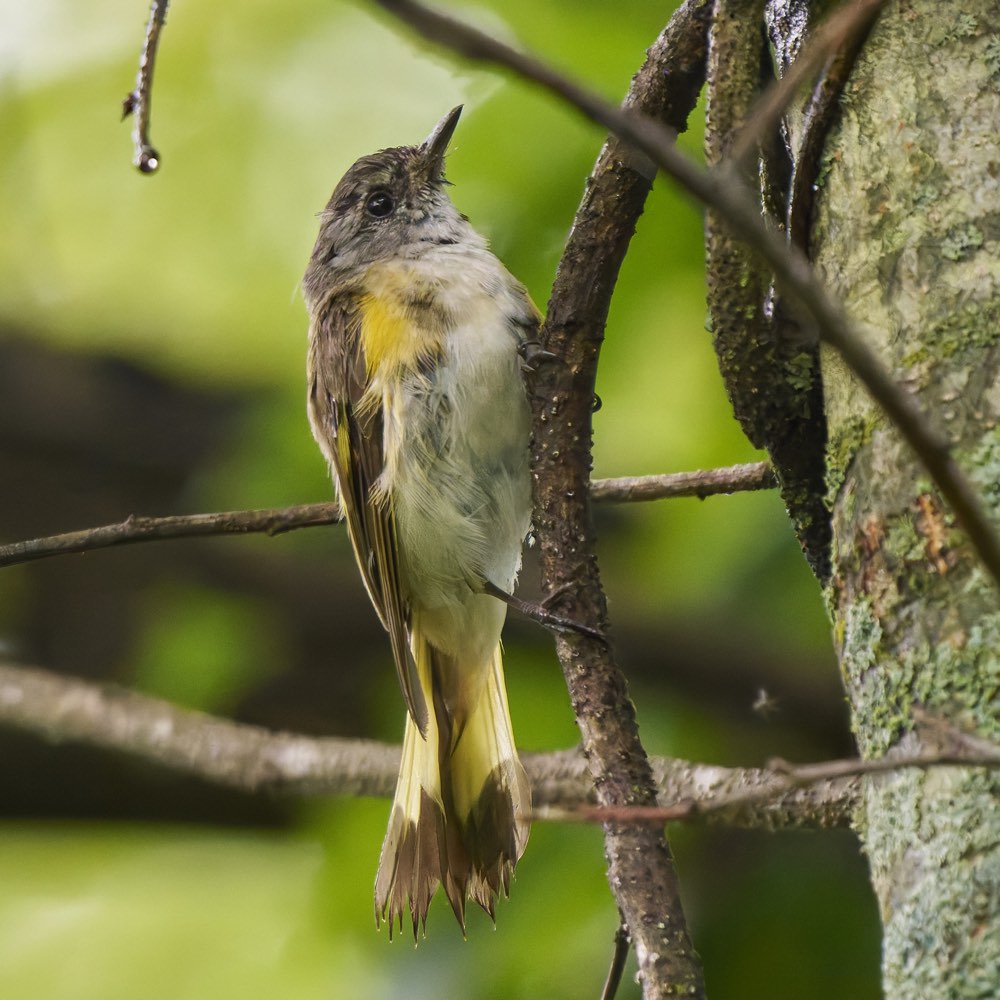
Gray-headed and olive-backed with yellow patches in exactly the same places the male’s are orange.
Male photo: Rhododendrites / Wikimedia, CC BY-SA 4.0 · Second photo: Paul Danese / Wikimedia, CC BY-SA 4.0
Field marks
- Bright orange or yellow patches at the base of the tail and in the wing
- Constantly fans the tail and droops the wings
- Male glossy black and orange; female gray, olive and yellow
- Flat, broad-based bill with prominent bristles
Similar species
What it sounds like
A high, thin series of notes usually ending in an emphatic downslurred "tsee-tsee-tsee-tsee-TSEEoo", with several song variations.
Behaviour that gives it away
Flashes its tail and wing patches to startle insects into flight, then catches them mid-air — hunting by making prey move.
Habitat & range
Second-growth deciduous woodland and shrubby forest edges across the eastern and northern United States in summer.
When you'll see it
Depending on where in eastern, central and northern North America you are, it is a summer visitor that arrives to breed and a passage migrant, seen mainly in spring and autumn.
What it eats
Flying insects caught on the wing, plus caterpillars and some berries.
Did you know?
Males take a full extra year to gain black-and-orange plumage, so many sing and hold territory while still looking like females.
Spot one yourself?
Point your camera at any bird and Aviarist identifies it in seconds — then logs it to your life list.
Get Aviarist on Google Play
More backyard birds
.jpg)

Other apps we make