How to Identify aPalm Warbler
Setophaga palmarum · 4.7–5.5 in (12–14 cm)
Male vs. female
Male
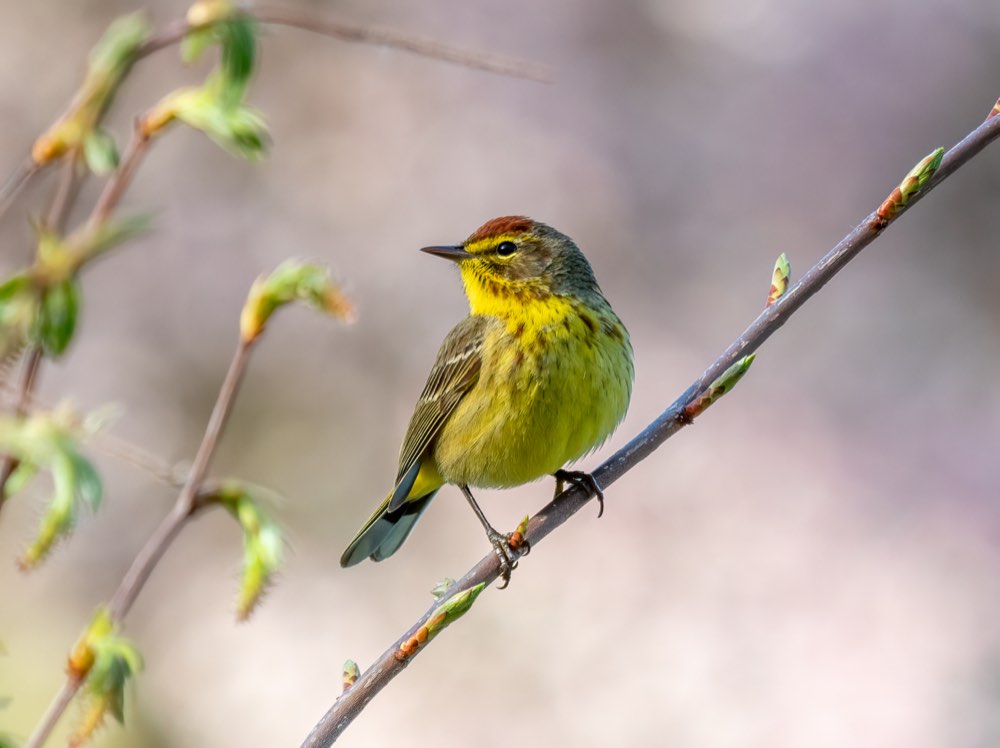
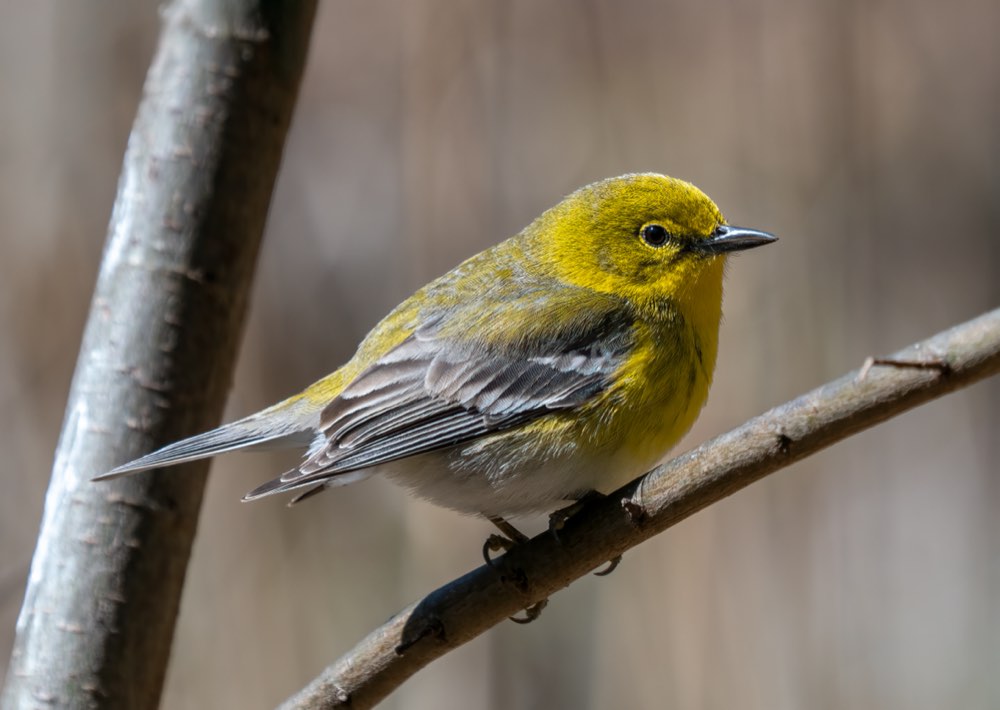
Brownish above with a rusty cap in breeding plumage, a yellow eyebrow and throat, streaked sides and a bright yellow undertail. Sexes look alike.
Female
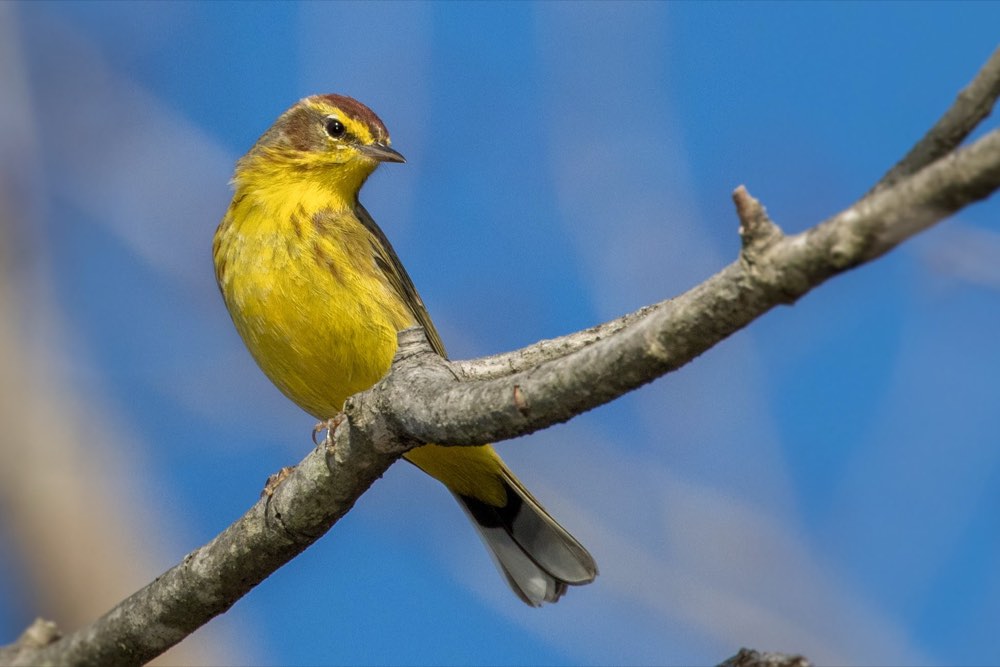
Identical to the male in the field.
Male photo: Rhododendrites / Wikimedia, CC BY-SA 4.0 · Second photo: Tony Clements / Wikimedia, CC BY-SA 4.0
Field marks
- Constant tail-pumping while feeding
- Yellow undertail coverts at all seasons
- Rusty cap in breeding plumage
- Feeds on the ground far more than most warblers
Similar species
What it sounds like
A weak, buzzy, even trill, easy to overlook among sparrow songs.
Behaviour that gives it away
Bobs its tail up and down almost without pause, which identifies it at any distance and in any plumage.
Habitat & range
Boreal bogs in summer; weedy fields, roadsides, lawns and beaches on migration and in winter.
When you'll see it
Depending on where in North America you are, it is a winter visitor and a passage migrant, seen mainly in spring and autumn.
What it eats
Insects taken mostly from the ground and low vegetation, plus berries in winter.
Did you know?
Despite the name it nests in northern spruce bogs, and only meets a palm tree on its Caribbean wintering grounds.
Spot one yourself?
Point your camera at any bird and Aviarist identifies it in seconds — then logs it to your life list.
Get Aviarist on Google Play
More backyard birds
.jpg)

Other apps we make