How to Identify aPine Warbler
Setophaga pinus · 5.1–5.5 in (13–14 cm)
Male vs. female
Male
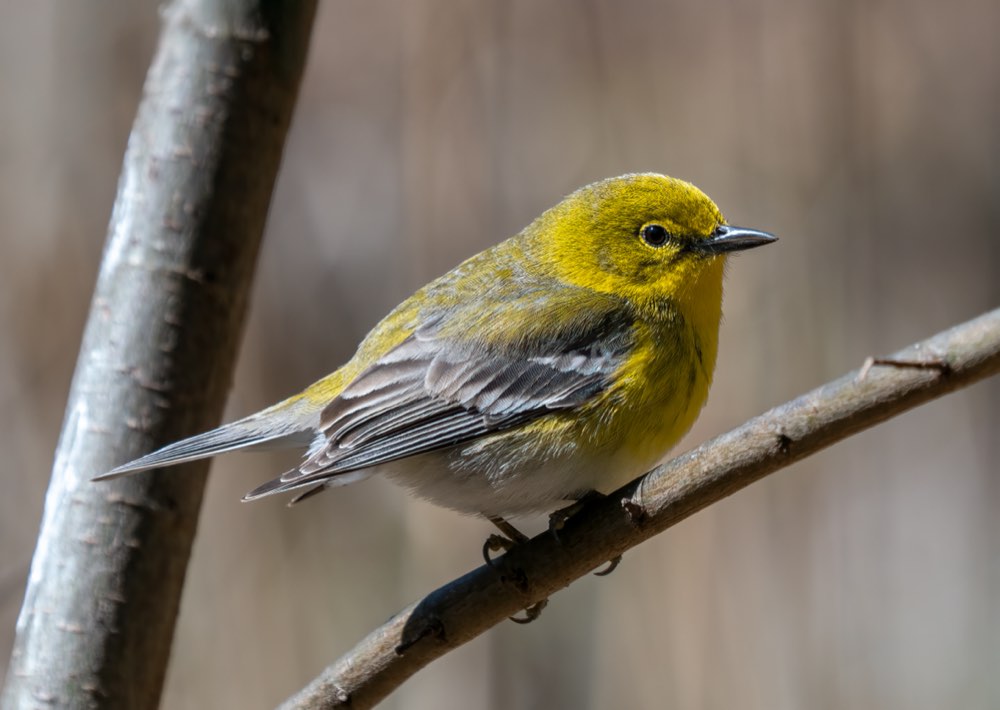
Olive-green above with a yellow throat and chest, blurry olive side streaks, white belly and two white wingbars.
Female
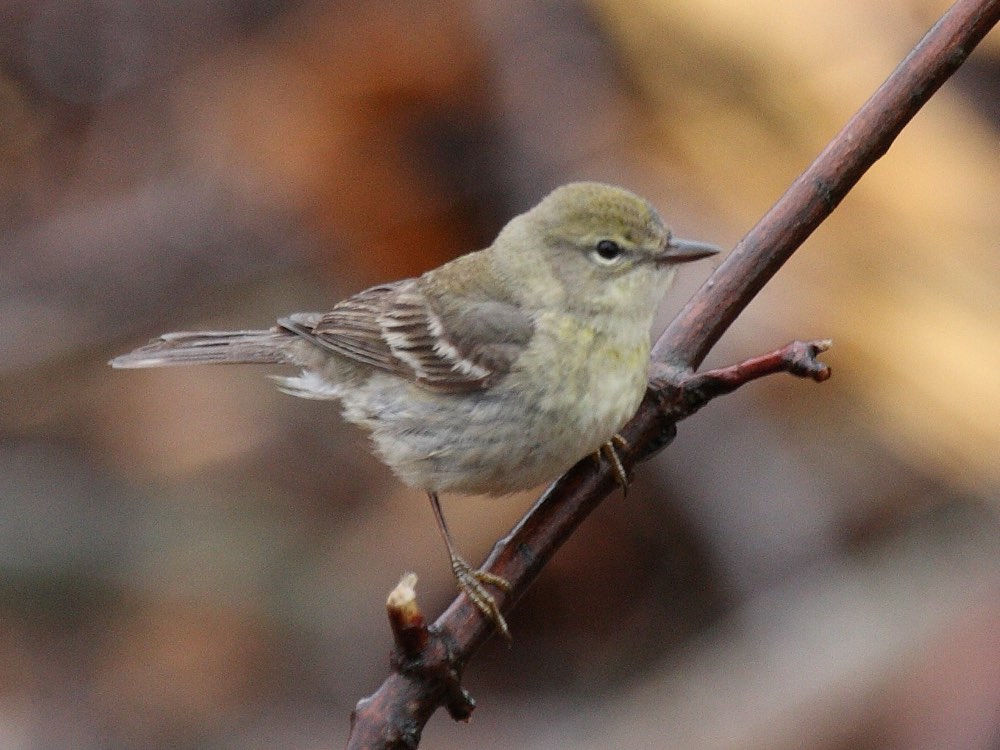
Much duller — grayish-olive with only a faint yellow wash.
Male photo: Rhododendrites / Wikimedia, CC BY-SA 4.0 · Female photo: Dominic Sherony / Wikimedia, CC BY-SA 2.0
Field marks
- Plain unstreaked olive back
- Two bold white wingbars
- Relatively heavy bill for a warbler
- White outer tail spots
Similar species
What it sounds like
A musical, even trill on one pitch, slower and sweeter than a Chipping Sparrow’s dry rattle.
Behaviour that gives it away
The only warbler that regularly eats seeds, which lets it visit suet and sunflower feeders and winter far north of other warblers.
Habitat & range
Pine and mixed pine woodland across the eastern and southeastern states.
When you'll see it
Depending on where in eastern, southeastern and central North America you are, it is present all year and a summer visitor that arrives to breed.
What it eats
Insects, plus seeds and suet — unusual among warblers.
Did you know?
It is the only warbler that eats seeds in quantity, and it turns up at feeders through the winter as a result.
Spot one yourself?
Point your camera at any bird and Aviarist identifies it in seconds — then logs it to your life list.
Get Aviarist on Google Play
More backyard birds
.jpg)

Other apps we make