How to Identify aOvenbird
Seiurus aurocapilla · 4.3–5.5 in (11–14 cm)
Male vs. female
Male
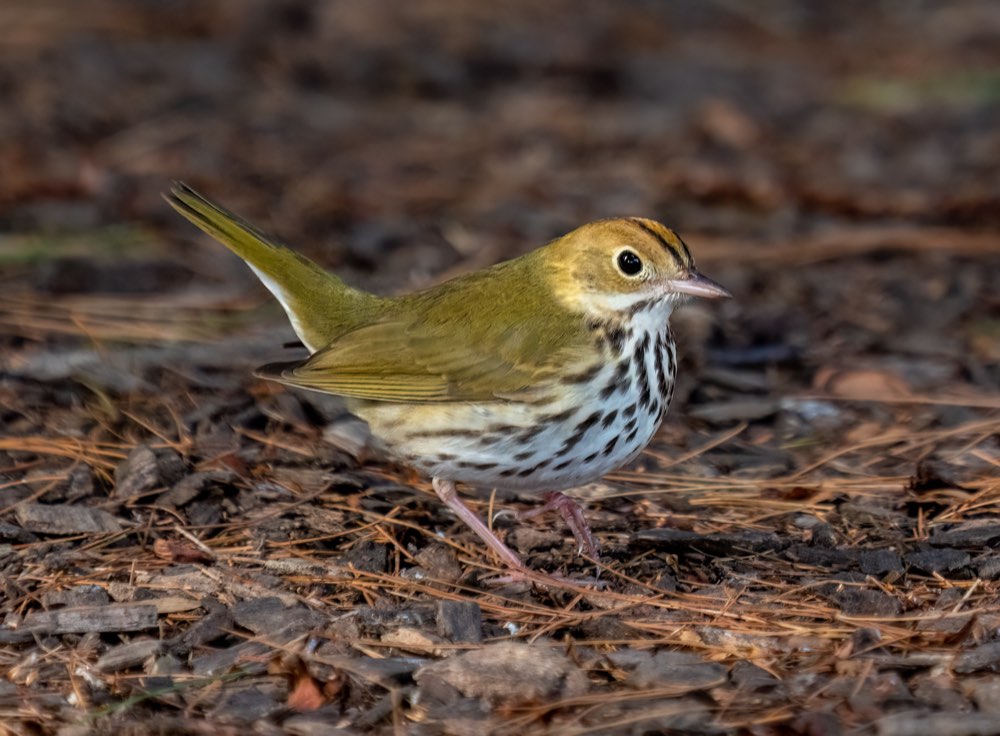
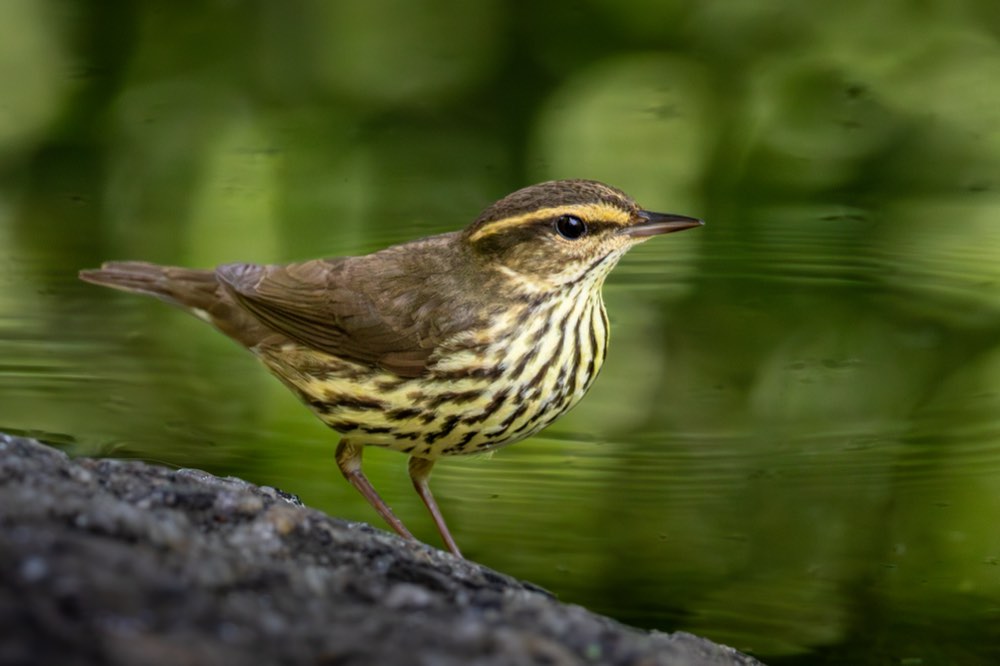
Olive-brown above, white below with heavy dark spotting, an orange crown edged in black and a striking white eye-ring. Sexes look alike.
Female
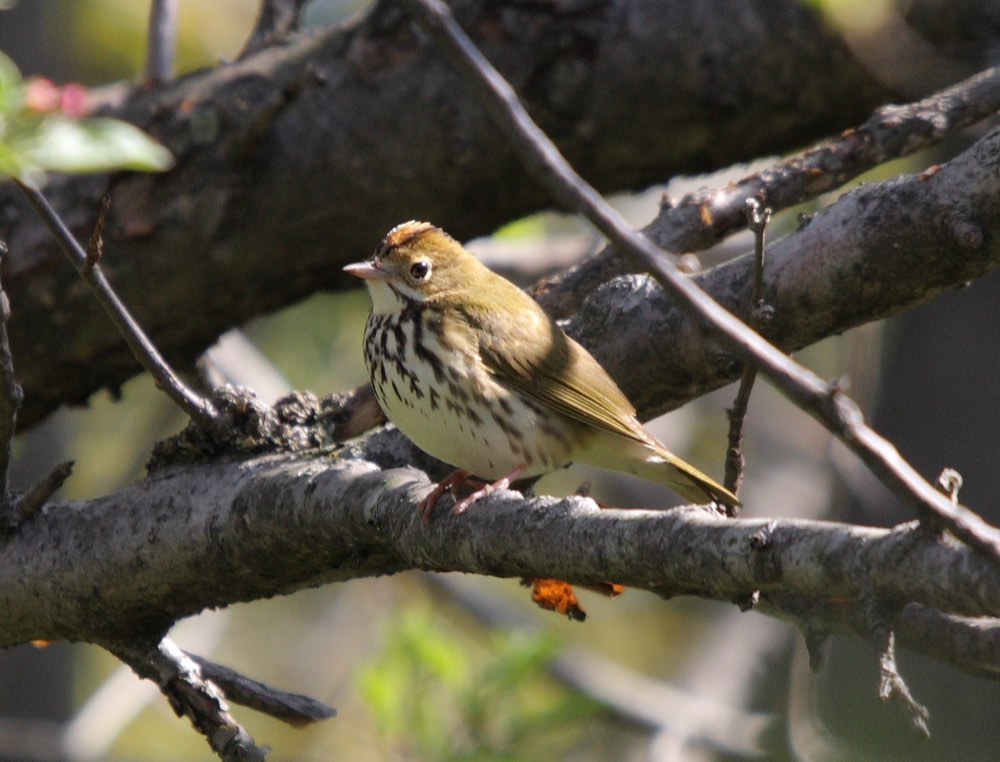
Identical to the male in the field.
Male photo: Rhododendrites / Wikimedia, CC BY-SA 4.0 · Second photo: Cephas / Wikimedia, CC BY-SA 3.0
Field marks
- Orange crown stripe bordered by black lines
- Bold complete white eye-ring
- Walks rather than hops on the forest floor
- Pink legs and an upright, tail-cocked posture
Similar species
What it sounds like
A loud, ringing, accelerating "teacher-TEACHER-TEACHER" that fills the whole woodlot.
Behaviour that gives it away
Walks deliberately over leaf litter rather than hopping, and builds a domed nest on the ground with a side entrance, like a little oven.
Habitat & range
Interior mature deciduous forest with deep leaf litter across the East.
When you'll see it
Depending on where in eastern, central and northern North America you are, it is a summer visitor that arrives to breed and a passage migrant, seen mainly in spring and autumn.
What it eats
Insects, spiders, snails and worms taken from the forest floor.
Did you know?
It is named for its nest — a domed structure of leaves built on the ground with the entrance in the side, resembling a Dutch oven.
Spot one yourself?
Point your camera at any bird and Aviarist identifies it in seconds — then logs it to your life list.
Get Aviarist on Google Play
More backyard birds
.jpg)

Other apps we make