How to Identify aNorthern Waterthrush
Parkesia noveboracensis · 4.7–5.9 in (12–15 cm)
Male vs. female
Male
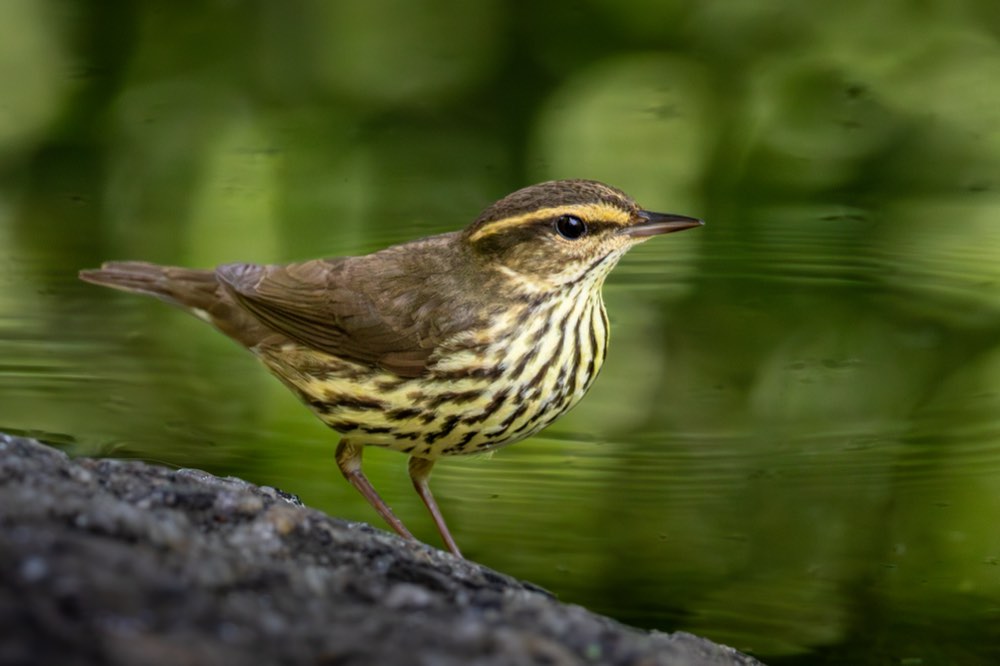
Dark brown above with a long buffy-white eyebrow, and creamy underparts covered in dense dark streaks including the throat. Sexes look alike.
Female
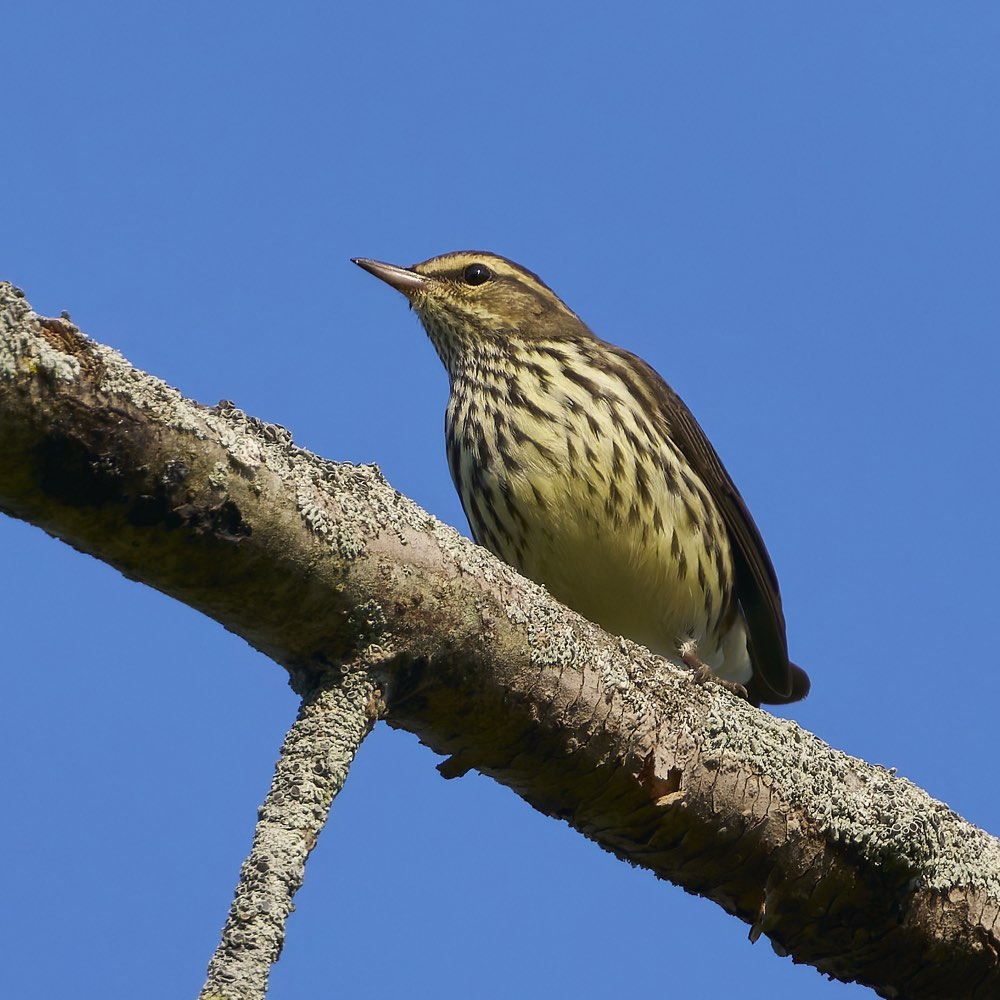
Identical to the male in the field.
Male photo: Mikeschafer.wildlife / Wikimedia, CC BY 4.0 · Second photo: Paul Danese / Wikimedia, CC BY-SA 4.0
Field marks
- Long pale eyebrow narrowing behind the eye
- Dense streaking extending onto the throat
- Constant bobbing of the rear body
- Walks along wet edges and fallen logs
Similar species
What it sounds like
A loud, ringing, three-part song that accelerates and drops in pitch as it goes.
Behaviour that gives it away
Teeters its whole rear body up and down as it walks, in the same way a Spotted Sandpiper does.
Habitat & range
Wooded swamps, bogs, and shaded streamsides and pond edges.
When you'll see it
Depending on where in northern, eastern and central North America you are, it is a summer visitor that arrives to breed and a passage migrant, seen mainly in spring and autumn.
What it eats
Aquatic and terrestrial insects, snails and small crustaceans.
Did you know?
Despite the name and habits it is a warbler, not a thrush, and its constant teetering walk is closer to a sandpiper’s.
Spot one yourself?
Point your camera at any bird and Aviarist identifies it in seconds — then logs it to your life list.
Get Aviarist on Google Play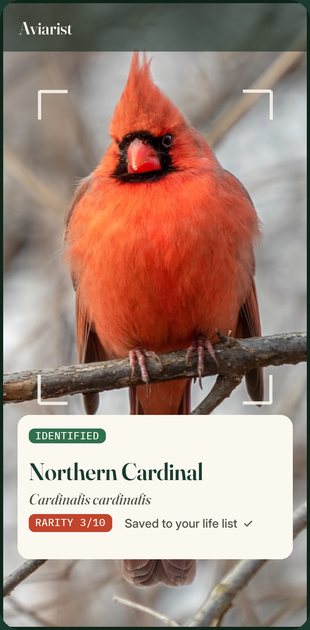
More backyard birds


Other apps we make