How to Identify aBlack-throated Green Warbler
Setophaga virens · 4.3–4.7 in (11–12 cm)
Male vs. female
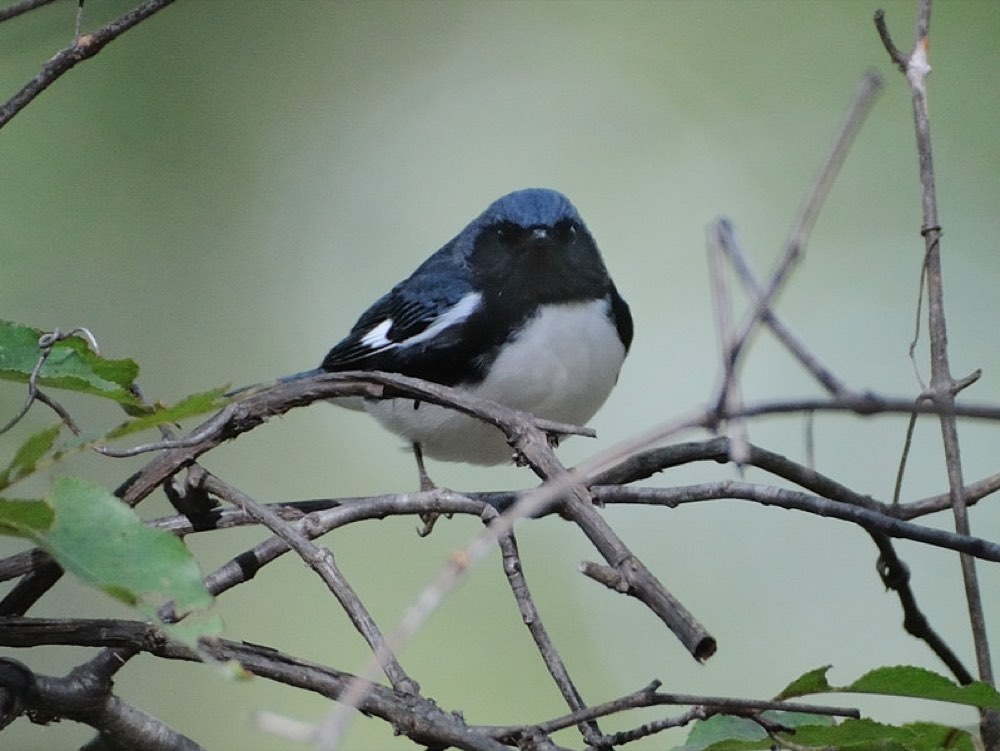
Male
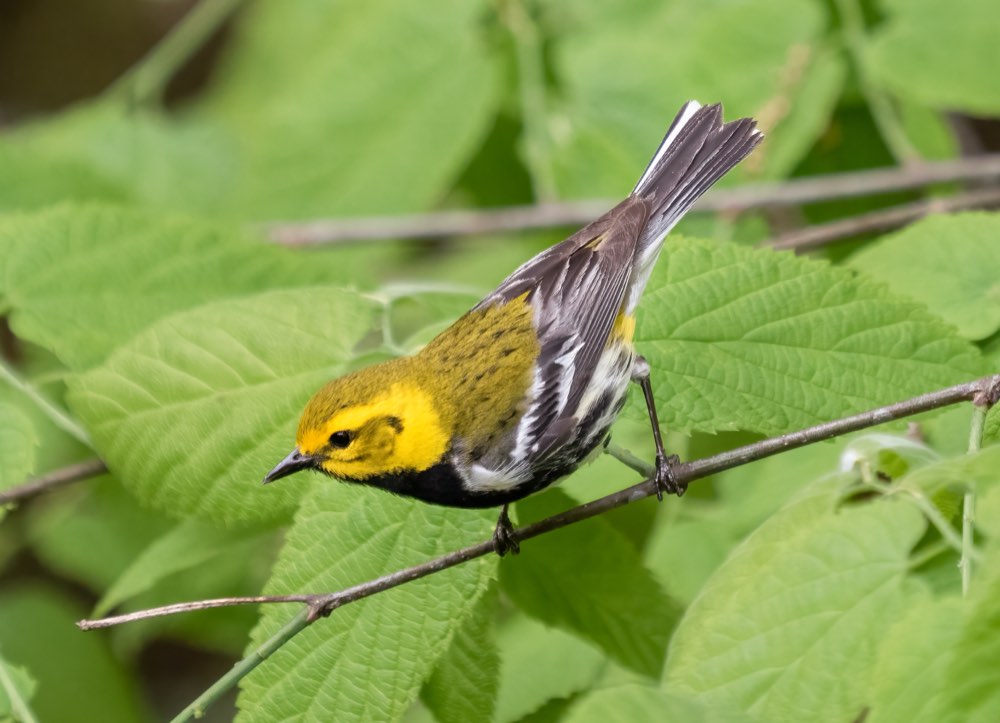
Olive-green crown and back, brilliant yellow face, jet-black throat and upper chest, white belly and two white wingbars.
Female
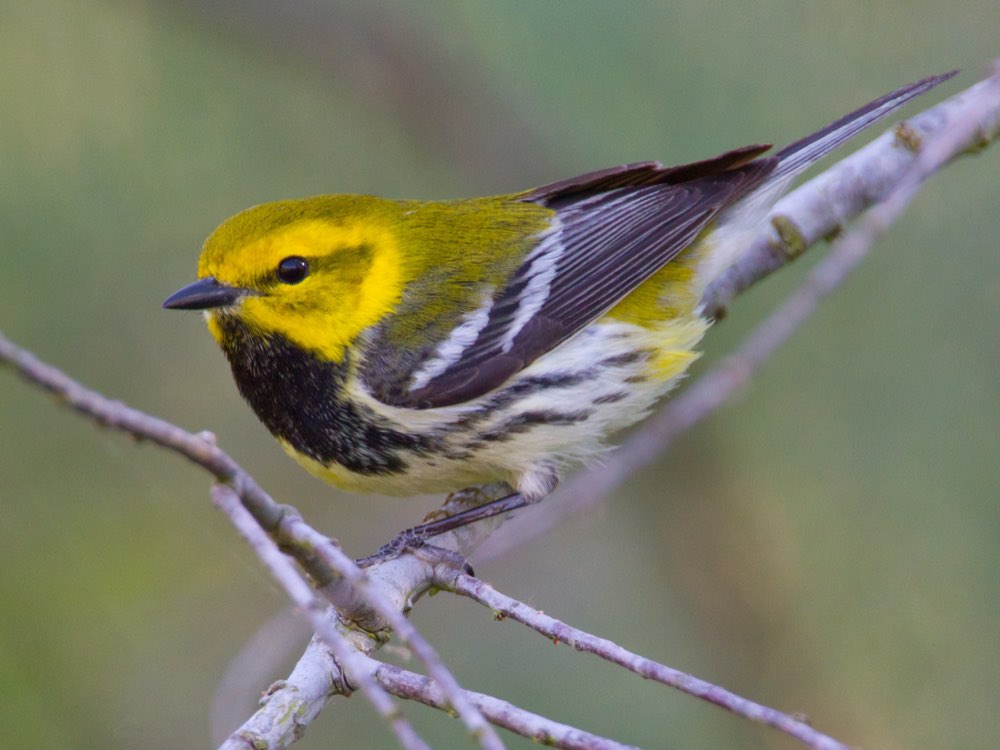
Similar but with a mottled or partly white throat rather than solid black.
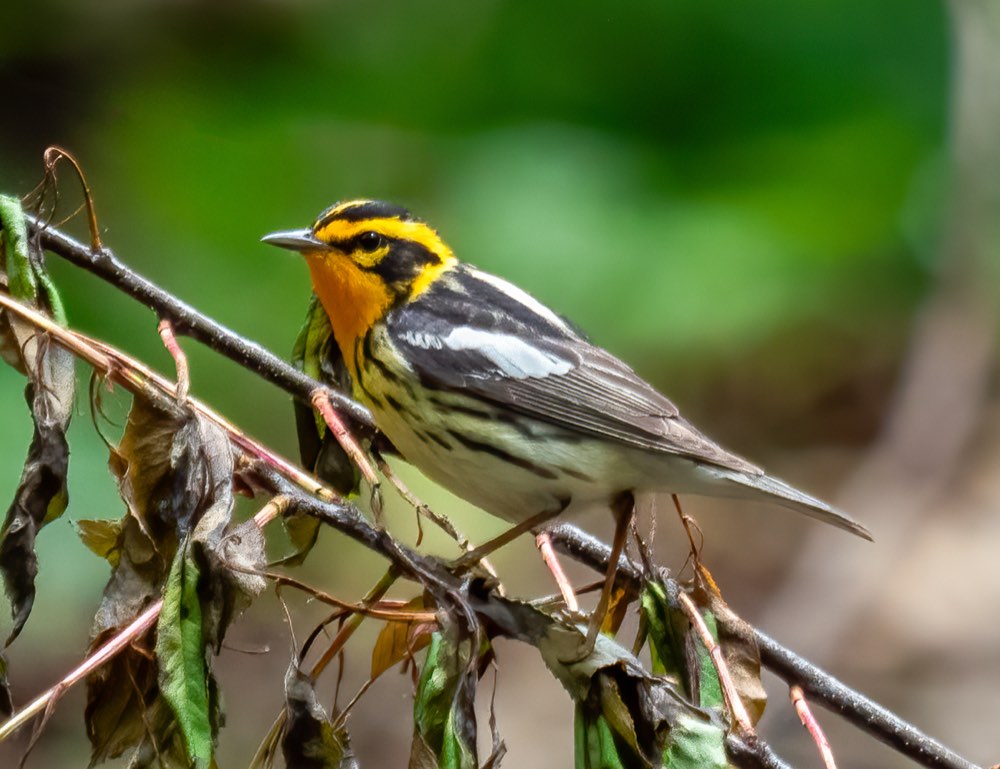
Male photo: Rhododendrites / Wikimedia, CC BY-SA 4.0 · Second photo: Dan Pancamo / Wikimedia, CC BY-SA 2.0
Field marks
- Bright yellow face framing a dark eye
- Solid black bib on the male
- Olive-green upperparts
- Faint yellow wash on the vent
Similar species
What it sounds like
A lazy, buzzy "zee-zee-zee-zoo-zee", often described as "trees, trees, murmuring trees".
Behaviour that gives it away
Sings persistently from high in conifers through the heat of the day when most warblers have gone quiet.
Habitat & range
Mature conifer and mixed forest across the Northeast and Appalachians in summer.
When you'll see it
Depending on where in eastern, northern and central North America you are, it is a summer visitor that arrives to breed and a passage migrant, seen mainly in spring and autumn.
What it eats
Caterpillars and other insects gleaned high in conifers.
Did you know?
Its drowsy buzzing song is one of the most persistent sounds of northern woods in midsummer, sung long after other species fall silent.
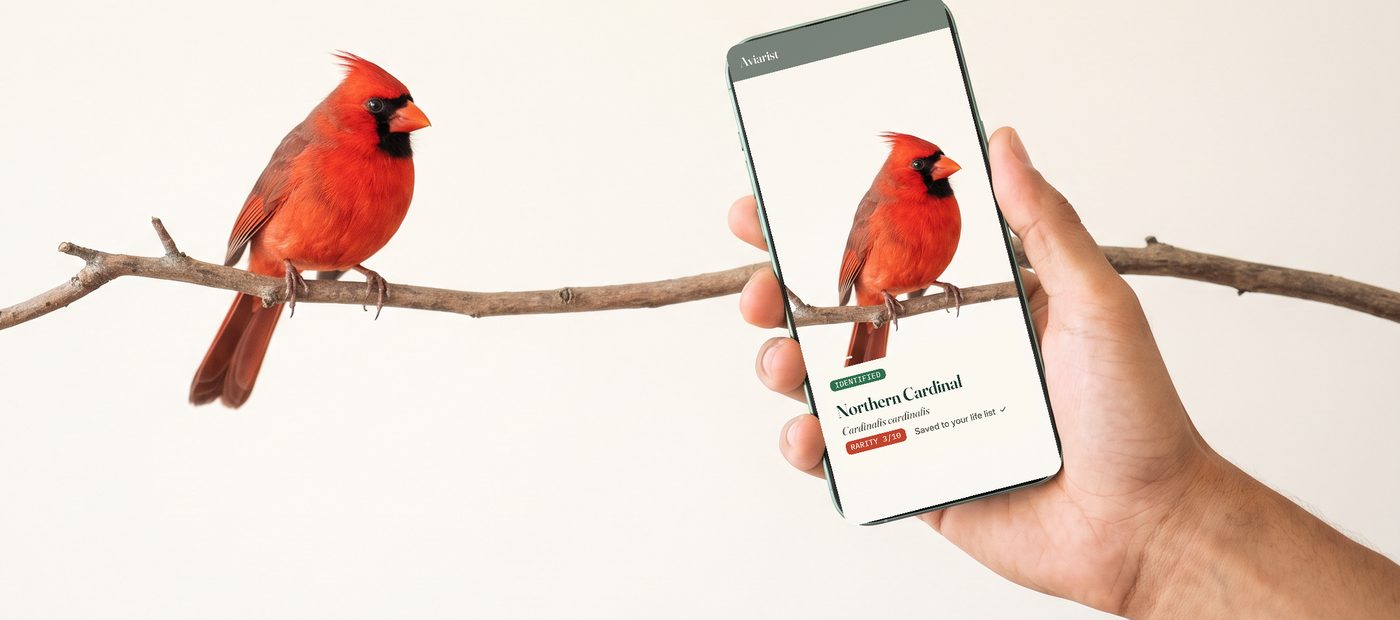
Spot one yourself?
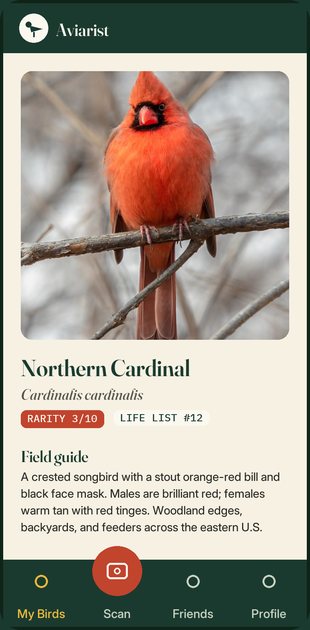
Point your camera at any bird and Aviarist identifies it in seconds — then logs it to your life list.
Get Aviarist on Google Play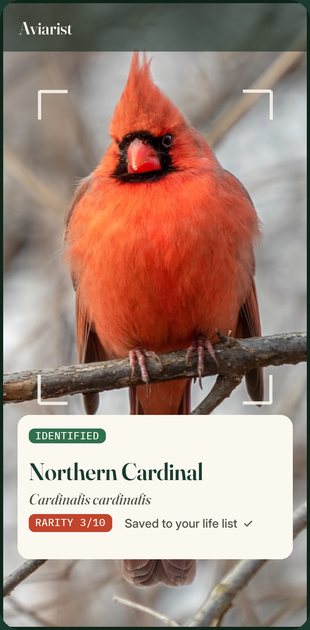
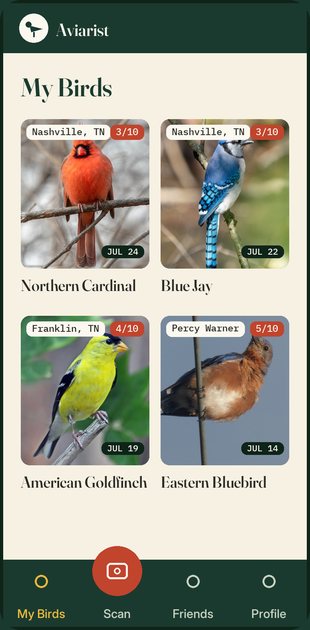
More backyard birds
.jpg)

Other apps we make