How to Identify aWood Duck
Aix sponsa · 18.5–21.3 in (47–54 cm)
Male vs. female
Male
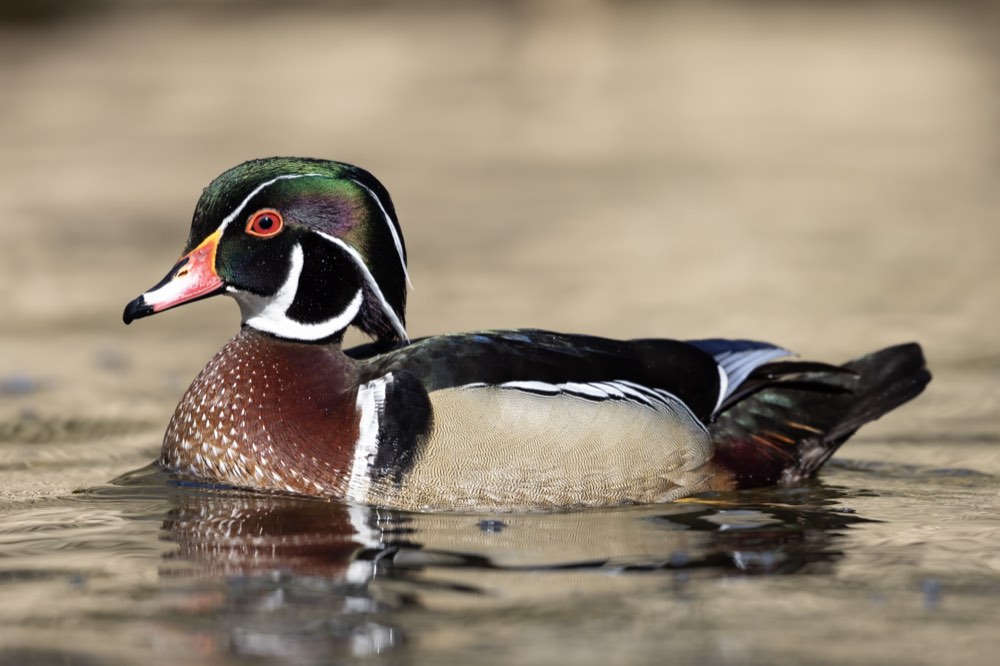
Glossy green and purple swept-back crest, chestnut breast spotted white, buff sides, red eye and a boldly striped face.
Female
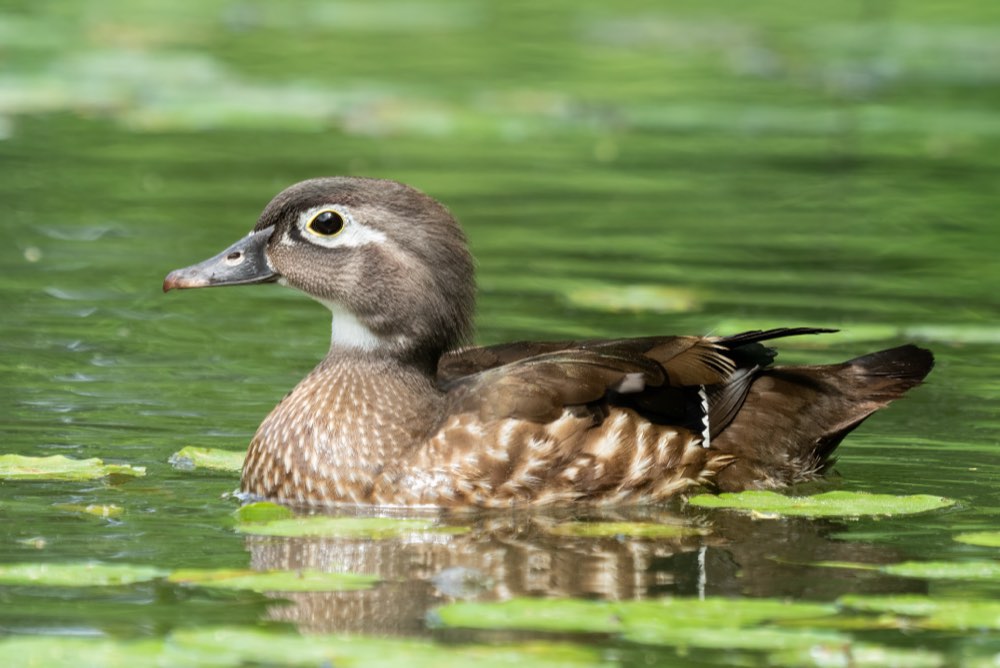
Gray-brown with a white teardrop-shaped eye patch, a small crest and a speckled breast.
Male photo: Chuck Homler d/b/a FocusOnwWildlife / Wikimedia, CC BY-SA 4.0 · Female photo: Rhododendrites / Wikimedia, CC BY-SA 4.0
Field marks
- Long swept-back crest on both sexes
- Male’s bold white facial stripes over iridescent green
- Female’s white teardrop eye-ring
- Square-tailed silhouette with the head held high in flight
Similar species
What it sounds like
The female gives a rising squealing "oo-eek" as she flushes; the male a thin whistled "jeeb".
Behaviour that gives it away
Nests in tree cavities and boxes, and the ducklings jump from the entrance to the ground within a day of hatching.
Habitat & range
Wooded swamps, beaver ponds, quiet rivers and marshes with overhanging trees.
When you'll see it
Depending on where in North America you are, it is present all year and a summer visitor that arrives to breed.
What it eats
Acorns, seeds, aquatic plants and insects.
Did you know?
Ducklings leave the nest by leaping from the cavity entrance — sometimes over fifty feet up — and bounce unhurt on the ground below.
Spot one yourself?
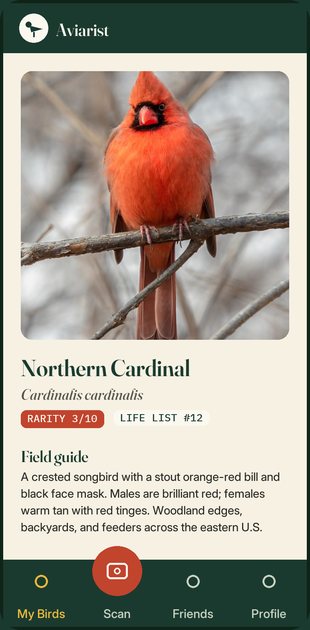
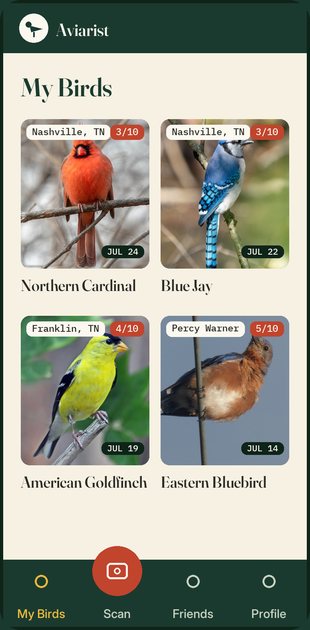
Point your camera at any bird and Aviarist identifies it in seconds — then logs it to your life list.
Get Aviarist on Google Play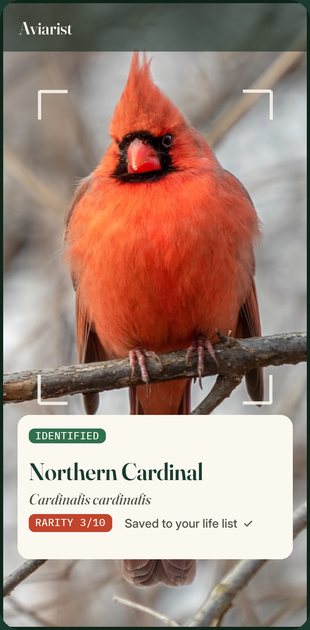
More backyard birds

.jpg)
Other apps we make