How to Identify aCommon Loon
Gavia immer · 26–36 in (66–91 cm)
Male vs. female
Male
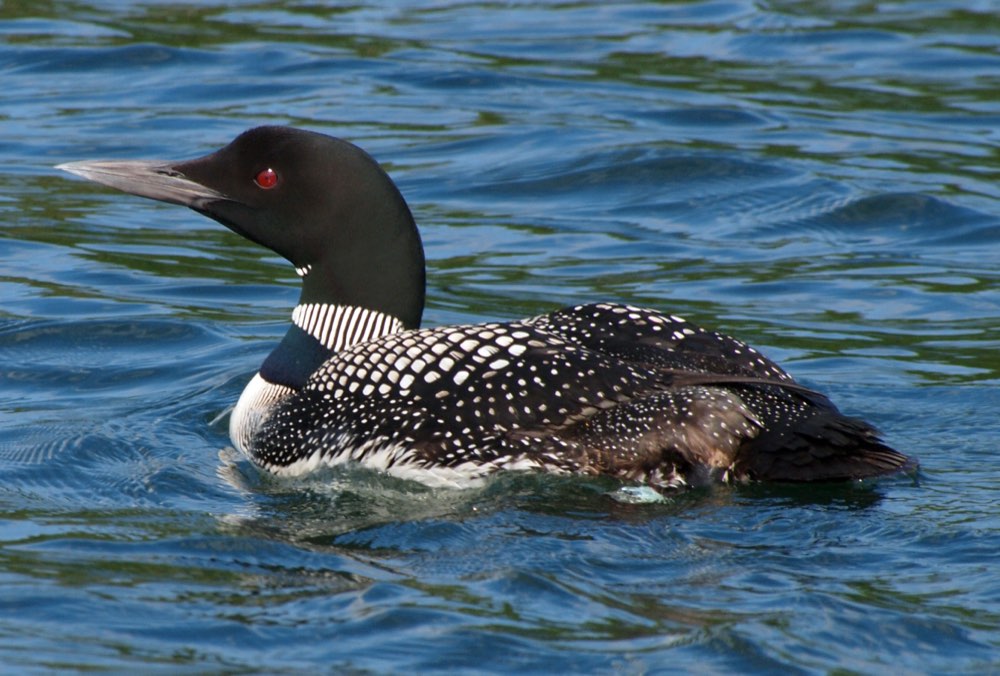
Black head with a green sheen, a striped neck collar, and a back checkered in black and white squares. Sexes look alike.
Female
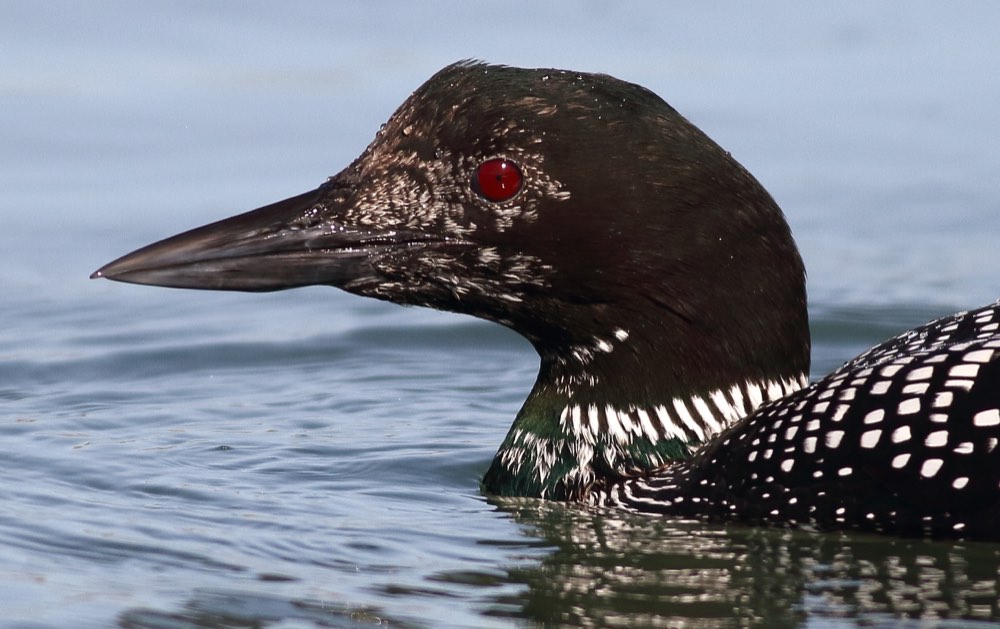
Identical to the male in the field, though usually smaller.
Male photo: John Picken from Chicago, USA / Wikimedia, CC BY 2.0 · Second photo: ADJ82 / Wikimedia, CC BY 4.0
Field marks
- Heavy straight dagger-shaped bill held level
- Checkerboard black-and-white back in summer
- Sits very low in the water
- Plain gray above and white below in winter
Similar species
What it sounds like
A long mournful wail, a laughing tremolo, and a complex rising yodel given only by males.
Behaviour that gives it away
Its bones are denser than most birds’, which reduces buoyancy for diving but means it needs a long running start across water to take off.
Habitat & range
Clear northern lakes in summer; coastal waters and large ice-free lakes in winter.
When you'll see it
Depending on where in North America you are, it is a summer visitor that arrives to breed, a winter visitor and a passage migrant, seen mainly in spring and autumn.
What it eats
Fish caught in underwater pursuit, plus crayfish and other aquatic animals.
Did you know?
Unlike most birds it has solid rather than hollow bones, which helps it dive but means it must patter across the surface for many yards to get airborne.
Spot one yourself?
Point your camera at any bird and Aviarist identifies it in seconds — then logs it to your life list.
Get Aviarist on Google Play
More backyard birds

_Portrait-1APR2017.jpg)
Other apps we make