How to Identify aRing-billed Gull
Larus delawarensis · 16.9–21.3 in (43–54 cm)
Male vs. female
Male
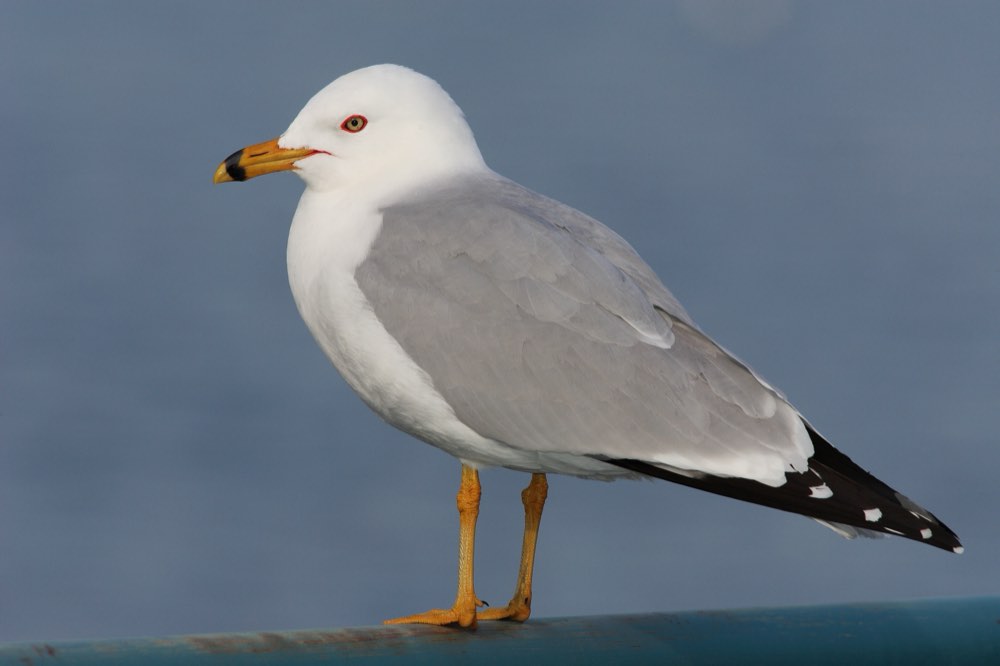
White head and body, pale gray back, black wingtips with white spots, yellow legs, and a clean black band around the yellow bill. Sexes look alike.
Female
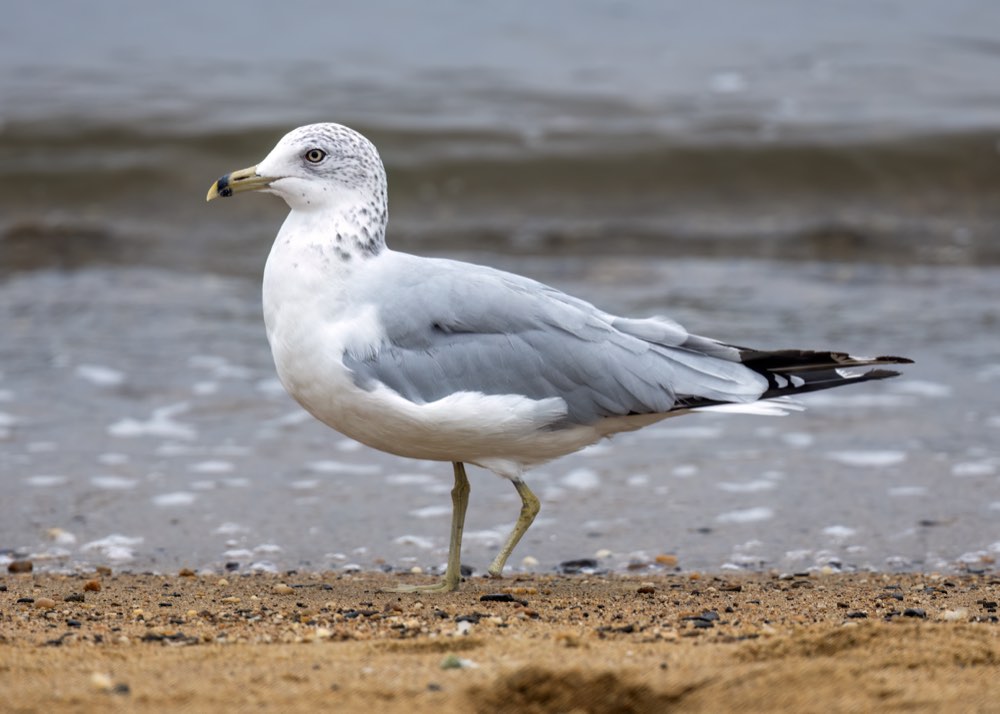
Identical to the male in the field, though slightly smaller.
Male photo: User:Mdf / Wikimedia, CC BY-SA 3.0 · Second photo: Polinova / Wikimedia, CC BY-SA 4.0
Field marks
- Neat black ring encircling a yellow bill
- Yellow legs, not pink
- Pale gray back with black wingtips
- Pale eye with a red orbital ring in breeding adults
Similar species
What it sounds like
A high squealing "kee-yow" and various raucous laughing calls.
Behaviour that gives it away
Thoroughly at home away from the coast, foraging in parking lots, ploughed fields and city parks far inland.
Habitat & range
Lakes, rivers, landfills, farm fields and shopping-centre parking lots across North America.
When you'll see it
Depending on where in North America you are, it is present all year and a winter visitor.
What it eats
Fish, insects, earthworms, grain, refuse and scraps.
Did you know?
It takes three years to reach adult plumage, so most winter flocks contain birds in several different-looking stages.
Spot one yourself?
Point your camera at any bird and Aviarist identifies it in seconds — then logs it to your life list.
Get Aviarist on Google Play
More backyard birds


Other apps we make