How to Identify aSandhill Crane
Antigone canadensis · 47.2 in (120 cm)
Male vs. female
Male
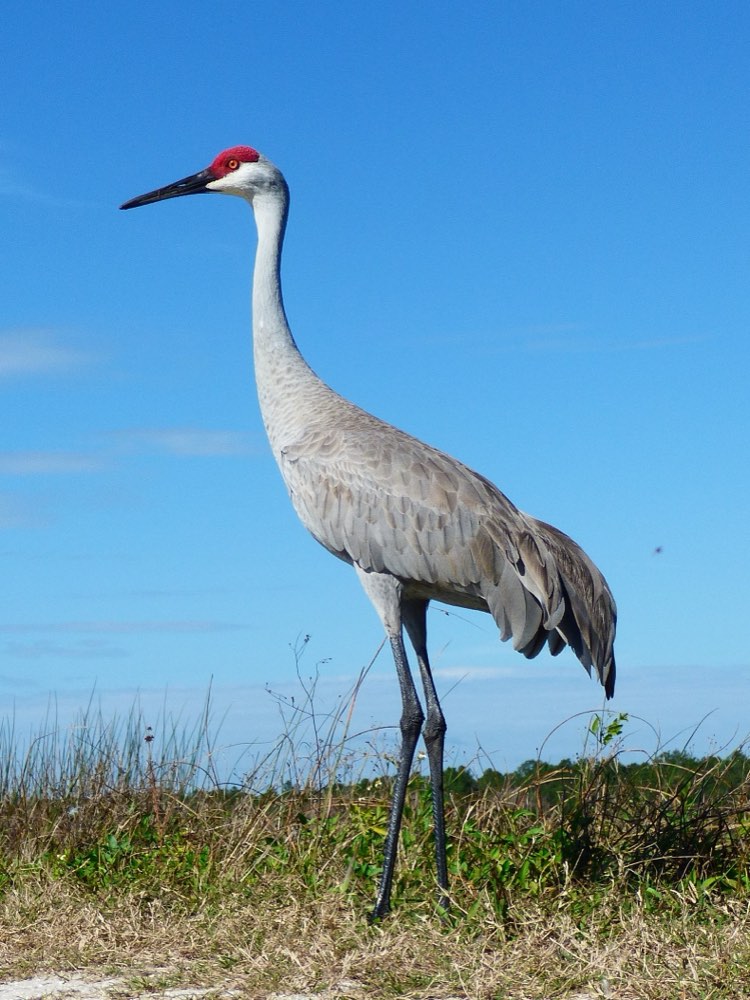
Slate-gray with a bare red forecrown, pale cheeks and a shaggy rear bustle; often stained rusty from preening with iron-rich mud. Sexes look alike.
Female
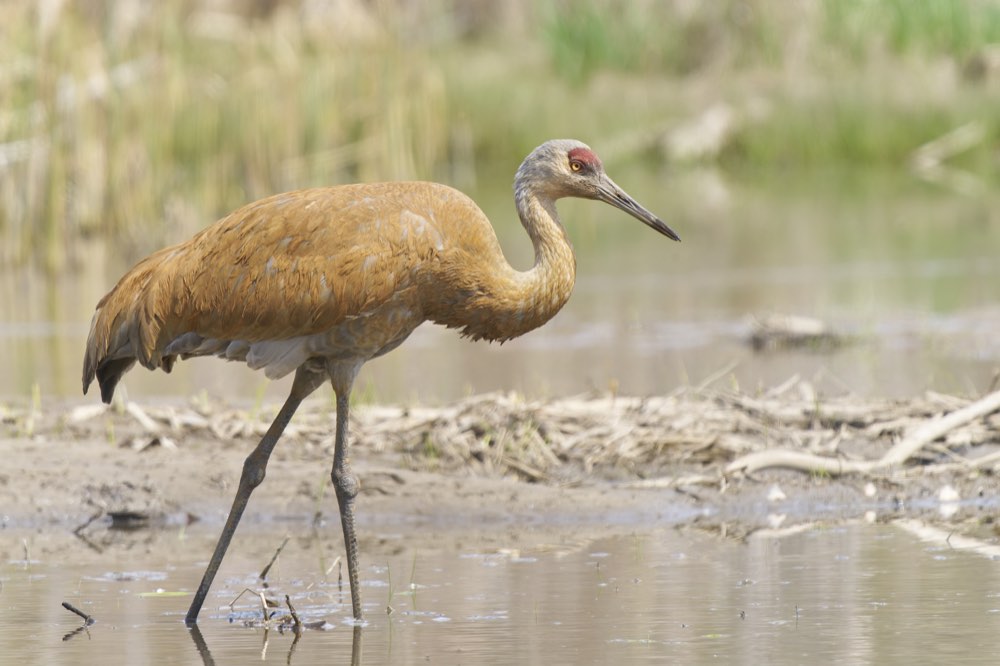
Identical to the male in the field, though slightly smaller.
Male photo: JeffreyGammon / Wikimedia, CC BY 4.0 · Second photo: Paul Danese / Wikimedia, CC BY-SA 4.0
Field marks
- Bare red patch on the forecrown
- Drooping feathered bustle over the rump
- Neck held straight out in flight, unlike a heron’s folded neck
- Very long dark legs trailing well past the tail
Similar species
What it sounds like
A loud, rolling, bugling rattle that carries for miles, often heard from birds too high to see.
Behaviour that gives it away
Pairs perform leaping dances with wings spread and heads thrown back, and stain their gray plumage rusty by deliberately preening with iron-rich mud.
Habitat & range
Marshes, wet meadows, prairies and harvested grain fields; famously gathers by the hundreds of thousands on the Platte River in spring.
When you'll see it
Depending on where in North America you are, it is a summer visitor that arrives to breed, a winter visitor and a passage migrant, seen mainly in spring and autumn.
What it eats
Grain, seeds, tubers, insects, snails and small vertebrates.
Did you know?
Fossil cranes almost indistinguishable from today’s birds date back millions of years, making it one of the oldest living bird lineages.
Spot one yourself?
Point your camera at any bird and Aviarist identifies it in seconds — then logs it to your life list.
Get Aviarist on Google Play
More backyard birds


Other apps we make