How to Identify aDouble-crested Cormorant
Nannopterum auritum · 28–35 in (70–90 cm)
Male vs. female
Male
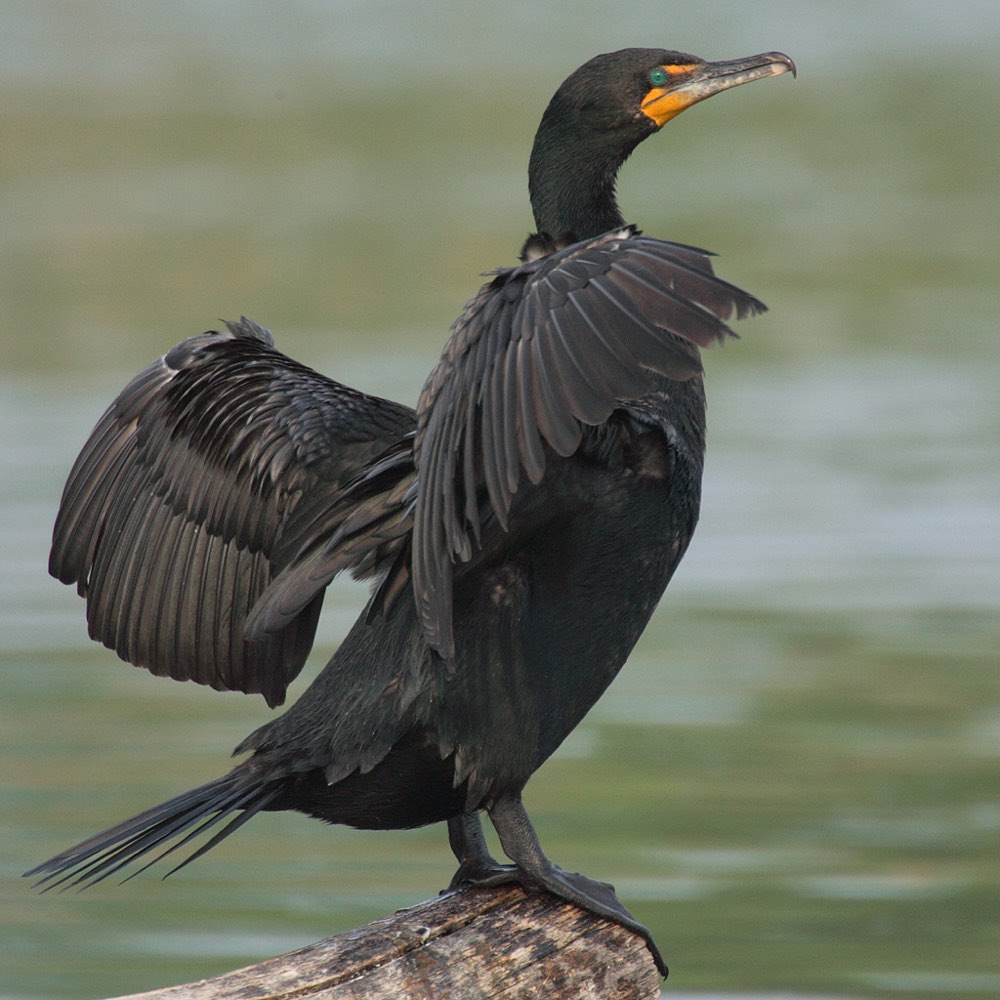
Blackish overall with a bare orange-yellow face and throat, a hooked bill and turquoise eyes. Sexes look alike.
Female
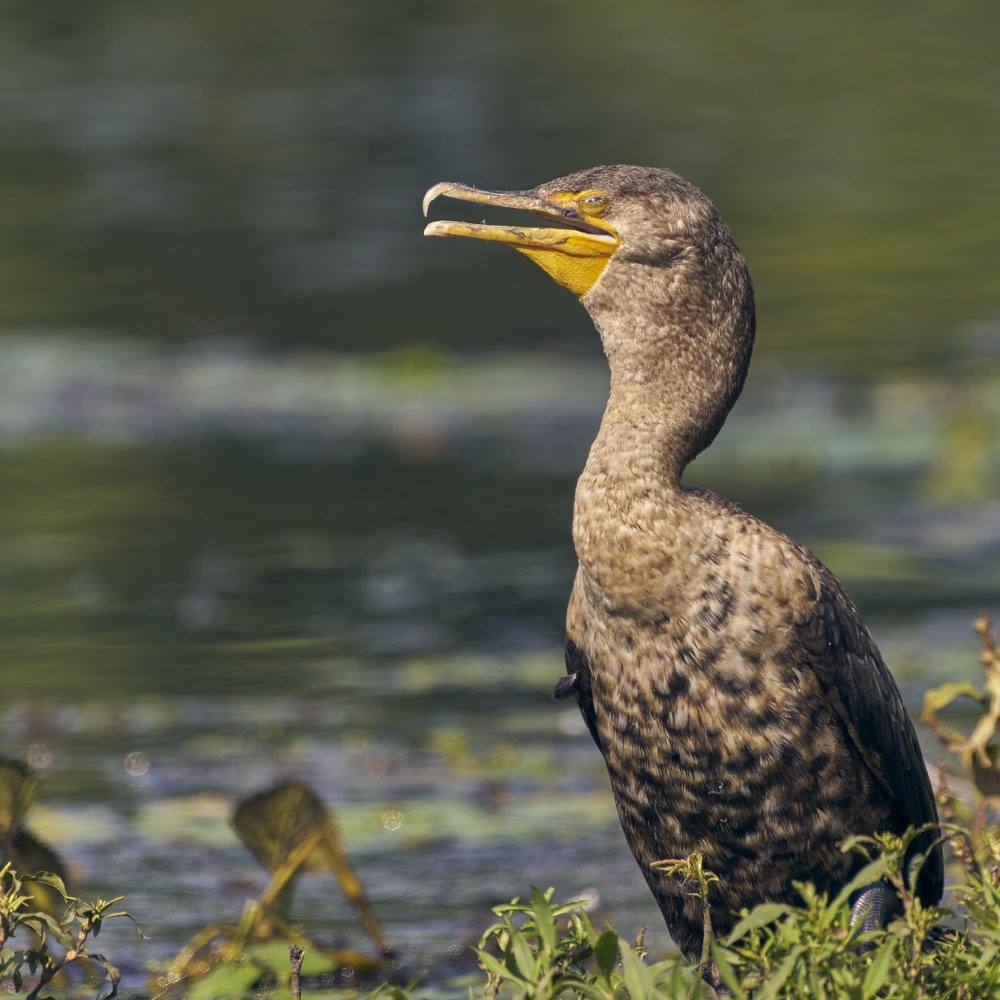
Identical to the male in the field.
Male photo: Mdf / Wikimedia, CC BY-SA 3.0 · Second photo: Paul Danese / Wikimedia, CC BY-SA 4.0
Field marks
- Bare orange-yellow throat patch
- Hook-tipped bill held slightly upward when swimming
- Sits very low in the water, often with only the neck showing
- Perches with wings held open to dry
Similar species
What it sounds like
Deep guttural grunts and croaks, mostly at colonies and roosts.
Behaviour that gives it away
Its feathers are only partly waterproof, which reduces buoyancy for underwater pursuit but forces it to perch with spread wings afterwards.
Habitat & range
Lakes, rivers, reservoirs, estuaries and coastlines across North America.
When you'll see it
Depending on where in North America you are, it is present all year and a summer visitor that arrives to breed.
What it eats
Fish caught in underwater pursuit, plus some crustaceans and amphibians.
Did you know?
Its partly wettable plumage is an adaptation for diving, and the familiar spread-wing pose is simply the bird drying off afterwards.
Spot one yourself?
Point your camera at any bird and Aviarist identifies it in seconds — then logs it to your life list.
Get Aviarist on Google Play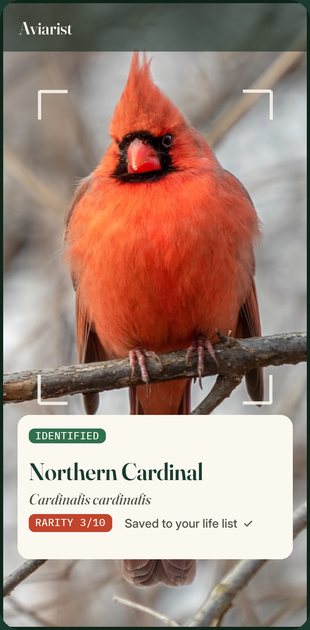
More backyard birds


Other apps we make