How to Identify aMallard
Anas platyrhynchos · 19.7–25.6 in (50–65 cm)
Male vs. female
Male
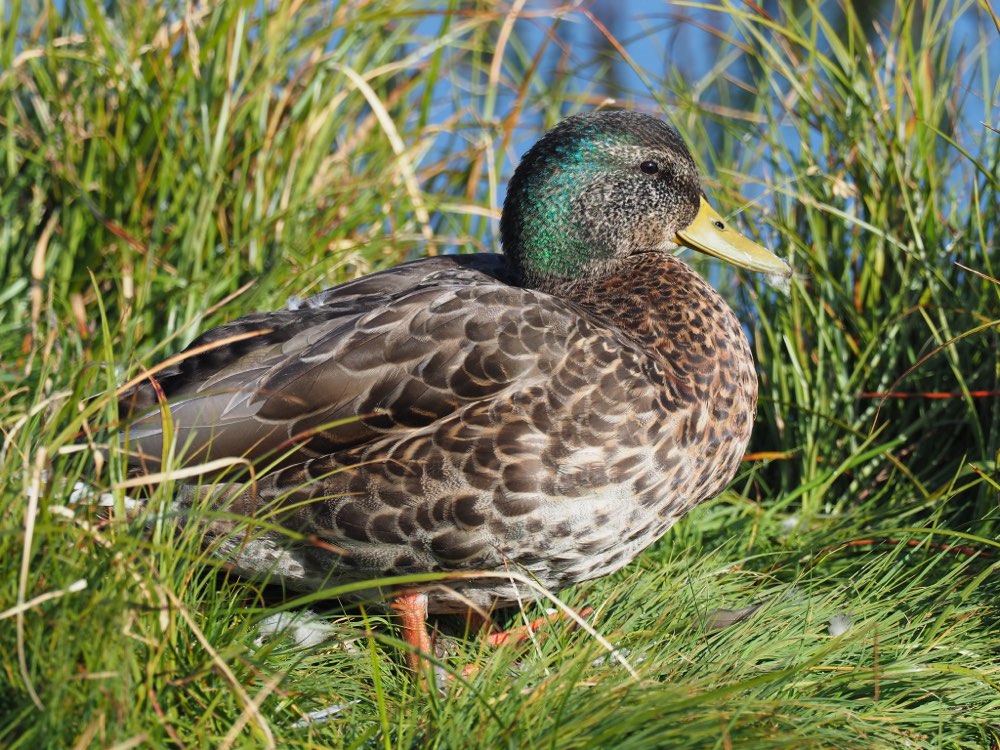
Glossy green head, white neck ring, chestnut breast, gray body, and a curl of black tail feathers.
Female
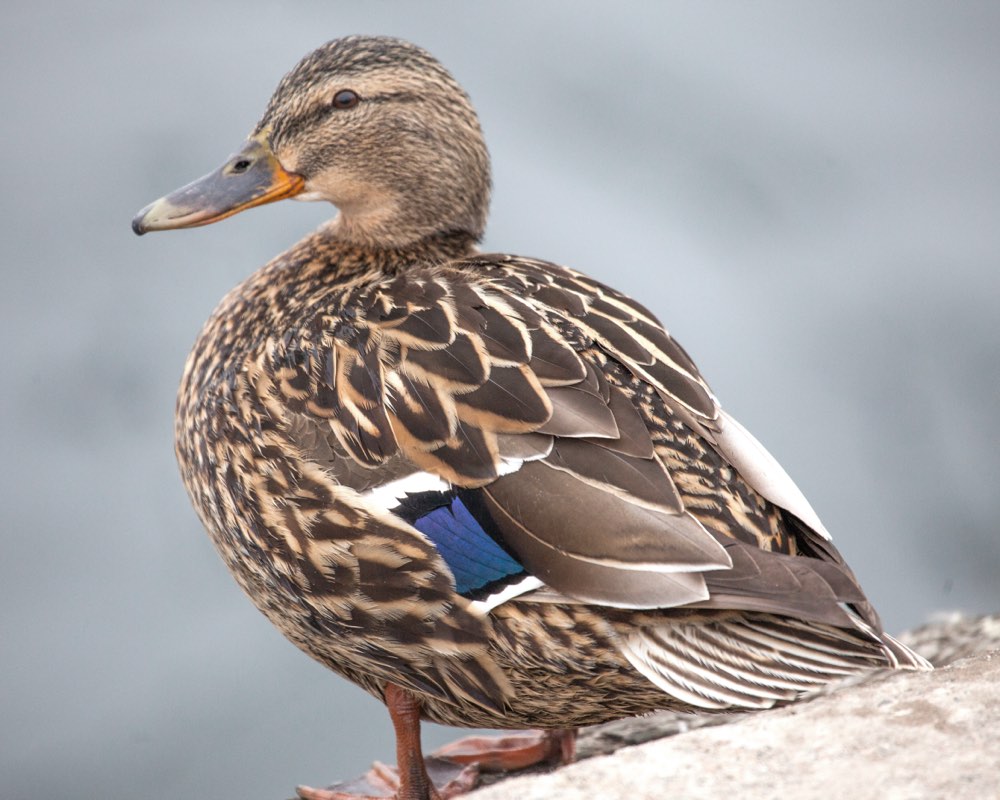
Mottled brown overall with an orange-and-black bill and a blue wing patch (speculum).
Male photo: earley_bird / Wikimedia, CC BY 4.0 · Female photo: Bengt Nyman / Wikimedia, CC BY 2.0
Field marks
- Drake's iridescent green head and yellow bill
- Hen mottled brown with an orange bill
- Blue speculum bordered in white on the wing
- Curled black central tail feathers on drakes
Similar species
What it sounds like
The loud descending "quack" everyone knows is the female; the male gives a quieter rasping note.
Behaviour that gives it away
Feeds by dabbling — tipping forward with its tail in the air — rather than diving.
Habitat & range
Ponds, lakes, marshes, and city parks across nearly all of North America.
When you'll see it
Present all year in North America.
What it eats
Aquatic plants, seeds, and invertebrates; dabbles and tips up in shallow water.
Did you know?
Nearly all domestic ducks descend from the Mallard, which readily hybridizes with other ducks.
Spot one yourself?
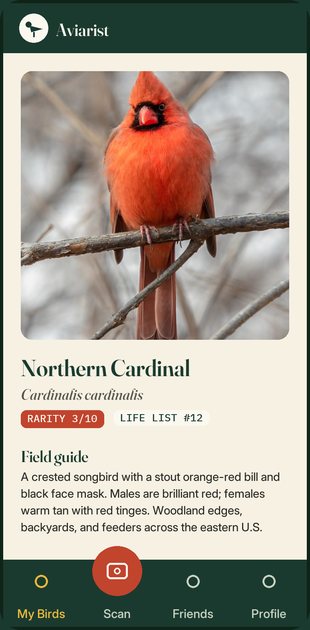
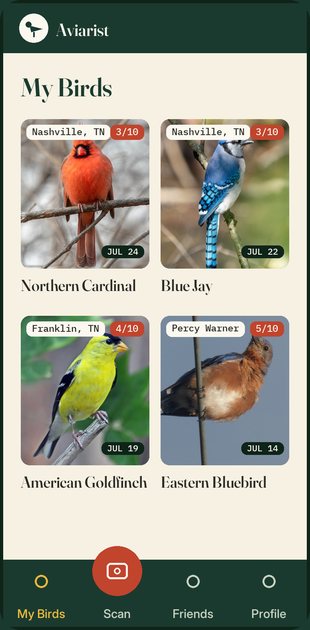
Point your camera at any bird and Aviarist identifies it in seconds — then logs it to your life list.
Get Aviarist on Google Play
More backyard birds


Other apps we make