How to Identify aWinter Wren
Troglodytes hiemalis · 3.1–4.7 in (8–12 cm)
Male vs. female
Male
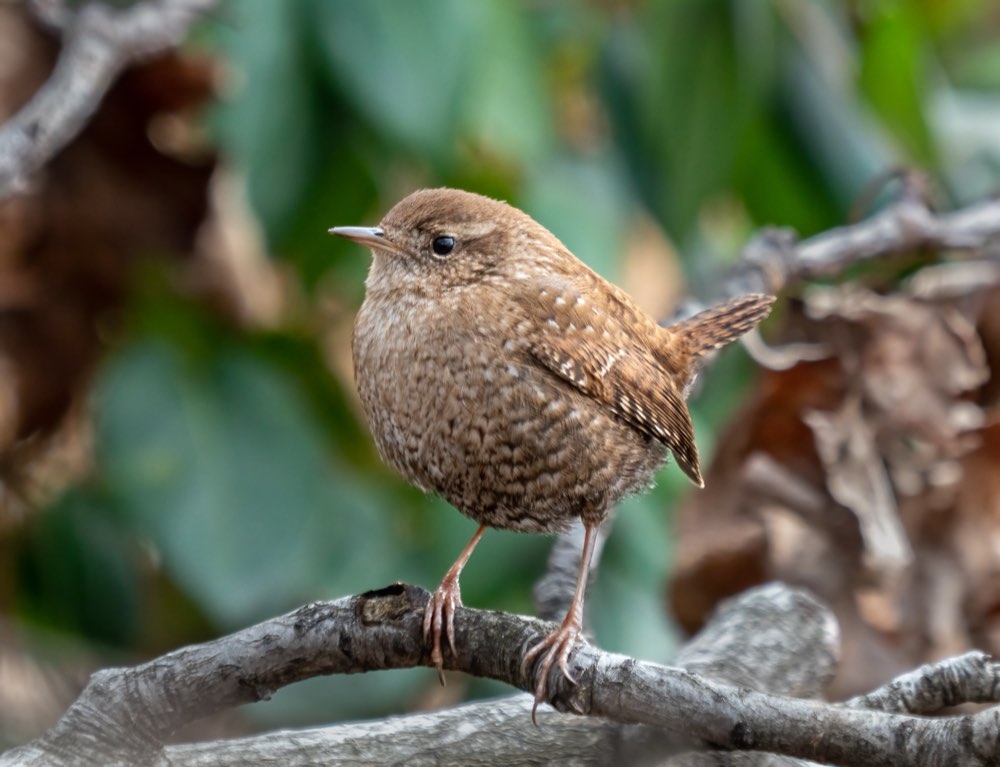
Very dark rich brown, heavily barred on the belly and flanks, with a stubby tail held sharply upright. Sexes look alike.
Female
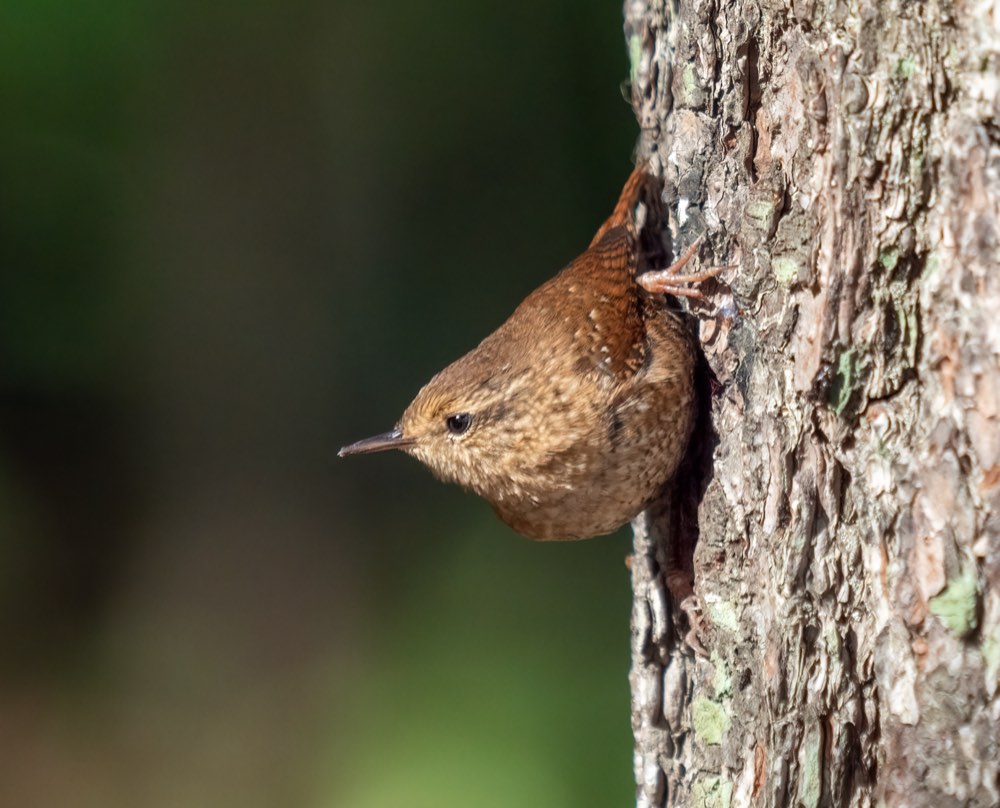
Identical to the male in the field.
Male photo: Rhododendrites / Wikimedia, CC BY-SA 4.0 · Second photo: Rhododendrites / Wikimedia, CC BY-SA 4.0
Field marks
- Extremely short tail cocked almost vertically
- Dark brown with heavy barring on the flanks
- Tiny, round, almost neckless shape
- Faint pale eyebrow
Similar species
What it sounds like
An astonishingly long, rapid cascade of tinkling trills lasting five to ten seconds without a pause.
Behaviour that gives it away
Creeps through root tangles and fallen logs like a mouse, and often disappears into a hole rather than flying away.
Habitat & range
Damp mature forest with fallen logs and root tangles, especially along streams.
When you'll see it
Depending on where in eastern and northern North America you are, it is present all year and a winter visitor.
What it eats
Insects and spiders taken from crevices, roots and leaf litter.
Did you know?
For its size its song is one of the most powerful of any bird, delivered with roughly ten times the power per ounce of a crowing rooster.
Spot one yourself?
Point your camera at any bird and Aviarist identifies it in seconds — then logs it to your life list.
Get Aviarist on Google Play
More backyard birds
.jpg)
.jpg)
Other apps we make