How to Identify aSwainson's Thrush
Catharus ustulatus · 6.3–7.5 in (16–19 cm)
Male vs. female
Male
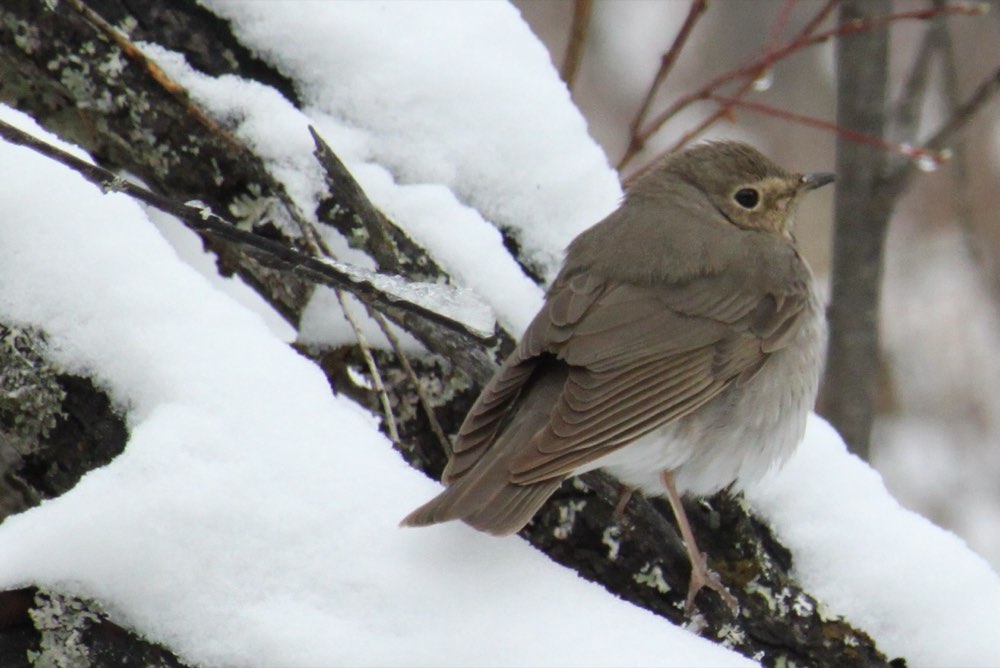
Olive-brown above with no rusty contrast, buffy eye-ring and cheeks forming spectacles, and dark spots on a buff chest. Sexes look alike.
Female
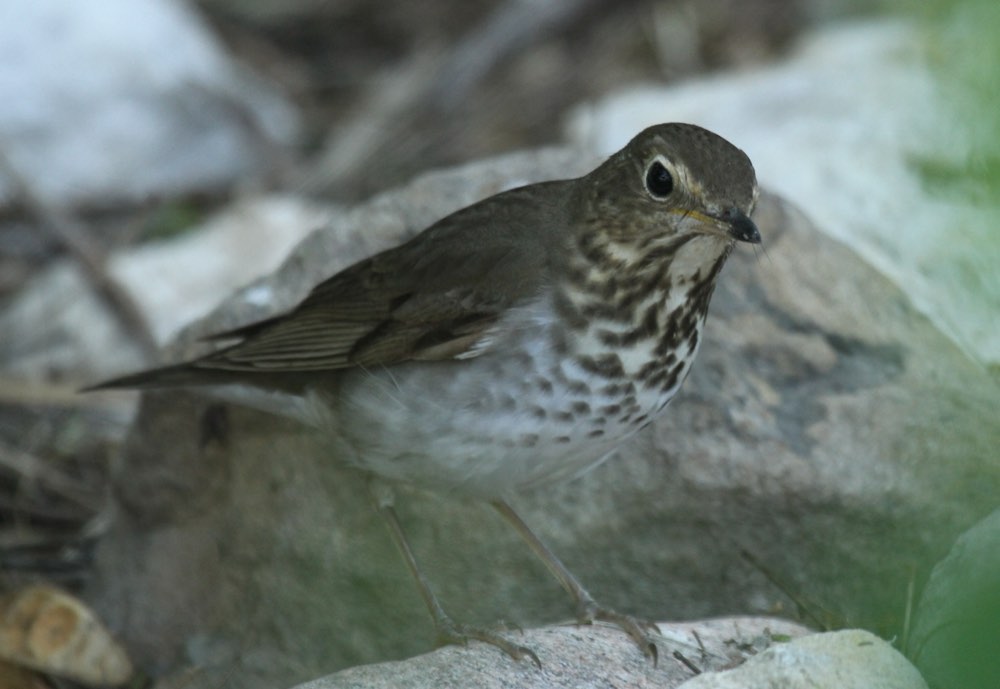
Identical to the male in the field.
Male photo: Gerry from Fort St. John, BC, Canada / Wikimedia, CC BY-SA 2.0 · Second photo: TonyCastro / Wikimedia, CC BY-SA 4.0
Field marks
- Buffy eye-ring joining a buff cheek to form spectacles
- Uniform olive-brown upperparts with no rusty tail
- Buff wash across a spotted chest
- Upright thrush posture on the forest floor
Similar species
What it sounds like
A flute-like song of rising spiralling phrases, each one climbing higher than the last.
Behaviour that gives it away
Migrates at night, and its soft "queep" flight call is one of the commonest sounds overhead on autumn nights.
Habitat & range
Damp conifer and mixed forest in summer; all wooded habitats on migration.
When you'll see it
Depending on where in North America you are, it is a summer visitor that arrives to breed and a passage migrant, seen mainly in spring and autumn.
What it eats
Insects taken from the ground and foliage, plus fruit in late summer.
Did you know?
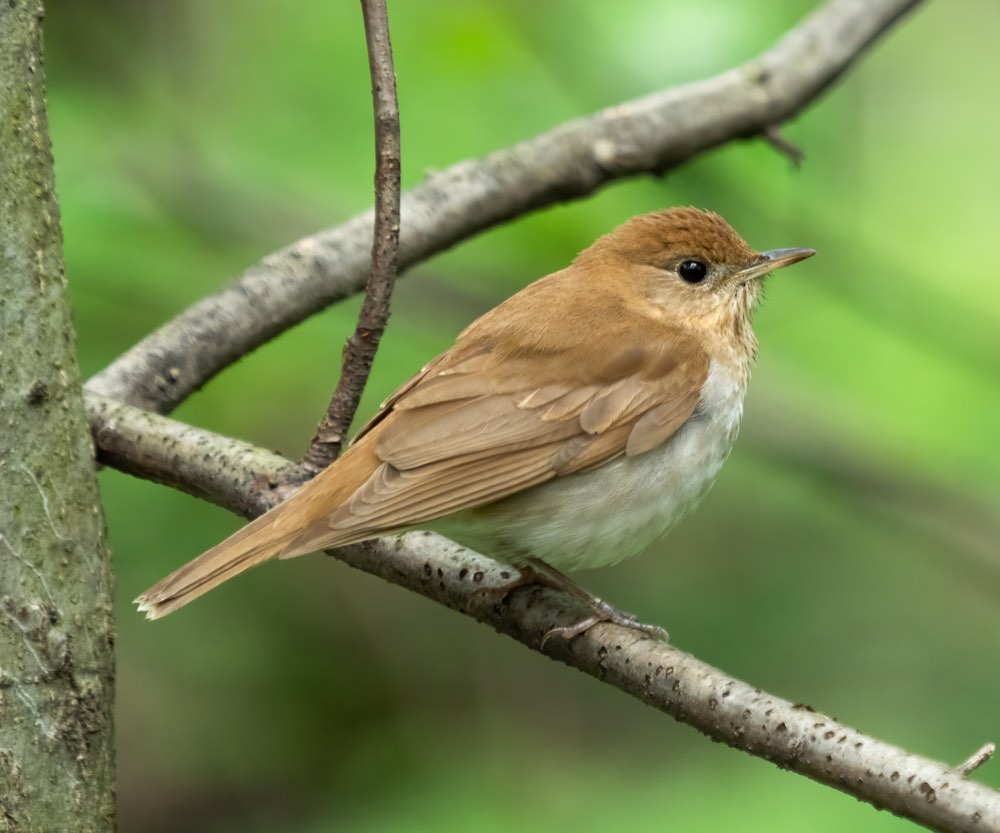
Its song spirals upward in pitch, the reverse of the Veery’s, which spirals down.
Spot one yourself?
Point your camera at any bird and Aviarist identifies it in seconds — then logs it to your life list.
Get Aviarist on Google Play
More backyard birds


Other apps we make