How to Identify aMountain Bluebird
Sialia currucoides · 6.3–7.9 in (16–20 cm)
Male vs. female
Male
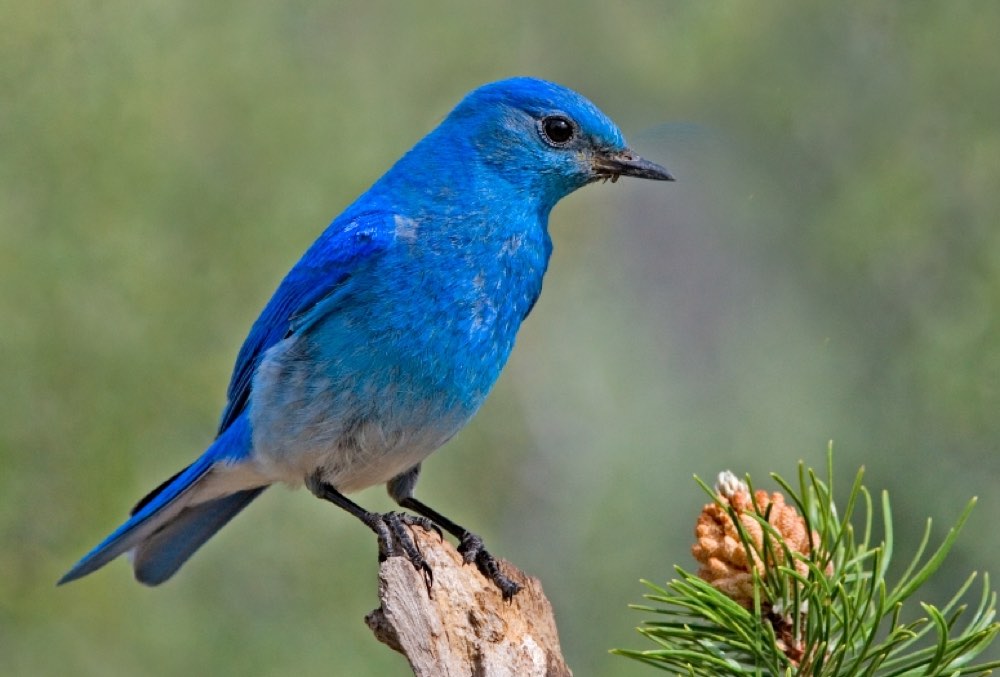
Brilliant turquoise-blue above and paler blue below, fading to white on the belly, with no rusty tones at all.
Female
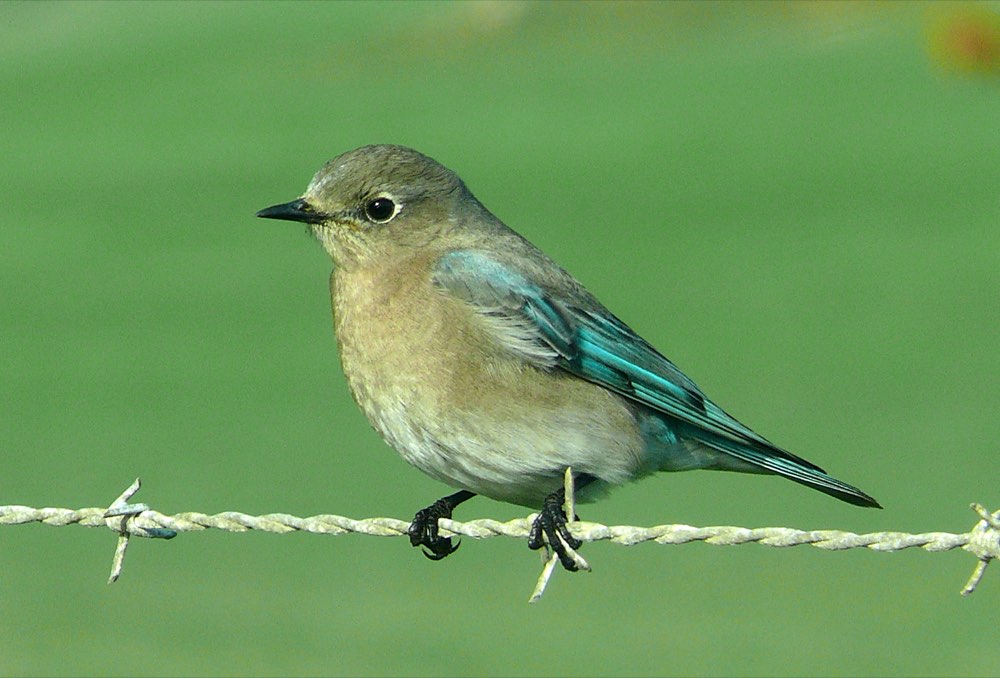
Gray-brown with blue confined to the wings and tail, and a faint pale eye-ring.
Male photo: Elaine R. Wilson / Wikimedia, CC BY-SA 2.5 · Female photo: Linda Tanner from Los Osos, California, U.S.A. / Wikimedia, CC BY 2.0
Field marks
- Entirely blue male with no orange or rust
- Slimmer and longer-winged than other bluebirds
- Often hovers above open ground before dropping
- White lower belly and undertail
Similar species
What it sounds like
A soft, low, warbled "tru-lee", quieter and thinner than other bluebirds.
Behaviour that gives it away
Hovers over open ground like a small kestrel before dropping on insects, rather than watching from a perch.
Habitat & range
Open mountain meadows, sagebrush, high plains and burned forest across the West.
When you'll see it
Depending on where in western North America you are, it is present all year and a summer visitor that arrives to breed.
What it eats
Insects taken from the air and ground, plus berries in winter.
Did you know?
It nests at higher elevations than any other North American bluebird, up to the edge of the alpine zone.
Spot one yourself?
Point your camera at any bird and Aviarist identifies it in seconds — then logs it to your life list.
Get Aviarist on Google Play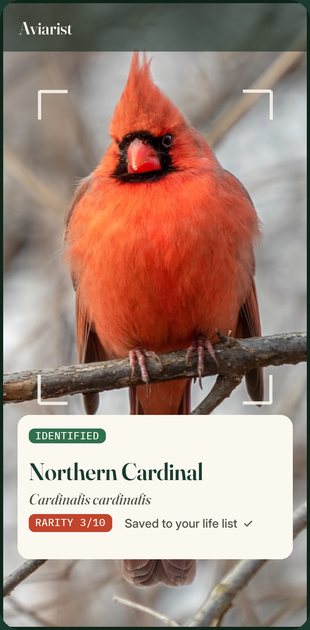
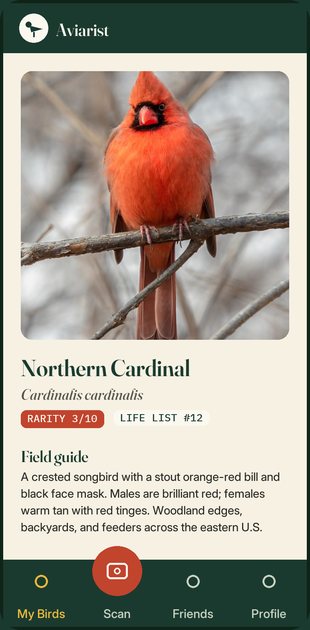
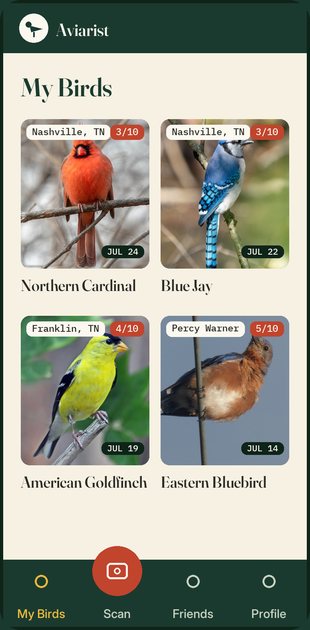
More backyard birds
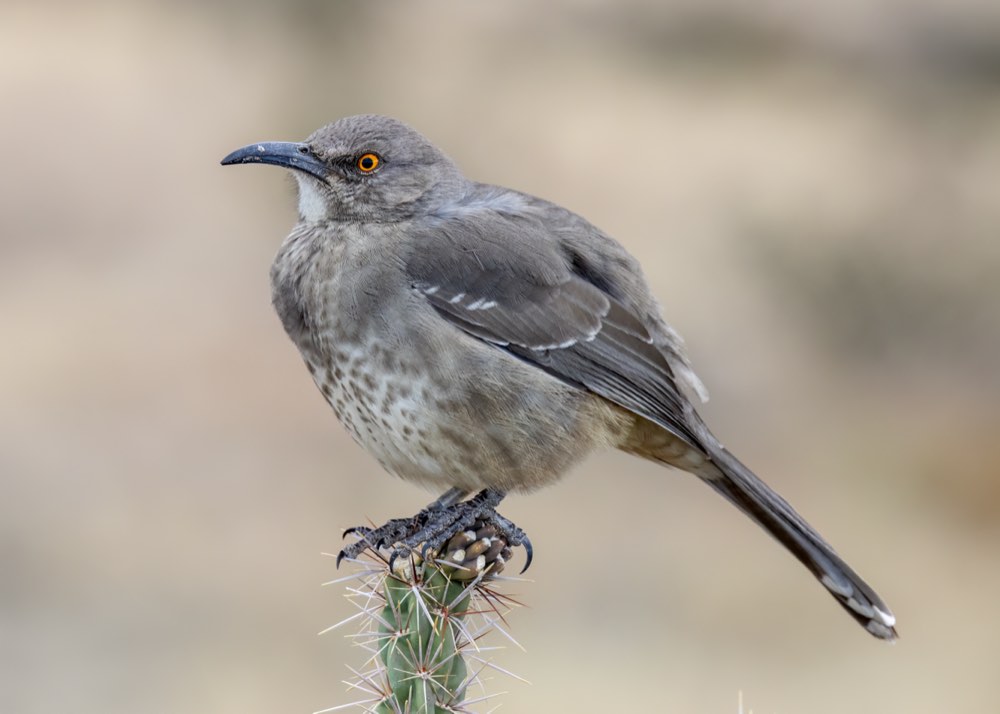


Other apps we make