How to Identify aVeery
Catharus fuscescens · 6.7–7.1 in (17–18 cm)
Male vs. female
Male
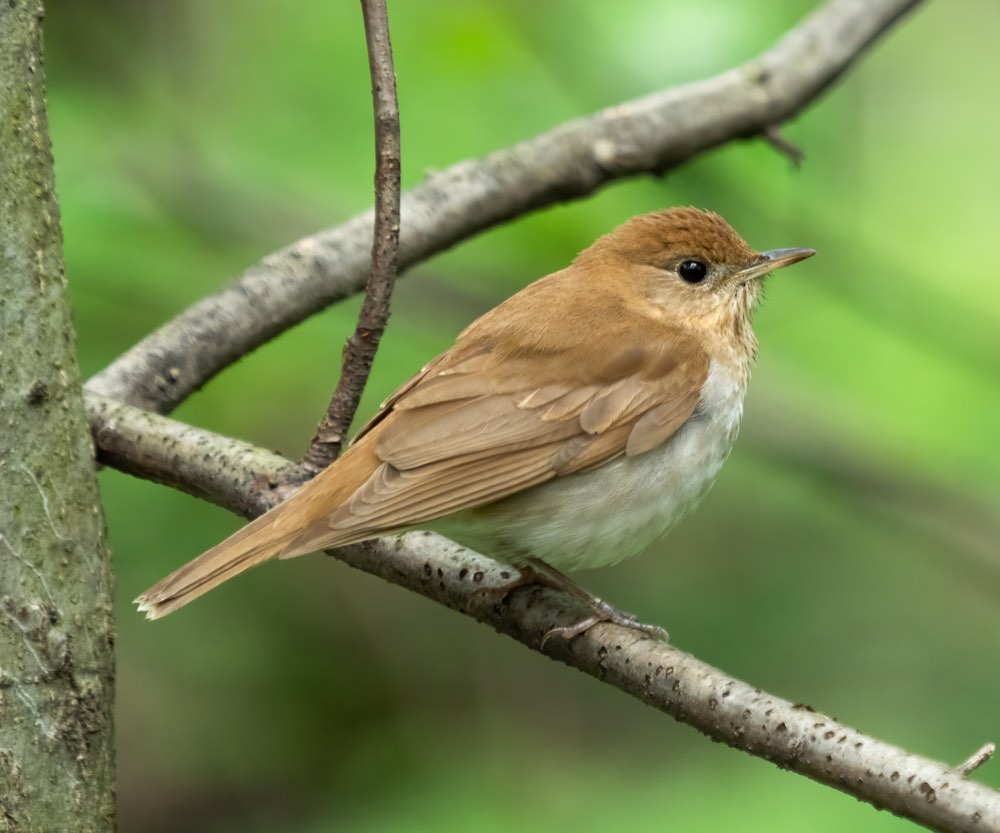
Uniform warm cinnamon-brown above, white below with faint blurry brownish spots limited to the upper chest. Sexes look alike.
Female
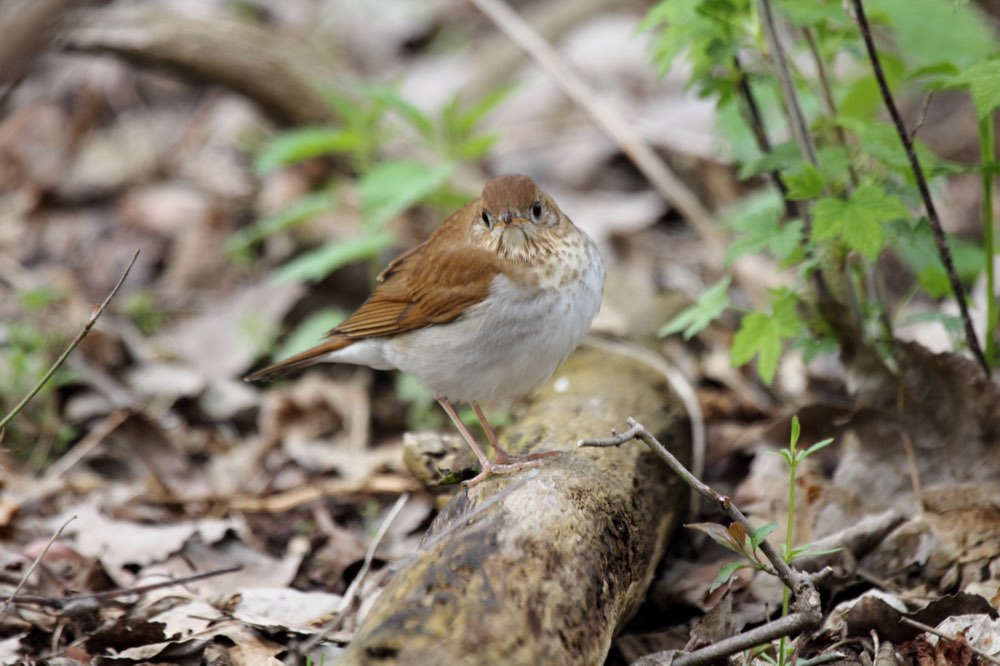
Identical to the male in the field.
Male photo: Rhododendrites / Wikimedia, CC BY-SA 4.0 · Second photo: Dominic Sherony / Wikimedia, CC BY-SA 2.0
Field marks
- Faint, blurry, indistinct chest spots
- Uniform warm reddish-brown upperparts
- Almost no eye-ring
- Gray wash along the flanks
Similar species
What it sounds like
A breezy, downward-spiralling series of flute-like notes, as though the bird were singing into a well.
Behaviour that gives it away
Sings a downward spiral by producing two notes at once with the two halves of its syrinx, harmonising with itself.
Habitat & range
Damp deciduous forest with dense understorey, often near streams, across the Northeast.
When you'll see it
Depending on where in eastern, northern and central North America you are, it is a summer visitor that arrives to breed and a passage migrant, seen mainly in spring and autumn.
What it eats
Insects taken from the leaf litter, plus fruit in late summer.
Did you know?
Its ethereal downward-spiralling song is produced by harmonising with itself, using both halves of its vocal organ at once.
Spot one yourself?
Point your camera at any bird and Aviarist identifies it in seconds — then logs it to your life list.
Get Aviarist on Google Play
More backyard birds
.jpg)
_(15226210689).jpg)
Other apps we make