How to Identify aCurve-billed Thrasher
Toxostoma curvirostre · 10.6–11 in (27–28 cm)
Male vs. female
Male
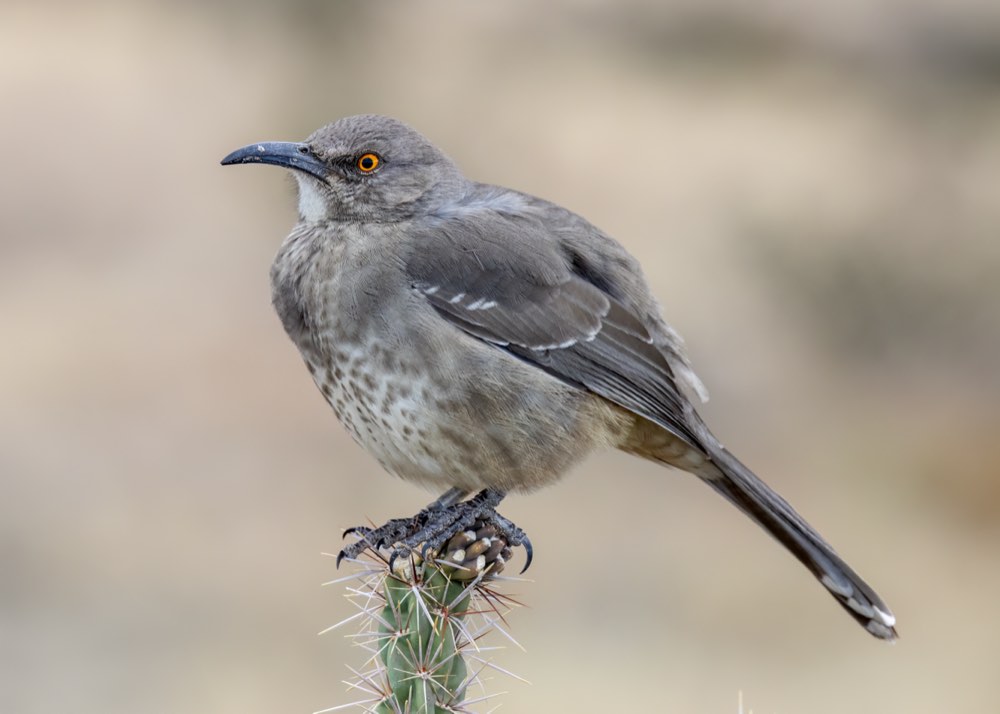
Gray-brown overall with soft blurry spotting on the chest, a long strongly curved black bill and orange-yellow eyes. Sexes look alike.
Female
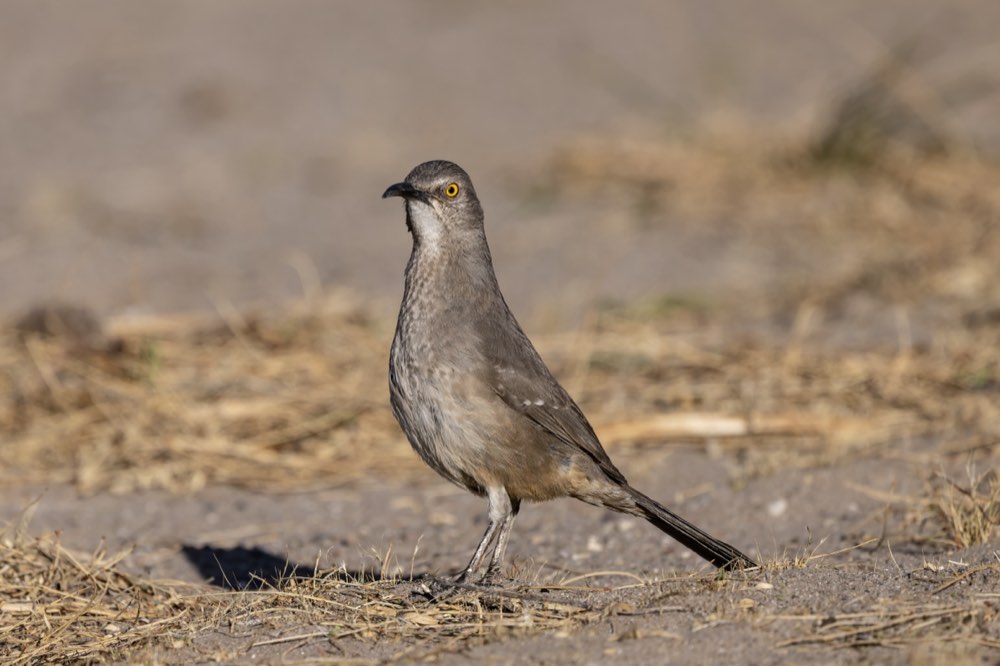
Identical to the male in the field.
Male photo: Polinova / Wikimedia, CC BY-SA 4.0 · Second photo: Chuck Homler d/b/a Focus On Wildlife / Wikimedia, CC BY-SA 4.0
Field marks
- Long, heavy, distinctly downcurved bill
- Bright orange or yellow eye
- Faint blurry chest spots on plain gray-brown
- Pale wing bars and white tail corners
Similar species
What it sounds like
A sharp, liquid, whistled "whit-WHEET!" like someone whistling for a dog.
Behaviour that gives it away
Digs and flicks through desert soil and leaf litter with sideways sweeps of its curved bill.
Habitat & range
Desert scrub, cholla and mesquite country, and desert suburbs of the Southwest.
When you'll see it
Present all year in southwestern North America.
What it eats
Insects dug from soil, plus cactus fruit, berries and seeds.
Did you know?
Its sharp two-note whistle is one of the most recognisable sounds of the Sonoran Desert, and it readily answers a human imitation.
Spot one yourself?
Point your camera at any bird and Aviarist identifies it in seconds — then logs it to your life list.
Get Aviarist on Google Play
More backyard birds

_in_Picacho_Hills,_Las_Cruces,_New_Mexico,_USA.jpg)
Other apps we make