How to Identify aHouse Wren
Troglodytes aedon · 4.3–5.1 in (11–13 cm)
Male vs. female
Male
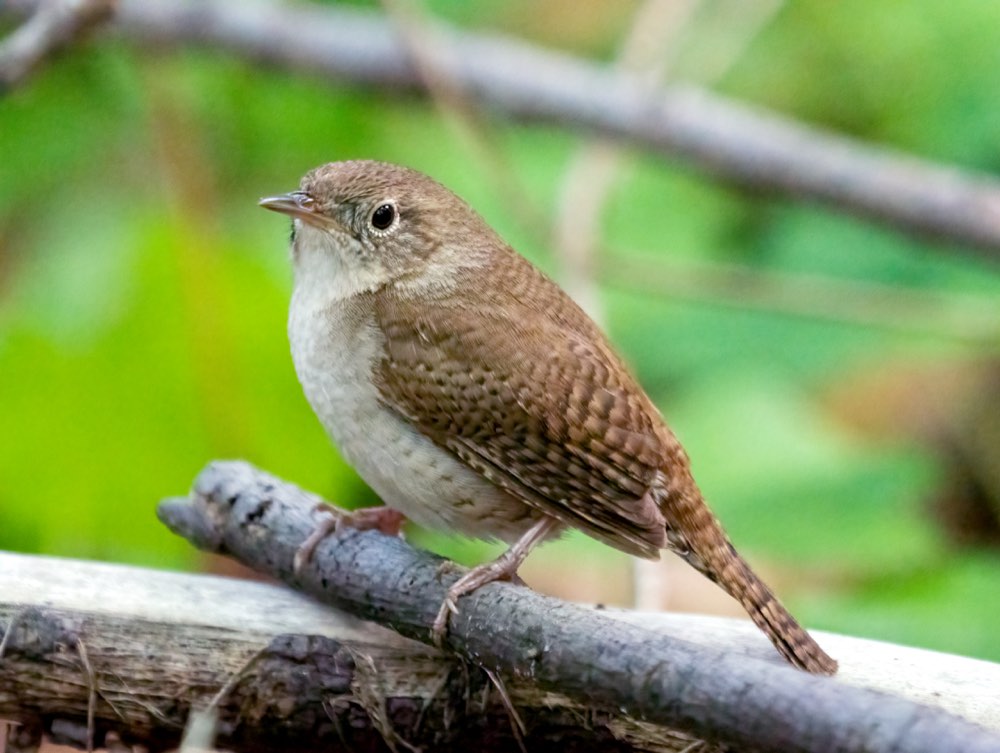
Warm grayish-brown overall with fine dark barring on the wings and tail and a faint pale eyebrow.
Female
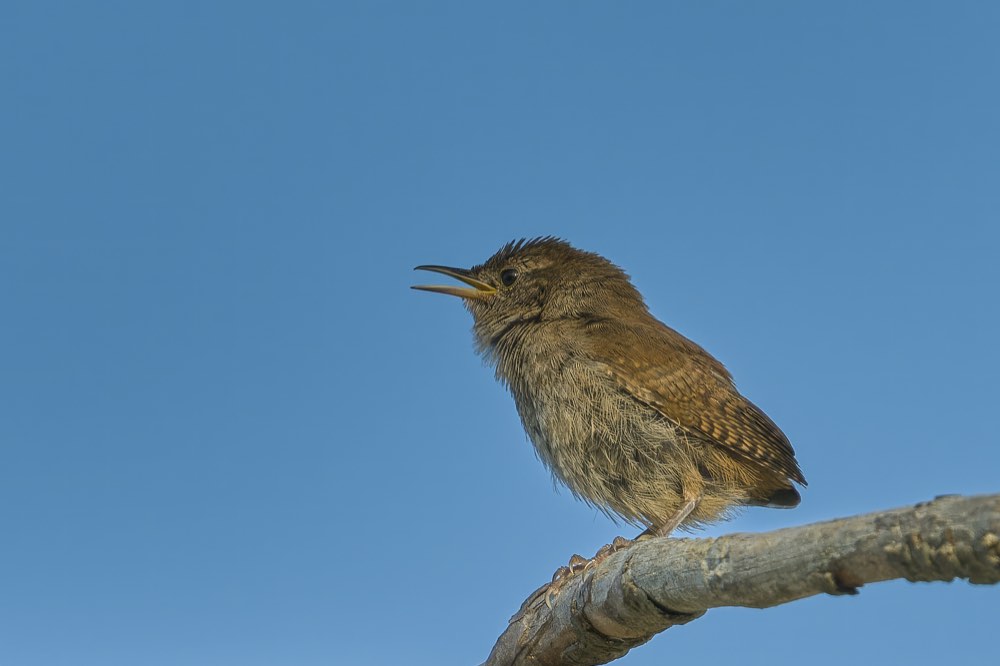
Identical to the male in the field.
Male photo: Rhododendrites / Wikimedia, CC BY-SA 4.0 · Second photo: Paul Danese / Wikimedia, CC BY-SA 4.0
Field marks
- Small, plain brown, and short-billed
- Fine dark barring on wings and tail
- Tail often cocked upward
- Faint, indistinct eyebrow
Similar species
What it sounds like
A long, bubbling, rushing cascade of chattering notes, delivered at great speed.
Behaviour that gives it away
Fills every available cavity in its territory with sticks, and will puncture the eggs of nearby competing birds.
Habitat & range
Brushy yards, gardens, woodland edges, and nest boxes across most of North America in summer.
When you'll see it
A summer visitor that arrives to breed in North America.
What it eats
Insects and spiders gleaned from shrubs and brush piles.
Did you know?
For its size it's fiercely competitive, sometimes puncturing the eggs of rival cavity-nesters.
Spot one yourself?
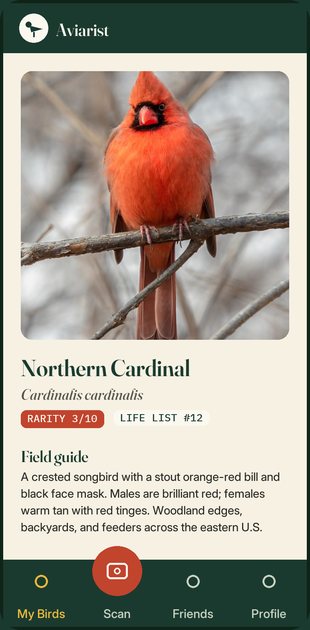
Point your camera at any bird and Aviarist identifies it in seconds — then logs it to your life list.
Get Aviarist on Google Play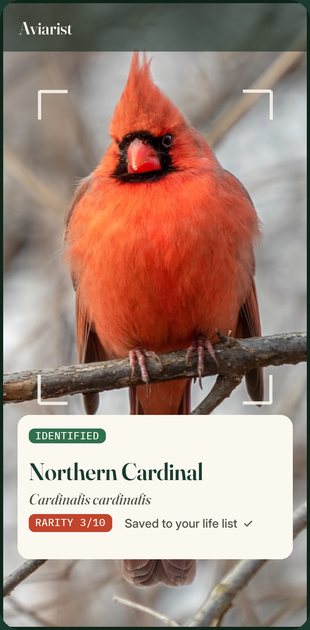
More backyard birds
.jpg)

Other apps we make