How to Identify aWestern Meadowlark
Sturnella neglecta · 6.3–10.2 in (16–26 cm)
Male vs. female
Male
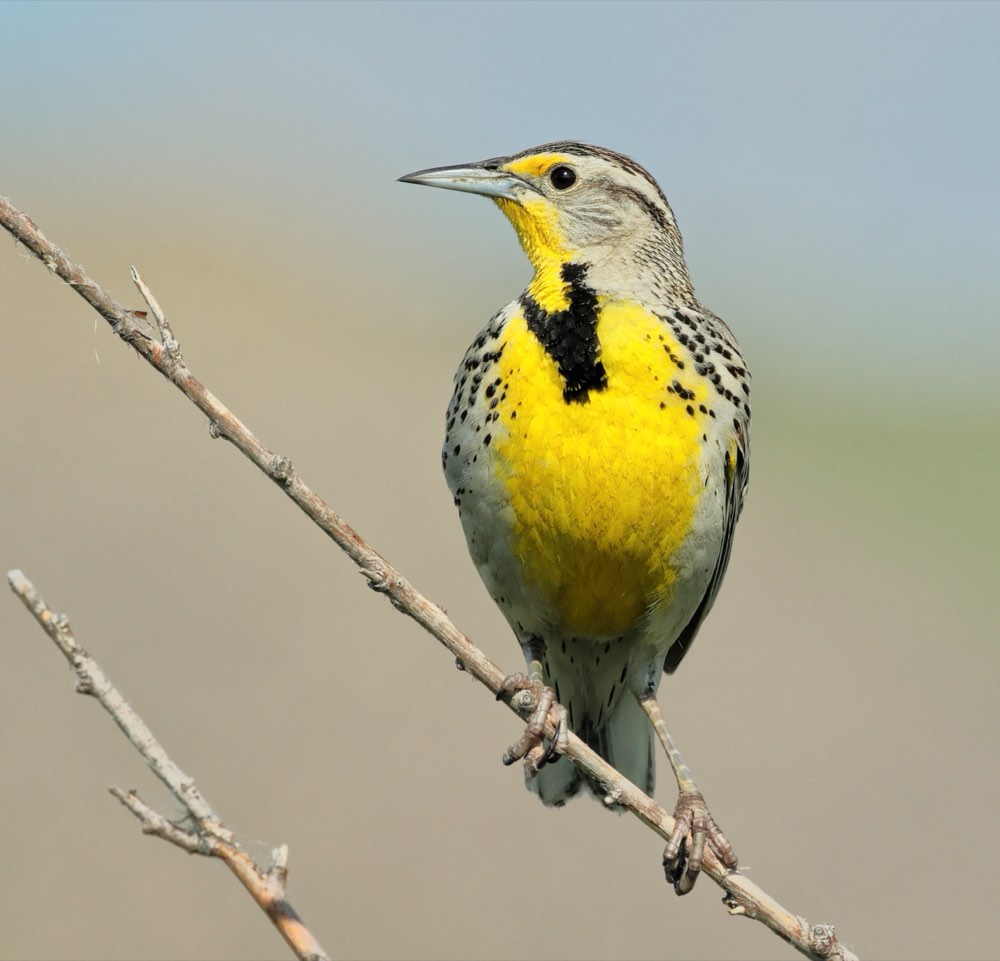
Bright yellow underparts with a black V, cryptic streaked brown back, and yellow reaching onto the cheek.
Female
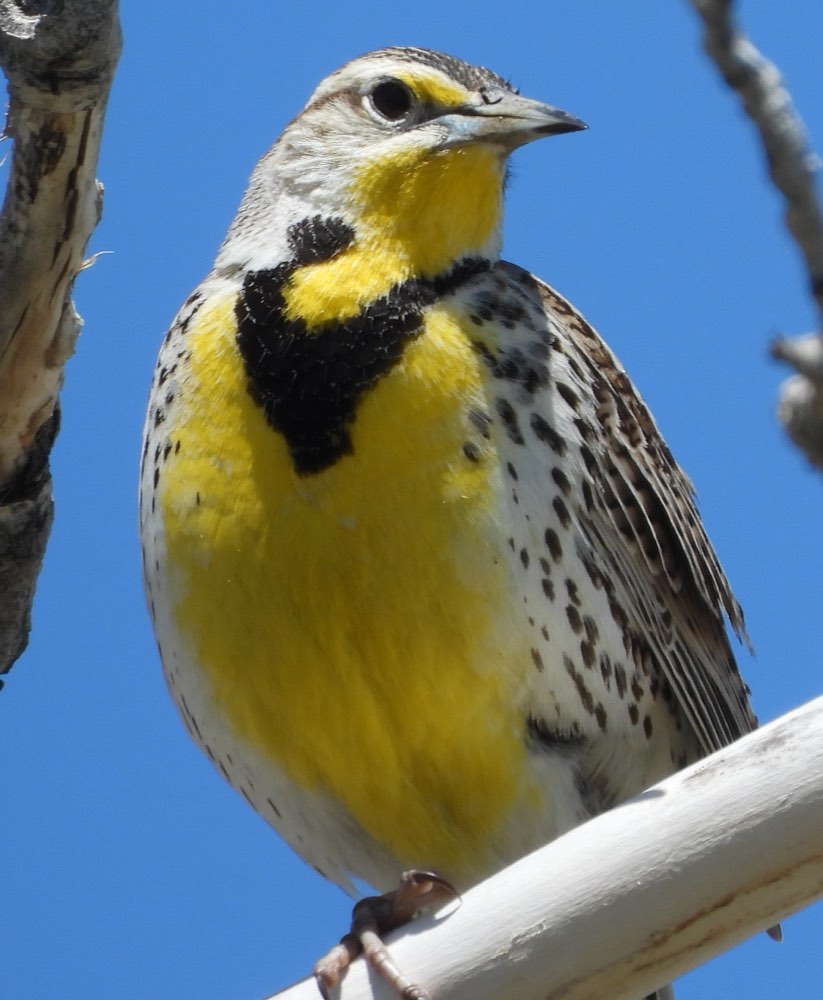
Similar but duller with a narrower and less defined chest band.
Male photo: Cephas / Wikimedia, CC BY-SA 4.0 · Second photo: Tumbleweed1954 / Wikimedia, CC0
Field marks
- Yellow extending onto the cheek below the eye
- Black V across a yellow chest
- White outer tail feathers flashing in flight
- Paler, greyer back than an Eastern Meadowlark
Similar species
What it sounds like
A rich, flute-like, bubbling gurgle that tumbles down the scale — quite unlike the Eastern’s clear whistles.
Behaviour that gives it away
Where the two meadowlarks overlap they defend territory against each other but rarely interbreed, kept apart mainly by song.
Habitat & range
Grassland, prairie, rangeland and farm fields across the western two-thirds of the continent.
When you'll see it
Depending on where in western, central and southwestern North America you are, it is present all year and a summer visitor that arrives to breed.
What it eats
Insects, especially grasshoppers and beetles, plus seeds and grain.
Did you know?
Audubon gave it the name neglecta because earlier naturalists crossing the West had overlooked it entirely, assuming it was the eastern bird.
Spot one yourself?
Point your camera at any bird and Aviarist identifies it in seconds — then logs it to your life list.
Get Aviarist on Google Play
More backyard birds


Other apps we make