How to Identify aEastern Meadowlark
Sturnella magna · 7.5–10.2 in (19–26 cm)
Male vs. female
Male
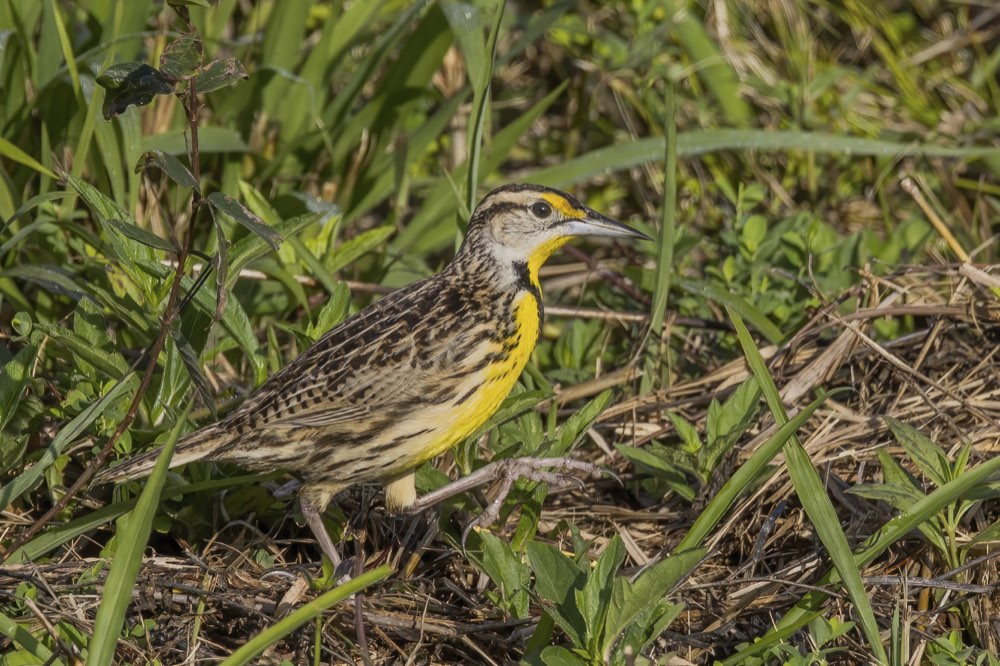
Bright yellow underparts with a bold black V across the chest, cryptic brown-streaked back, white outer tail feathers.
Female
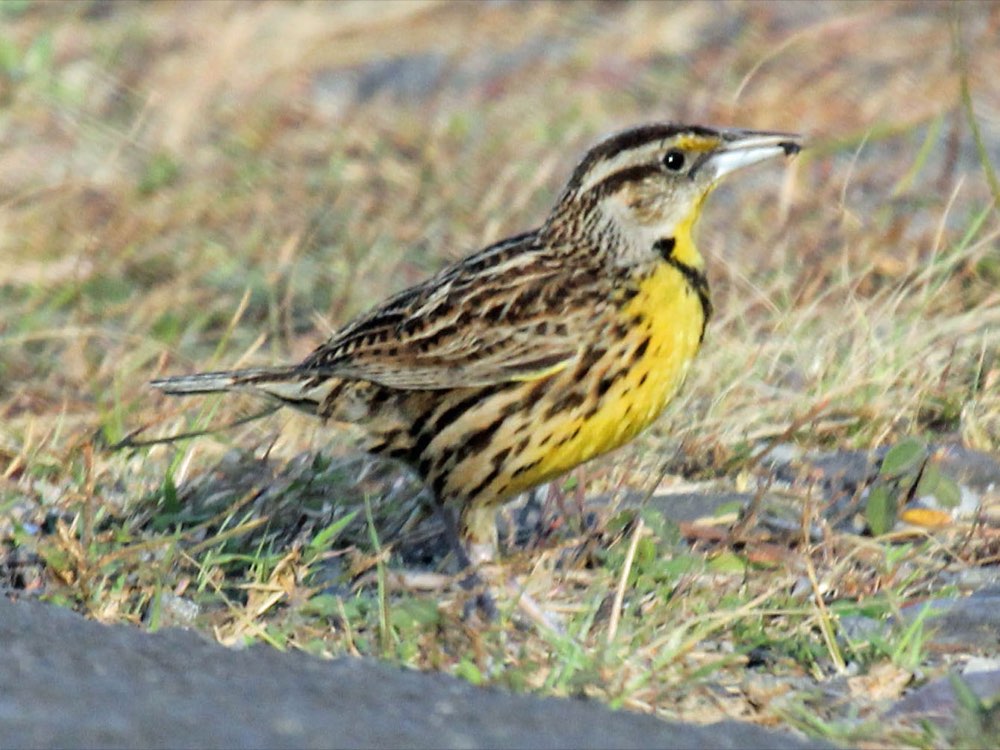
Same pattern but slightly duller, with a narrower and less crisp black chest band.
Male photo: Charles J. Sharp / Wikimedia, CC BY-SA 4.0 · Second photo: DickDaniels (http://theworldbirds.org/) / Wikimedia, CC BY-SA 3.0
Field marks
- Black V band across a yellow breast
- Streaked brown back that vanishes against dead grass
- White outer tail feathers flashing in flight
- Long pointed bill and short tail
Similar species
What it sounds like
A clear, mournful slurred whistle of three or four notes, often written as "spring-of-the-year".
Behaviour that gives it away
Flies with several stiff shallow wingbeats followed by a short glide, and sings from fenceposts and wires rather than from cover.
Habitat & range
Grassland, hayfields, pasture and weedy roadsides across the eastern and central United States.
When you'll see it
Present all year in eastern, central and southeastern North America.
What it eats
Insects, especially grasshoppers and crickets, plus seeds and waste grain in winter.
Did you know?
It is not a lark at all but a member of the blackbird family, related to grackles and orioles.
Spot one yourself?
Point your camera at any bird and Aviarist identifies it in seconds — then logs it to your life list.
Get Aviarist on Google Play
More backyard birds
_Orange_Walk.jpg)

Other apps we make