How to Identify aBullock's Oriole
Icterus bullockii · 6.7–7.5 in (17–19 cm)
Male vs. female
Male
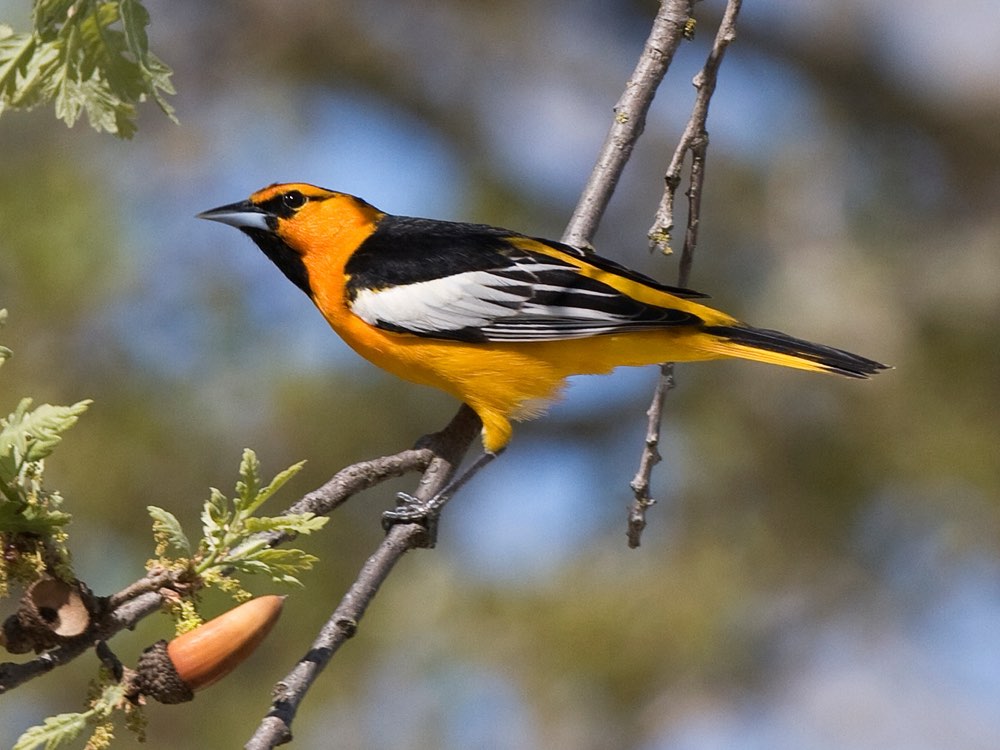
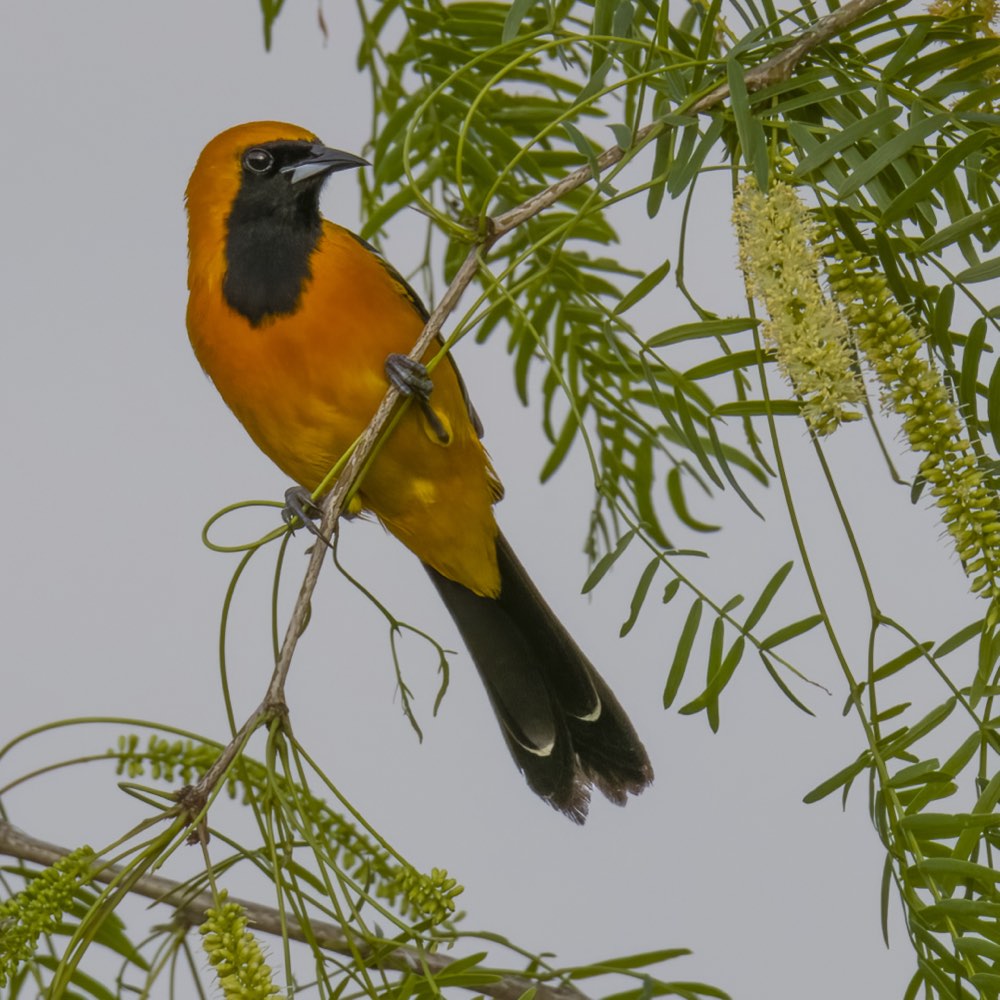
Flame-orange face and underparts with a black crown, black throat patch, black eye-line and a large white wing panel.
Female
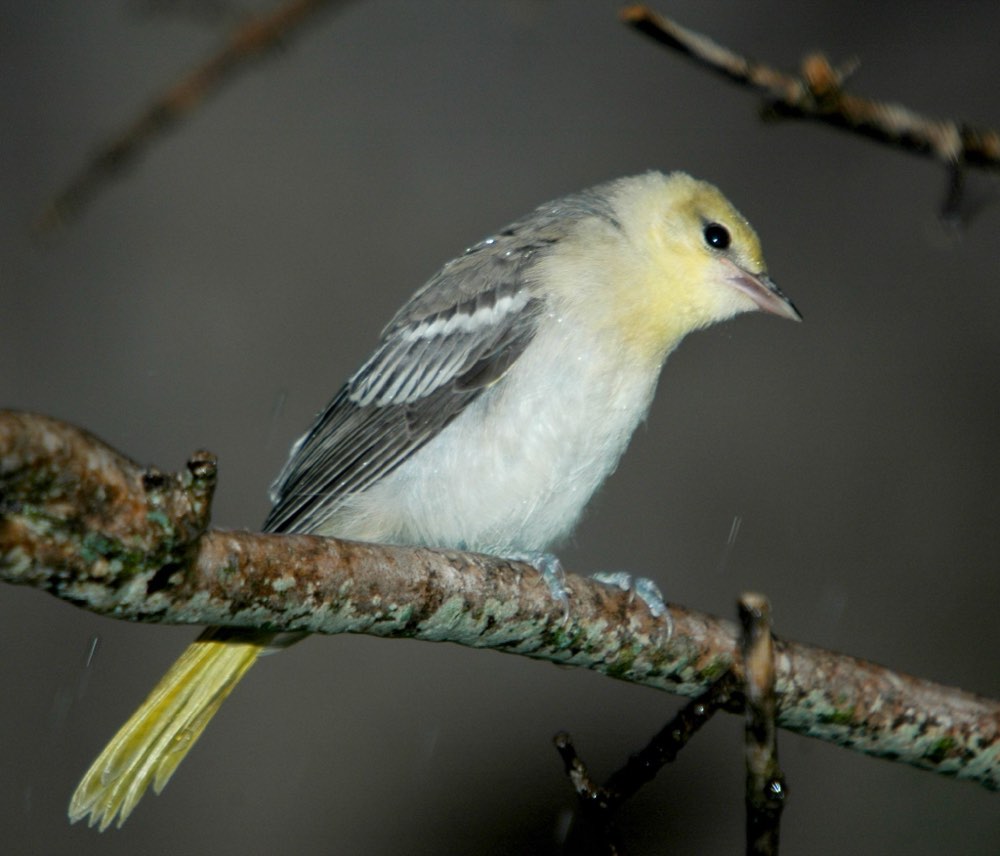
Yellowish head and chest fading to a grayish belly, with two whitish wingbars.
Male photo: Kevin Cole from Pacific Coast, USA (en:User:Kevinlcole) / Wikimedia, CC BY 2.0 · Second photo: Clinton & Charles Robertson from Del Rio, Texas & College Station, TX, USA / Wikimedia, CC BY 2.0
Field marks
- Black line through the eye, not a full black hood
- Large white wing patch
- Orange face with a black cap and bib
- Grayish belly on the female
Similar species
What it sounds like
A series of harsh and sweet whistled notes mixed with rattles — less flutey than a Baltimore Oriole.
Behaviour that gives it away
Weaves a hanging pouch nest and, unlike many songbirds, recognises and rejects cowbird eggs.
Habitat & range
Riverside cottonwoods, open woodland, orchards and suburbs across the West.
When you'll see it
A summer visitor that arrives to breed in western and southwestern North America.
What it eats
Insects, nectar and fruit; visits oranges and jelly feeders.
Did you know?
It and the Baltimore Oriole were lumped as the Northern Oriole for decades before being split again in 1995.
Spot one yourself?
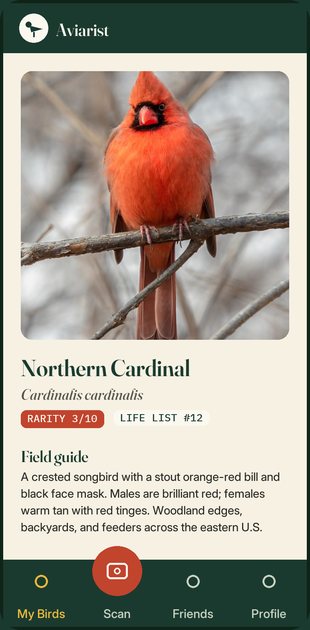
Point your camera at any bird and Aviarist identifies it in seconds — then logs it to your life list.
Get Aviarist on Google Play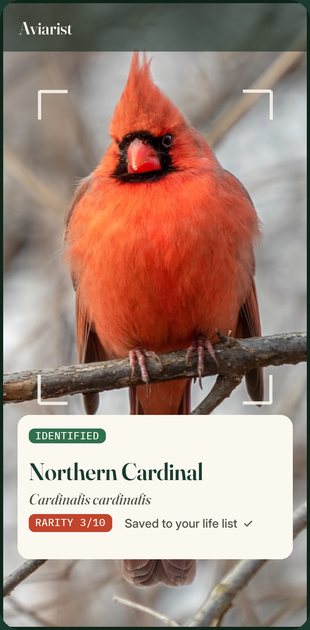
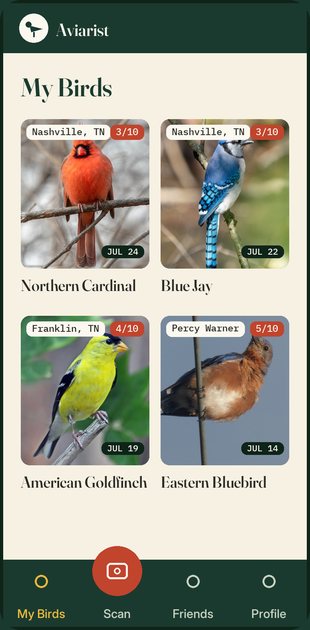
More backyard birds


Other apps we make