How to Identify aGreat-tailed Grackle
Quiscalus mexicanus · 15–18.1 in (38–46 cm)
Male vs. female
Male
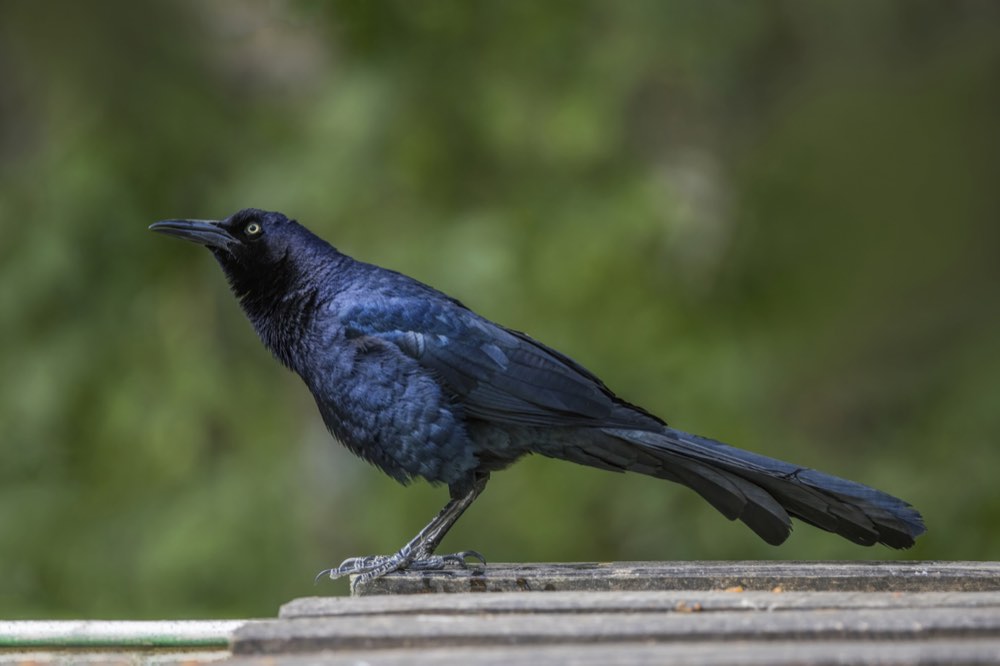
Glossy purple-black with a huge V-shaped tail, pale yellow eyes and a long heavy bill.
Female
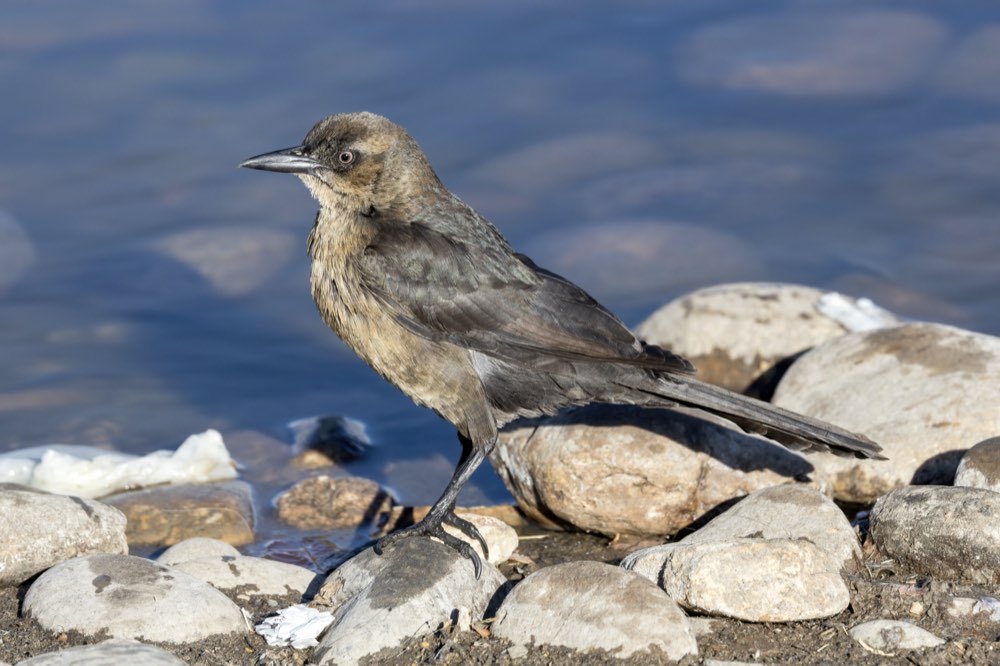
Much smaller and warm brown with a paler throat and chest, and a shorter tail.
Male photo: Charles J. Sharp / Wikimedia, CC BY-SA 4.0 · Female photo: Polinova / Wikimedia, CC BY-SA 4.0
Field marks
- Very long tail folded into a deep V or keel
- Bright yellow eye
- Male far larger than the female
- Flat-headed profile with a long bill
Similar species
What it sounds like
An extraordinary range of whistles, rattles, shrieks and mechanical noises, sounding almost electronic.
Behaviour that gives it away
Roosts communally in town squares and parking lots in flocks of thousands, and has spread rapidly north with irrigation.
Habitat & range
Towns, farmland, feedlots, marshes and parking lots across the Southwest and southern plains.
When you'll see it
Present all year in southwestern, central and southeastern North America.
What it eats
Almost anything — insects, grain, fruit, small vertebrates and refuse.
Did you know?
Its range has expanded enormously since 1900, spreading north with irrigated agriculture and urban development.
Spot one yourself?
Point your camera at any bird and Aviarist identifies it in seconds — then logs it to your life list.
Get Aviarist on Google Play
More backyard birds
_male_Copan.jpg)

Other apps we make