How to Identify aWood Thrush
Hylocichla mustelina · 7.1–8.5 in (18–21.5 cm)
Male vs. female
Male
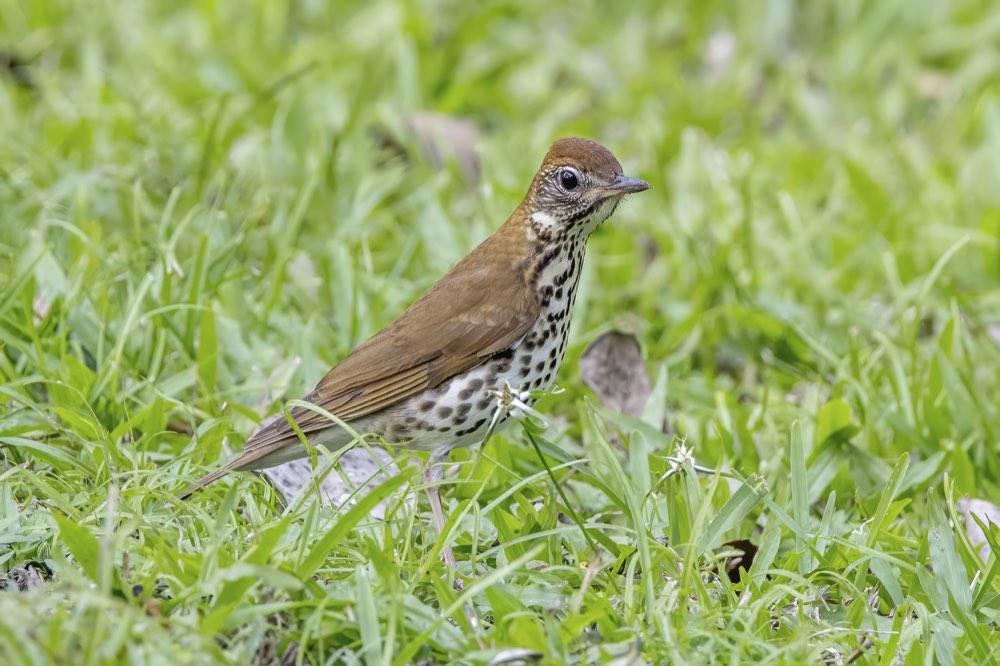
Warm rusty-brown above, brightest on the head, with large black spots over white underparts and a bold white eye-ring. Sexes look alike.
Female
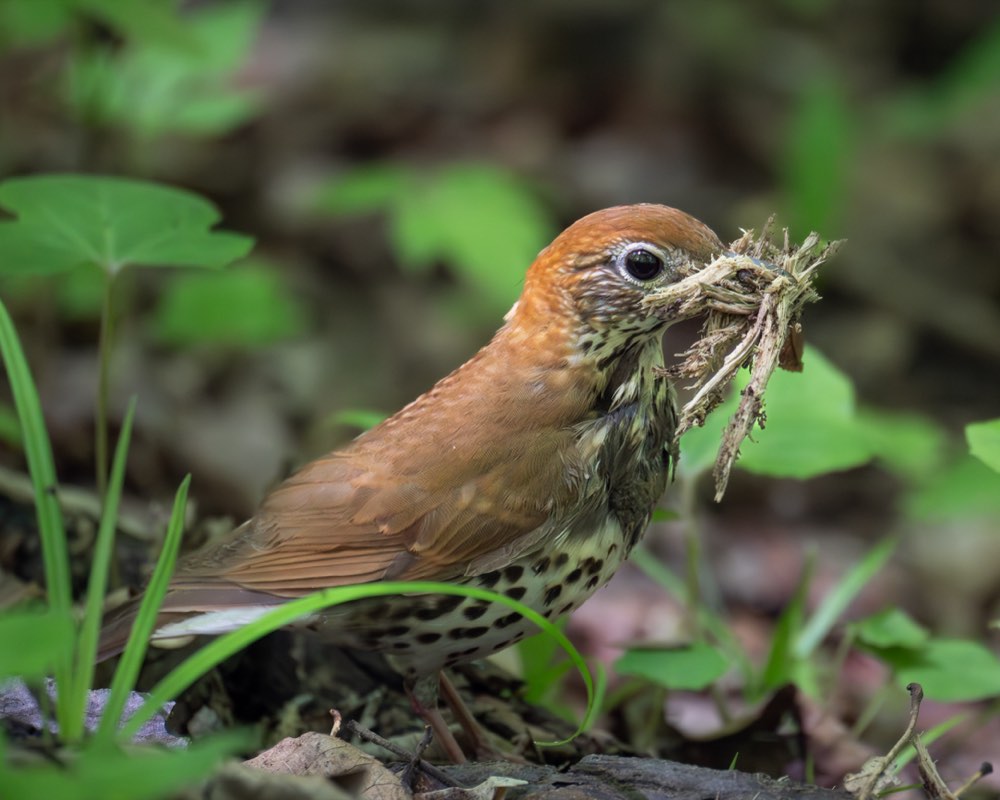
Identical to the male in the field.
Male photo: Charles J. Sharp / Wikimedia, CC BY-SA 4.0 · Second photo: P0cketriki / Wikimedia, CC BY-SA 4.0
Field marks
- Rusty-brown head fading to olive-brown on the tail
- Large round black spots covering the breast and flanks
- Bold white eye-ring on a streaked face
- Plump, upright, robin-shaped posture
Similar species
What it sounds like
A liquid, flute-like "ee-oh-lay" of extraordinary purity, often given at dawn and dusk from deep cover.
Behaviour that gives it away
Forages on the forest floor, flipping dead leaves with sideways sweeps of the bill rather than scratching with its feet.
Habitat & range
Interior deciduous and mixed forest with a shaded understorey across the eastern United States in summer.
When you'll see it
A summer visitor that arrives to breed in eastern and central North America.
What it eats
Insects, snails and other soil invertebrates, plus fruit in late summer.
Did you know?
Its syrinx lets it sing two notes at once, harmonizing with itself in the fluting phrases at the end of its song.
Spot one yourself?
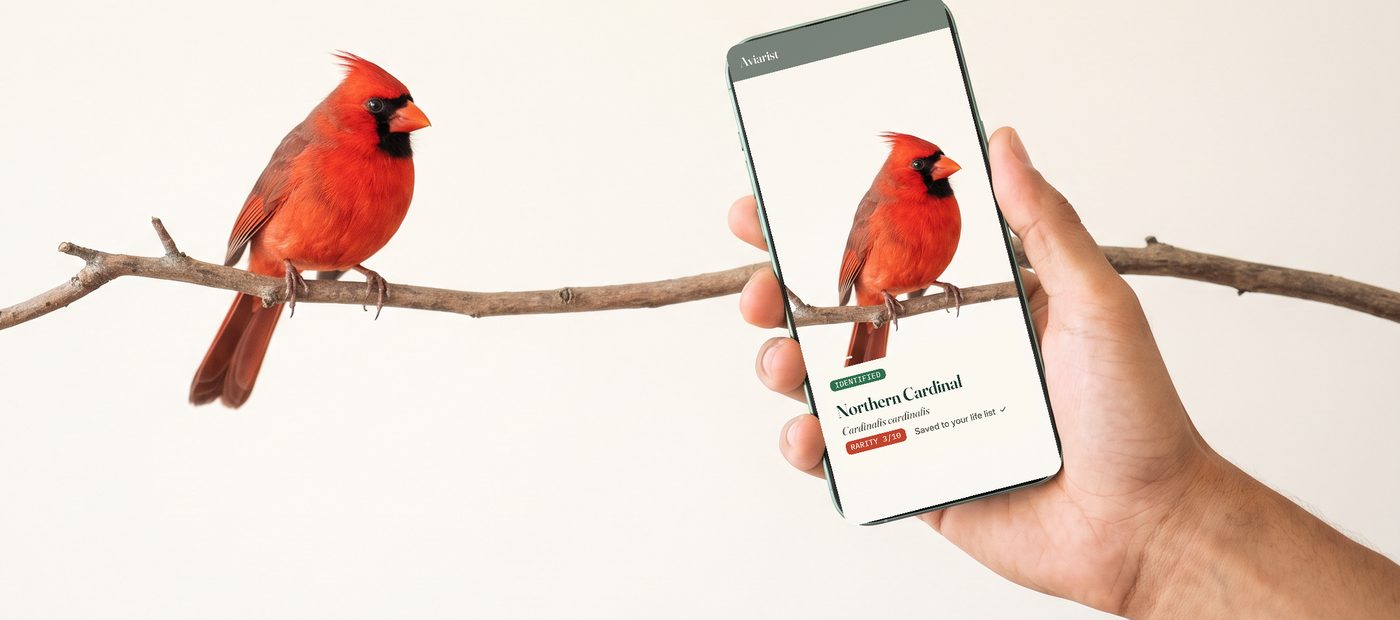
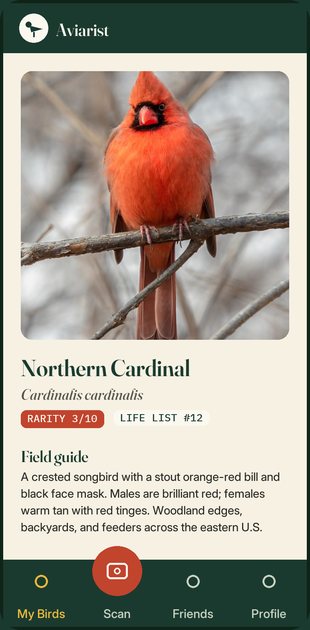
Point your camera at any bird and Aviarist identifies it in seconds — then logs it to your life list.
Get Aviarist on Google Play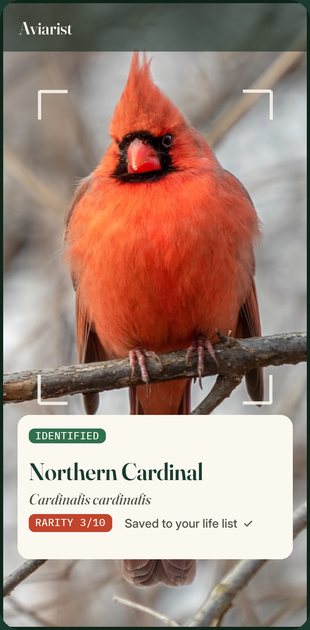
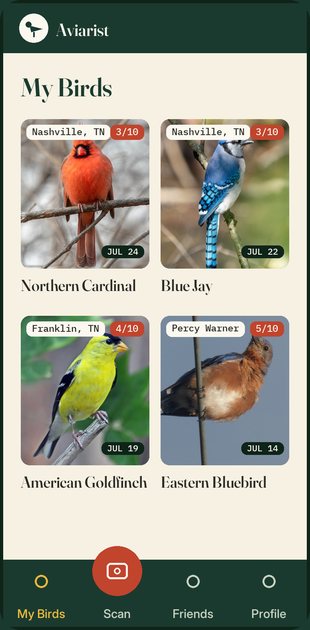
More backyard birds
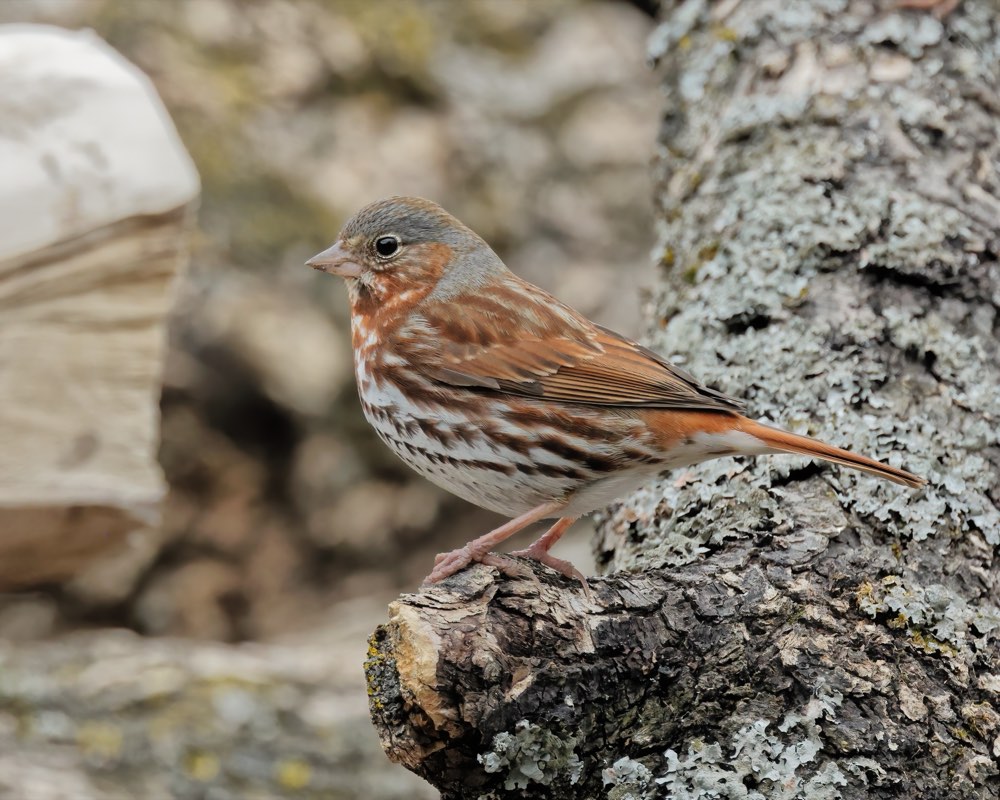
_Peten.jpg)

Other apps we make