How to Identify aChestnut-backed Chickadee
Poecile rufescens · 3.9–4.7 in (10–12 cm)
Male vs. female
Male
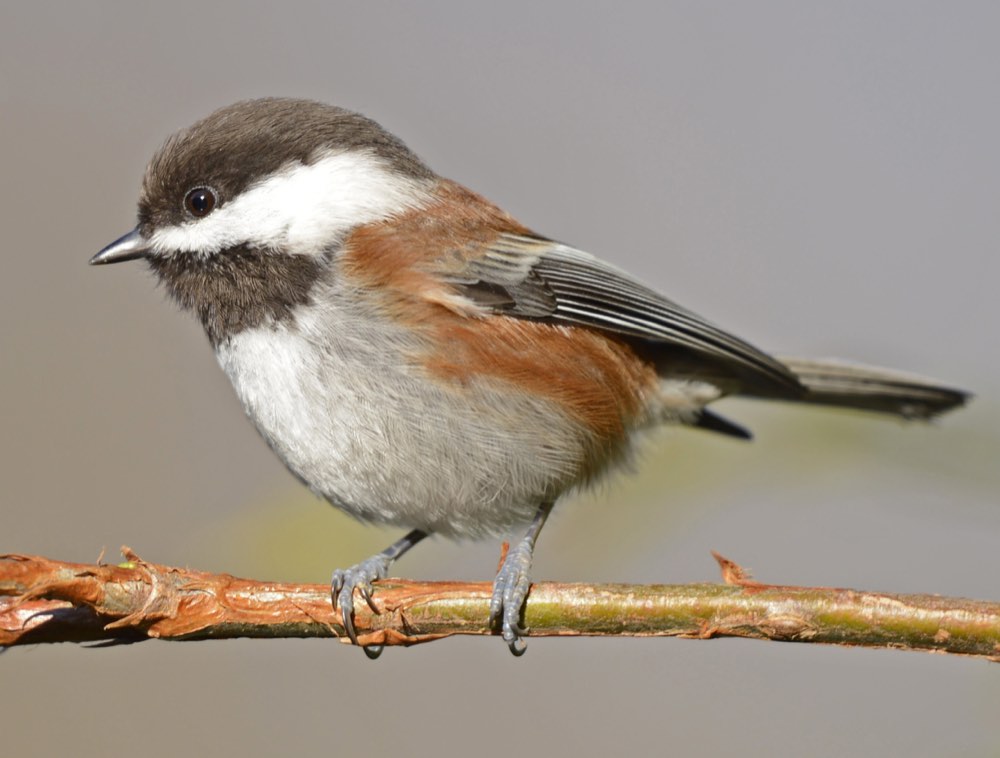
Deep chestnut back and flanks, sooty dark-brown cap, black bib and white cheeks. Sexes look alike.
Female
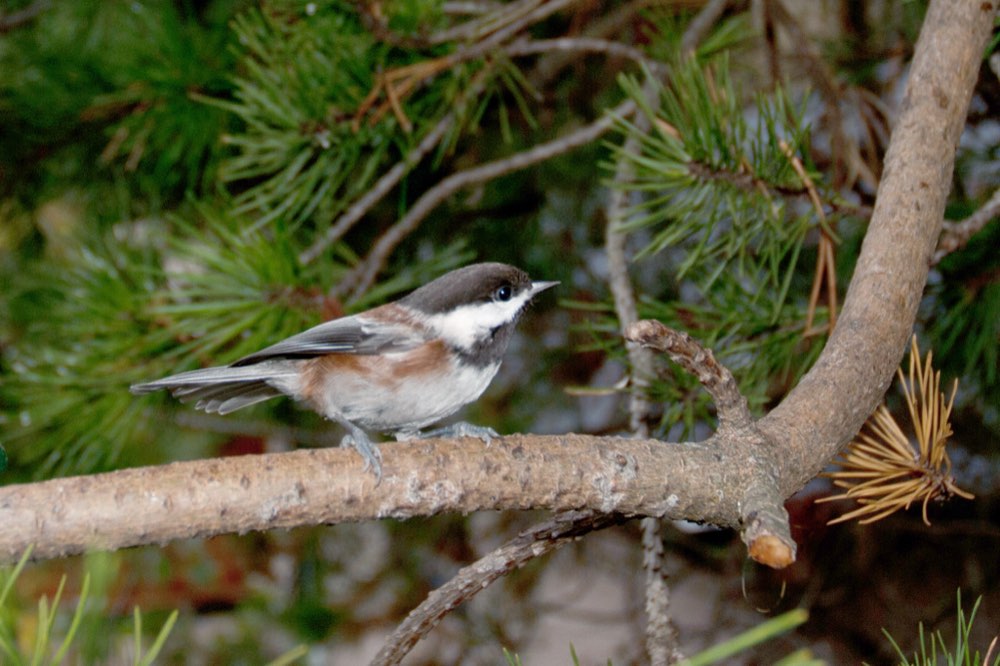
Identical to the male in the field.
Male photo: VJAnderson / Wikimedia, CC BY-SA 4.0 · Second photo: Thom Quine / Wikimedia, CC BY-SA 3.0
Field marks
- Rich chestnut back, unique among chickadees
- Dark sooty-brown rather than black cap
- Chestnut flanks
- Very small and short-tailed
Similar species
What it sounds like
A hoarse, fast, buzzy "chick-a-zee-zee", higher and raspier than other chickadees; it does not whistle a clear song.
Behaviour that gives it away
Lines its nest cavity with fur, sometimes more than half the nest by volume, and covers the eggs with a fur blanket when it leaves.
Habitat & range
Damp conifer forest along the Pacific coast and inland to the northern Rockies.
When you'll see it
Present all year in western North America.
What it eats
Insects, spiders, conifer seeds and suet.
Did you know?
It packs its nest with animal fur, and pulls a fur blanket over the eggs whenever it leaves the cavity.
Spot one yourself?
Point your camera at any bird and Aviarist identifies it in seconds — then logs it to your life list.
Get Aviarist on Google Play
More backyard birds
.jpg)

Other apps we make