How to Identify aHermit Thrush
Catharus guttatus · 5.9–7.1 in (15–18 cm)
Male vs. female
Male
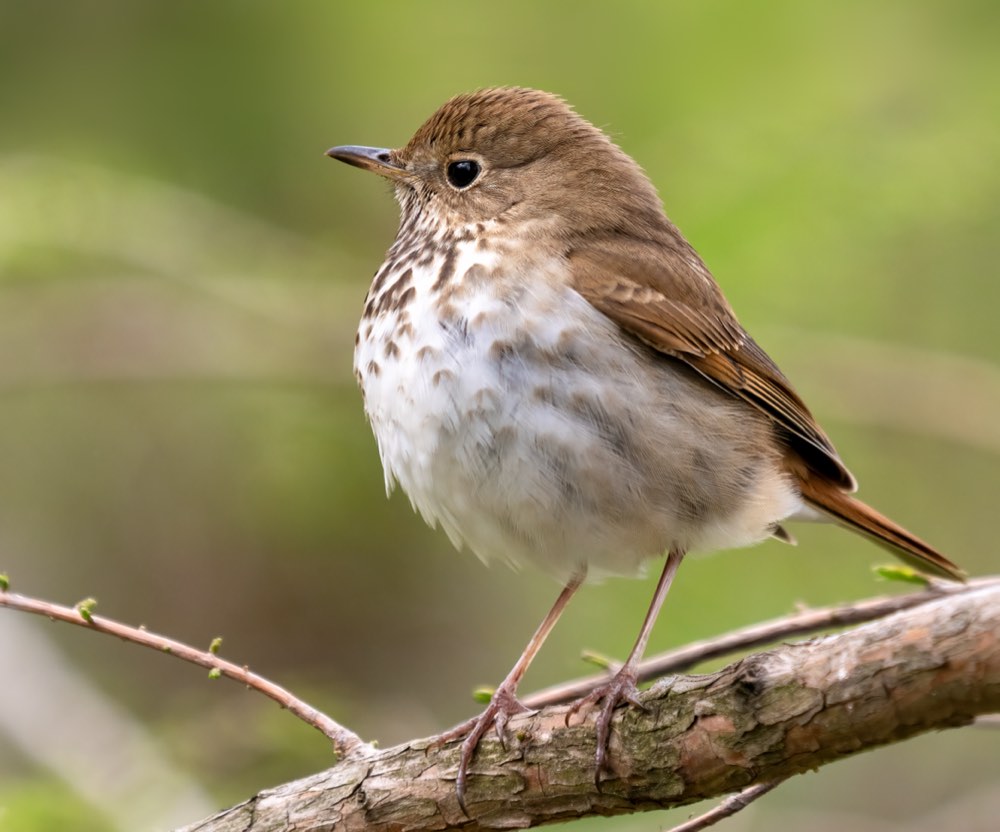
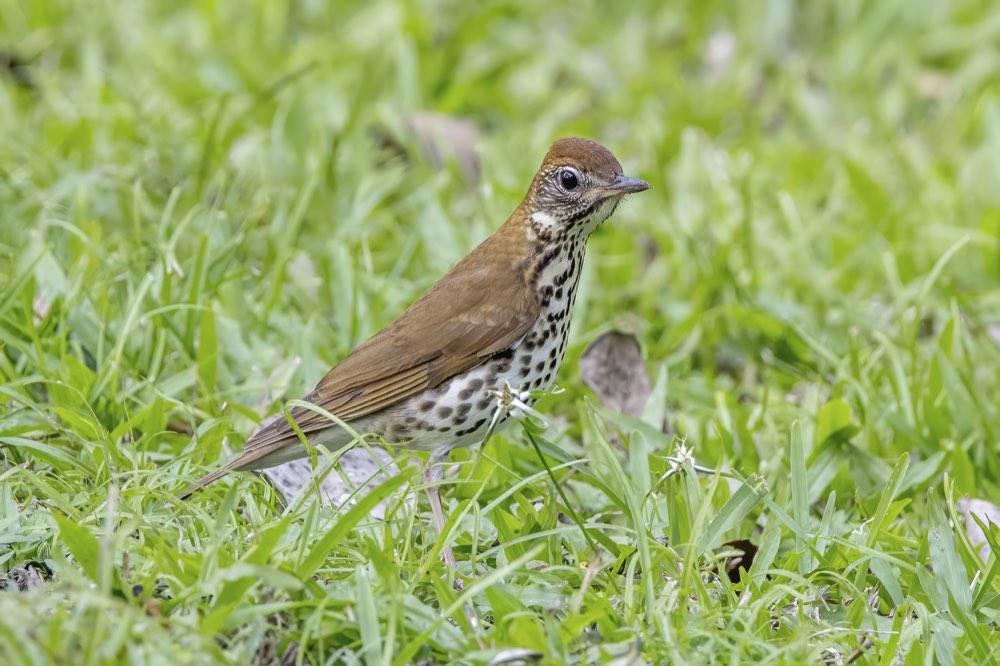
Warm brown above with a contrasting reddish tail, whitish below with bold dark spots on the breast. Sexes look alike.
Female
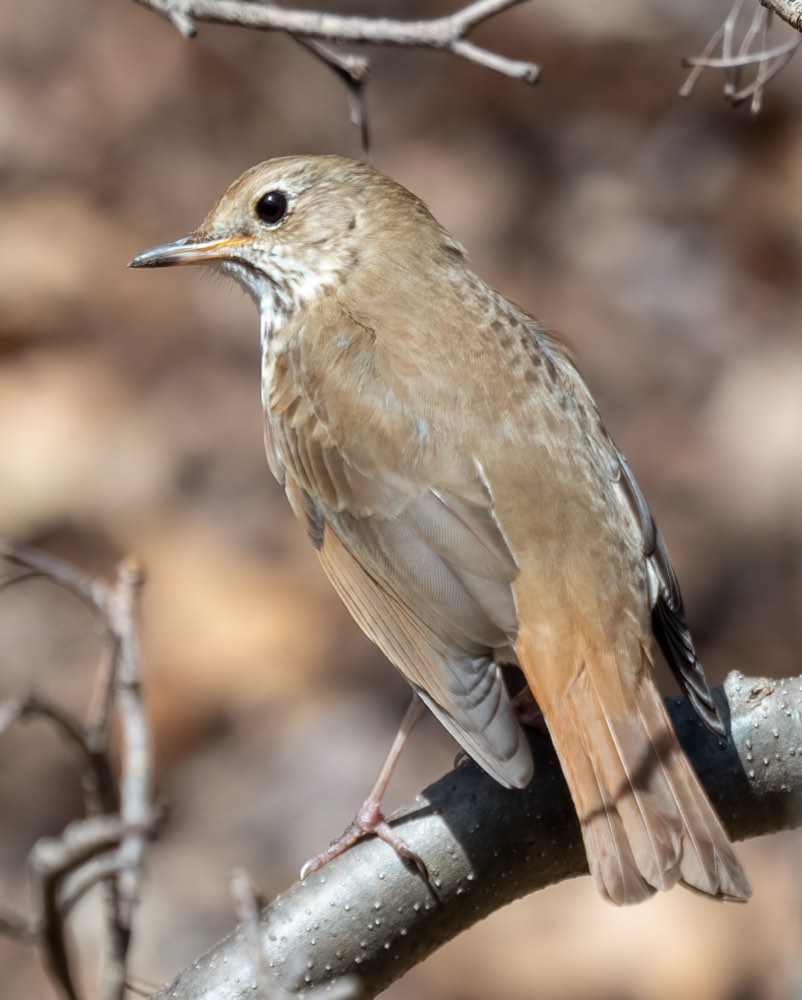
Identical to the male in the field.
Male photo: Rhododendrites / Wikimedia, CC BY-SA 4.0 · Second photo: Rhododendrites / Wikimedia, CC BY-SA 4.0
Field marks
- Rusty-red tail contrasting with a duller brown back
- Bold round dark spots across a white breast
- Thin pale eye-ring
- Slowly raises then lowers the tail when perched
Similar species
What it sounds like
A flute-like song that begins with one clear held note then spirals into ethereal phrases, each starting on a different pitch.
Behaviour that gives it away
Raises its rusty tail slowly and lets it drop, often flicking its wings at the same time — the surest way to separate it from other brown thrushes.
Habitat & range
Breeds in northern and mountain forest; the only spotted thrush that regularly winters in the United States, in woods and thickets.
When you'll see it
Depending on where in North America you are, it is a winter visitor and a passage migrant, seen mainly in spring and autumn.
What it eats
Insects and other invertebrates in summer, berries and fruit in winter.
Did you know?
It is the only one of North America’s spotted brown thrushes that regularly stays in the United States through the winter.
Spot one yourself?
Point your camera at any bird and Aviarist identifies it in seconds — then logs it to your life list.
Get Aviarist on Google Play
More backyard birds
.jpg)
.jpg)
Other apps we make