How to Identify aPurple Martin
Progne subis · 7.5–7.9 in (19–20 cm)
Male vs. female
Male
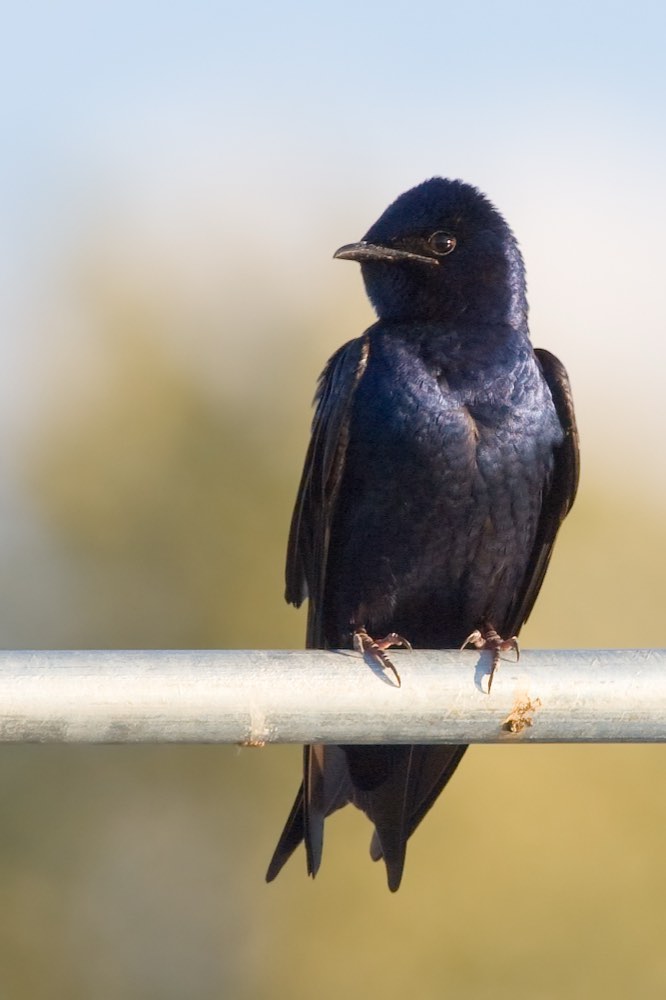
Uniformly glossy dark blue-purple including the belly, with blackish wings and a notched tail.
Female
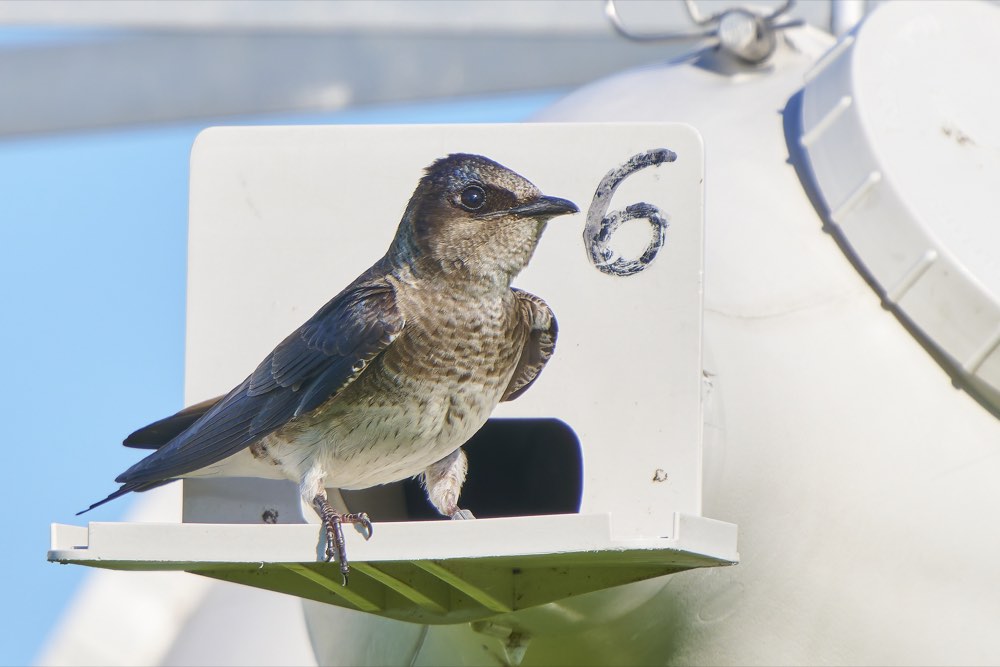
Dull gray-brown below with a grayish collar and only a dark sheen above, never solidly glossy.
Male photo: JJ Cadiz, Cajay / Wikimedia, CC BY 3.0 · Second photo: Paul Danese / Wikimedia, CC BY-SA 4.0
Field marks
- Large and broad-chested for a swallow
- Male dark purple-blue on the belly as well as the back
- Notched, slightly forked tail
- Long, pointed, broad-based wings
Similar species
What it sounds like
A rich, liquid, gurgling chortle, often given in flight and from the tops of nest boxes at dawn.
Behaviour that gives it away
In the eastern United States it nests almost exclusively in human-supplied boxes and gourds, and gathers in enormous premigration roosts.
Habitat & range
Open country near water, farmland and suburban yards with martin housing, across the eastern United States in summer.
When you'll see it
A summer visitor that arrives to breed in eastern, central and southeastern North America.
What it eats
Flying insects including dragonflies, beetles and flies, caught high in the air.
Did you know?
Eastern Purple Martins now nest almost entirely in boxes and hollow gourds put up by people, a dependence that goes back centuries.
Spot one yourself?
Point your camera at any bird and Aviarist identifies it in seconds — then logs it to your life list.
Get Aviarist on Google Play
More backyard birds


Other apps we make