How to Identify aCliff Swallow
Petrochelidon pyrrhonota · 5.1–5.9 in (13–15 cm)
Male vs. female
Male
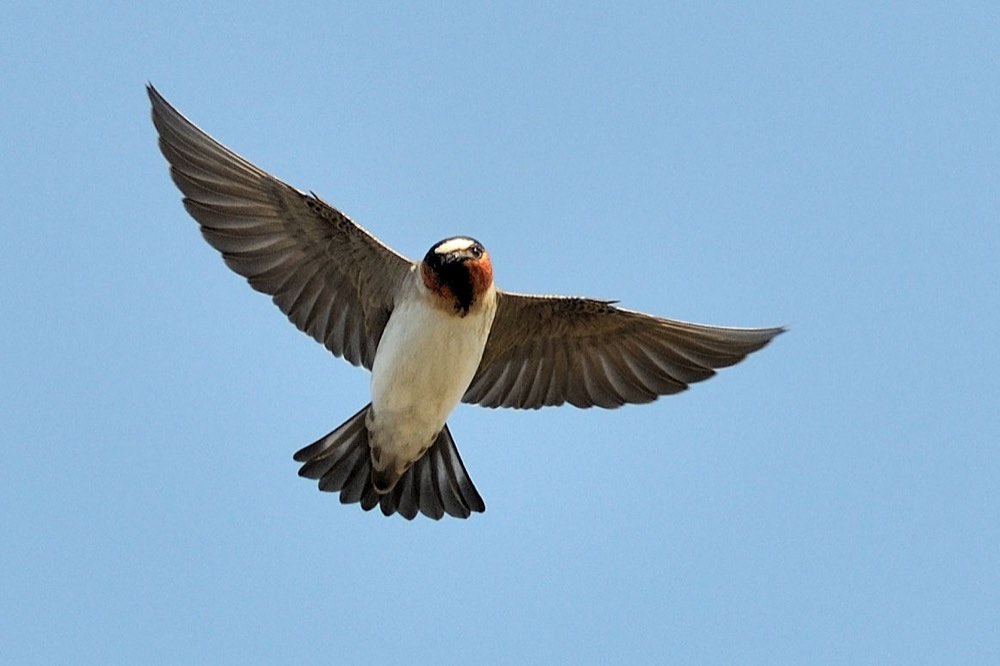
Dark blue back, rusty throat and cheeks, pale creamy forehead patch and a buff-orange rump; square tail. Sexes look alike.
Female
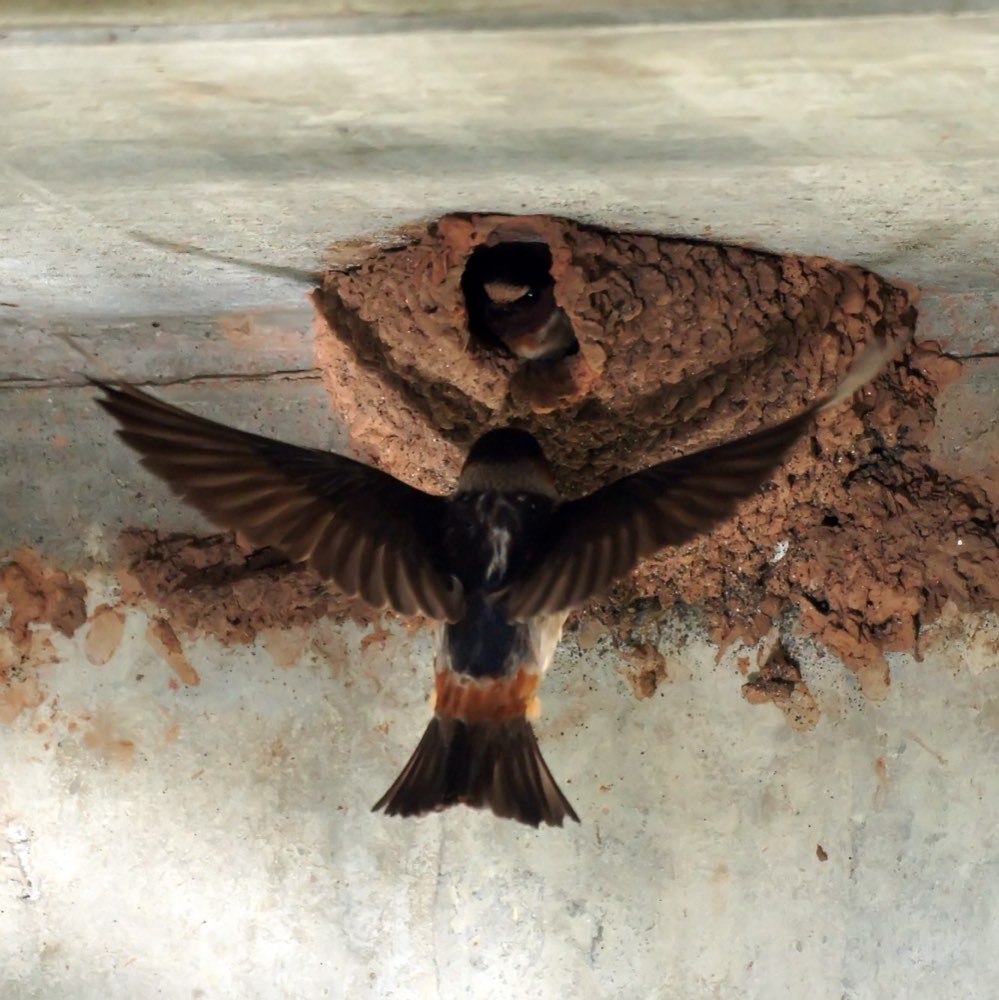
Identical to the male in the field.
Male photo: Don DeBold / Wikimedia, CC BY-SA 2.0 · Second photo: Mike's Birds / Wikimedia, CC BY-SA 2.0
Field marks
- Square-tipped tail with no fork
- Buffy-orange rump patch obvious in flight
- Pale creamy forehead above a dark rusty face
- Compact, short-tailed shape
Similar species
What it sounds like
A low, creaky chattering and grating twitters given around the nesting colony.
Behaviour that gives it away
Builds enclosed gourd-shaped mud nests packed side by side in colonies of hundreds under bridges, culverts and eaves.
Habitat & range
Open country near bridges, dams, culverts and cliffs across most of North America in summer.
When you'll see it
A summer visitor that arrives to breed in North America.
What it eats
Flying insects caught in the air, often high over fields and water.
Did you know?
It builds a closed gourd-shaped nest from mouthful after mouthful of mud pellets, packed shoulder to shoulder in dense colonies.
Spot one yourself?
Point your camera at any bird and Aviarist identifies it in seconds — then logs it to your life list.
Get Aviarist on Google Play
More backyard birds

.jpg)
Other apps we make