How to Identify aGreen Heron
Butorides virescens · 16–18 in (41–46 cm)
Male vs. female
Male
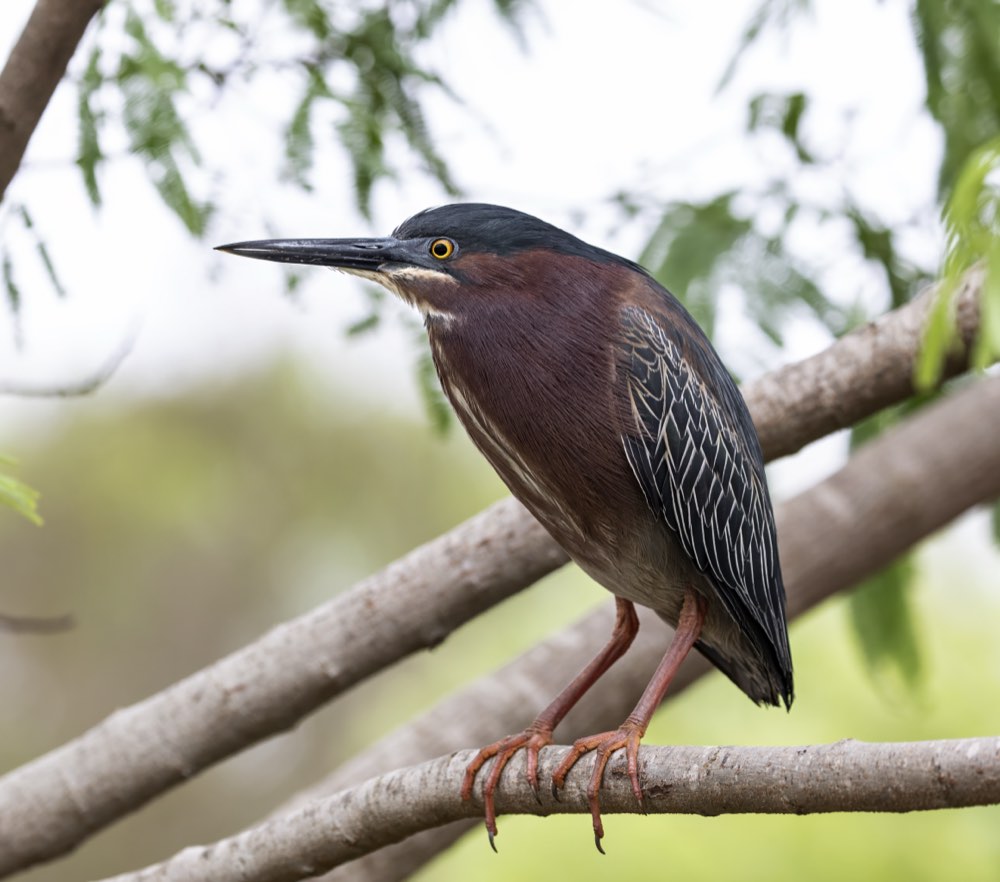
Dark glossy green-black cap and back, deep chestnut neck and breast, orange-yellow legs. Sexes look alike.
Female
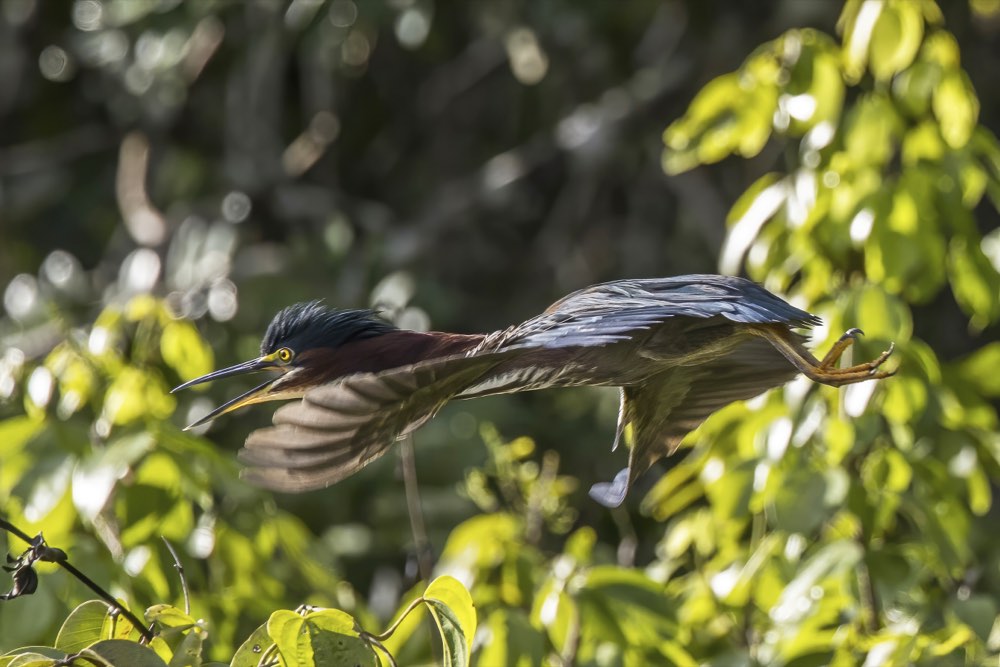
Slightly duller than the male but essentially identical in the field.
Male photo: Chuck Homler d/b/a Focus On Wildlife / Wikimedia, CC BY-SA 4.0 · Second photo: Charles J. Sharp / Wikimedia, CC BY-SA 4.0
Field marks
- Small and stocky for a heron, often crouched flat
- Rich chestnut neck against a dark green-black back
- Bright orange-yellow legs
- Short thick neck usually drawn in, extended suddenly when striking
Similar species
What it sounds like
A sharp, explosive "skeow!" as it flushes, plus clucking notes around the nest.
Behaviour that gives it away
One of the few birds that uses tools — it drops insects, feathers or twigs onto the water as bait and seizes the fish that come to investigate.
Habitat & range
Wooded ponds, marshes, streams and quiet shorelines with overhanging cover, across much of the United States.
When you'll see it
Depending on where in North America you are, it is present all year and a summer visitor that arrives to breed.
What it eats
Small fish, frogs, crayfish and aquatic insects taken with a sudden strike.
Did you know?
It is one of the very few tool-using birds, dropping bait on the water surface to draw small fish within reach.
Spot one yourself?
Point your camera at any bird and Aviarist identifies it in seconds — then logs it to your life list.
Get Aviarist on Google Play
More backyard birds
,_South_Padre_Island,_Texas,_USA_(cropped).jpg)
_in_flight_Peten.jpg)
Other apps we make