How to Identify aEuropean Starling
Sturnus vulgaris · 7.9–9.1 in (20–23 cm)
Male vs. female
Male
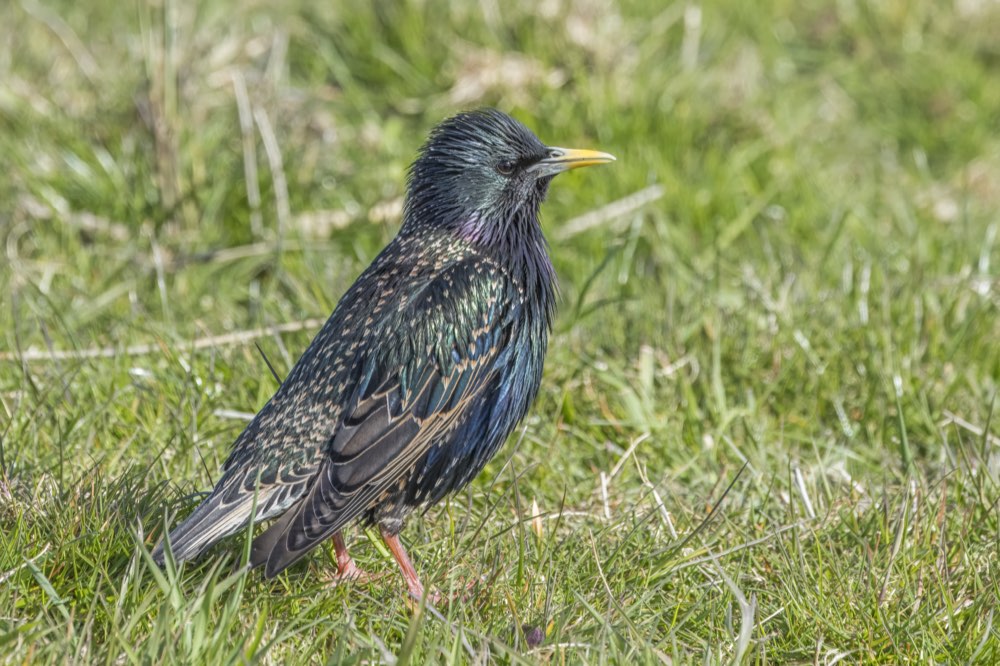
Glossy black with green-purple sheen and a yellow bill when breeding; spangled with pale spots in winter.
Female
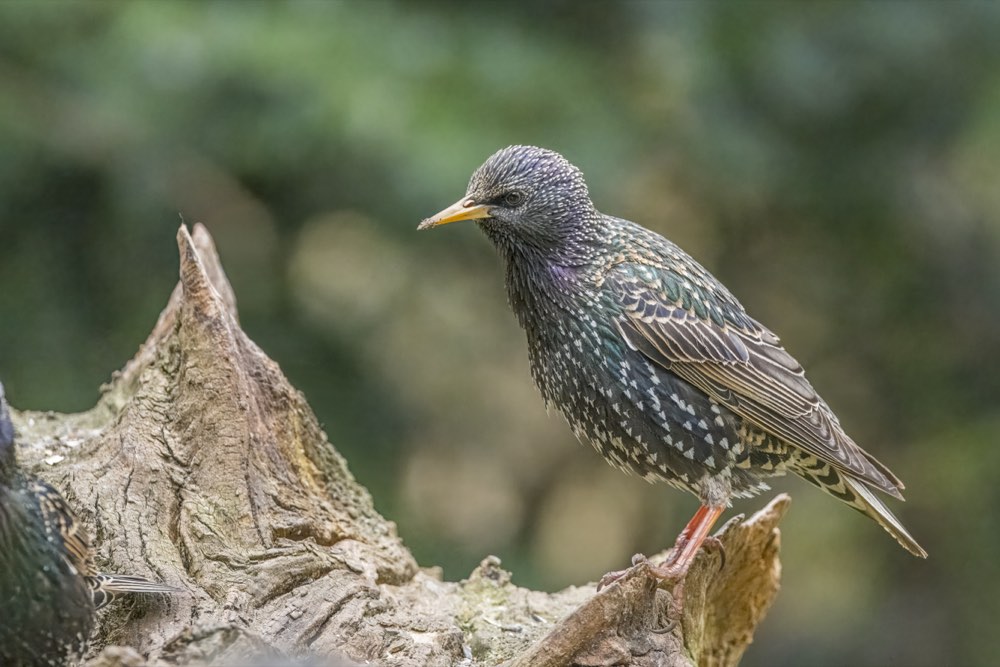
Similar to the male; often shows more and larger white spots and a slightly duller gloss.
Male photo: Charles J. Sharp / Wikimedia, CC BY-SA 4.0 · Second photo: Charles J. Sharp / Wikimedia, CC BY-SA 4.0
Field marks
- Short square tail and triangular wings in flight
- Long pointed bill (yellow in breeding season)
- White spangling in fresh winter plumage
- Iridescent green-purple gloss up close
Similar species
What it sounds like
A jumble of whistles, rattles and clicks, mixed with imitations of other birds and of mechanical sounds.
Behaviour that gives it away
Opens its bill against resistance to pry soil apart — a "gaping" muscle action most songbirds cannot manage.
Habitat & range
Cities, farms, fields, and feeders across all of North America — an introduced species.
When you'll see it
Present all year in North America.
What it eats
Insects, fruit, grain, and scraps; forages in large flocks.
Did you know?
North America's starlings trace back to about 60 birds released in New York's Central Park in 1890.
Spot one yourself?
Point your camera at any bird and Aviarist identifies it in seconds — then logs it to your life list.
Get Aviarist on Google Play
More backyard birds
_breeding_male_Marken.jpg)
_non_breeding_Drenthe_2.jpg)
Other apps we make