How to Identify aMarsh Wren
Cistothorus palustris · 3.9–5.5 in (10–14 cm)
Male vs. female
Male
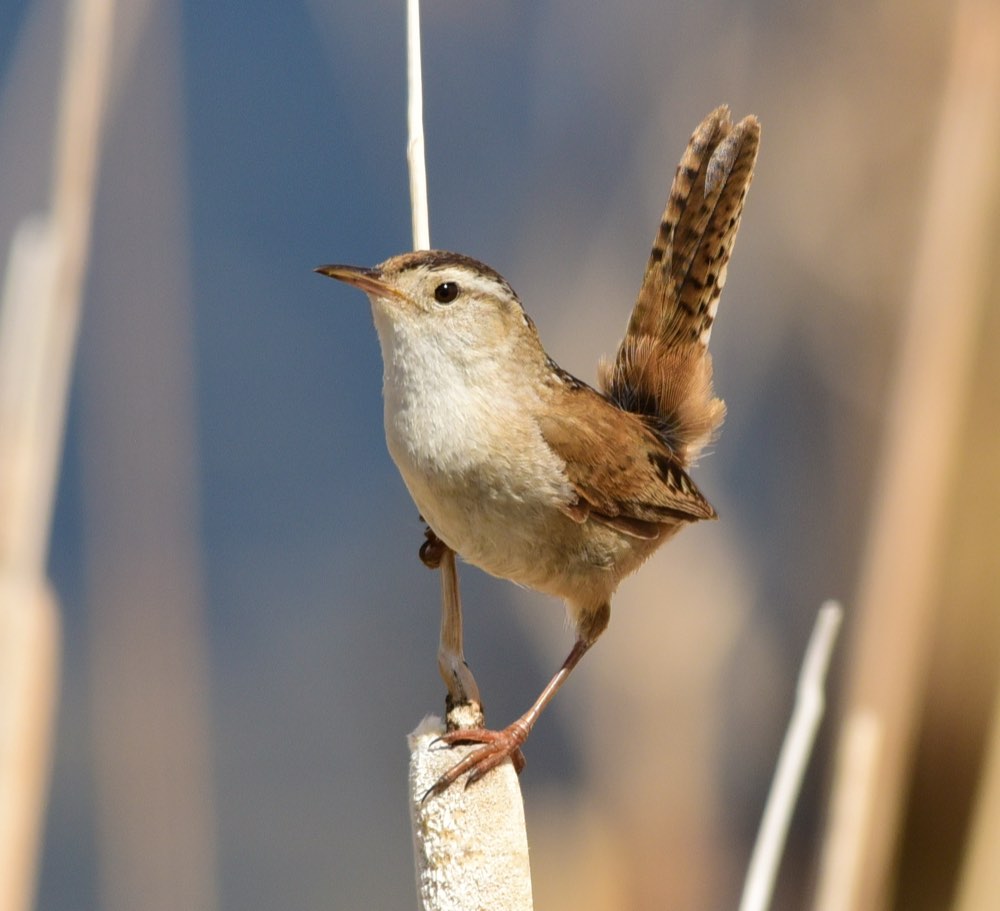
Warm brown with a white eyebrow, black upper back streaked with white, and a tail usually cocked straight up. Sexes look alike.
Female
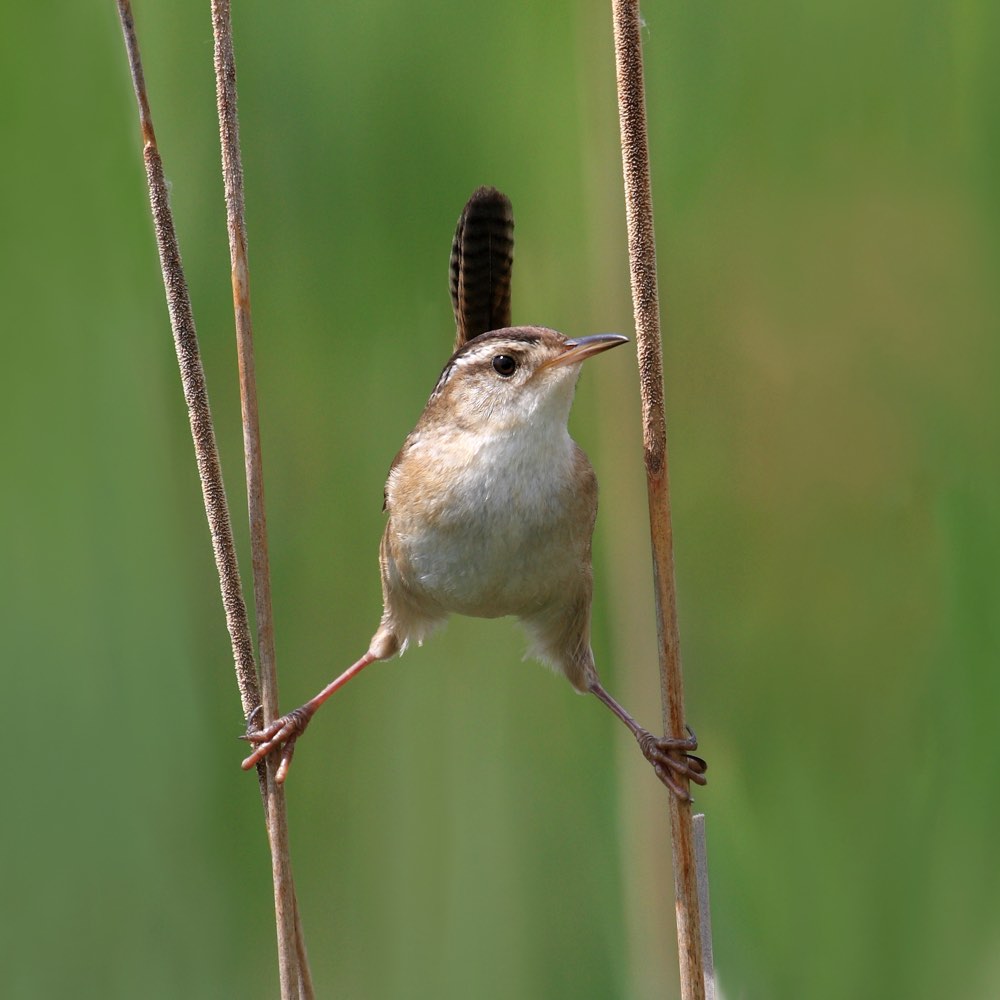
Identical to the male in the field.
Male photo: USFWS Mountain Prairie / Wikimedia, Public domain · Second photo: Cephas / Wikimedia, CC BY-SA 3.0
Field marks
- Black patch striped with white on the upper back
- Bold white eyebrow
- Tail cocked sharply upward or over the back
- Clings sideways across two cattail stems
Similar species
What it sounds like
A rapid, mechanical, rattling trill introduced by a few dry notes, sung day and night in spring.
Behaviour that gives it away
Each male builds many dummy nests across his territory, and routinely punctures the eggs of neighbouring marsh birds.
Habitat & range
Cattail and bulrush marshes across much of North America.
When you'll see it
Depending on where in North America you are, it is present all year and a summer visitor that arrives to breed.
What it eats
Insects and spiders taken from marsh vegetation and the water surface.
Did you know?
A single male may build more than twenty unused dummy nests in his territory before the female chooses one to line.
Spot one yourself?
Point your camera at any bird and Aviarist identifies it in seconds — then logs it to your life list.
Get Aviarist on Google Play
More backyard birds


Other apps we make