How to Identify aMagnolia Warbler
Setophaga magnolia · 4.3–5.1 in (11–13 cm)
Male vs. female
Male
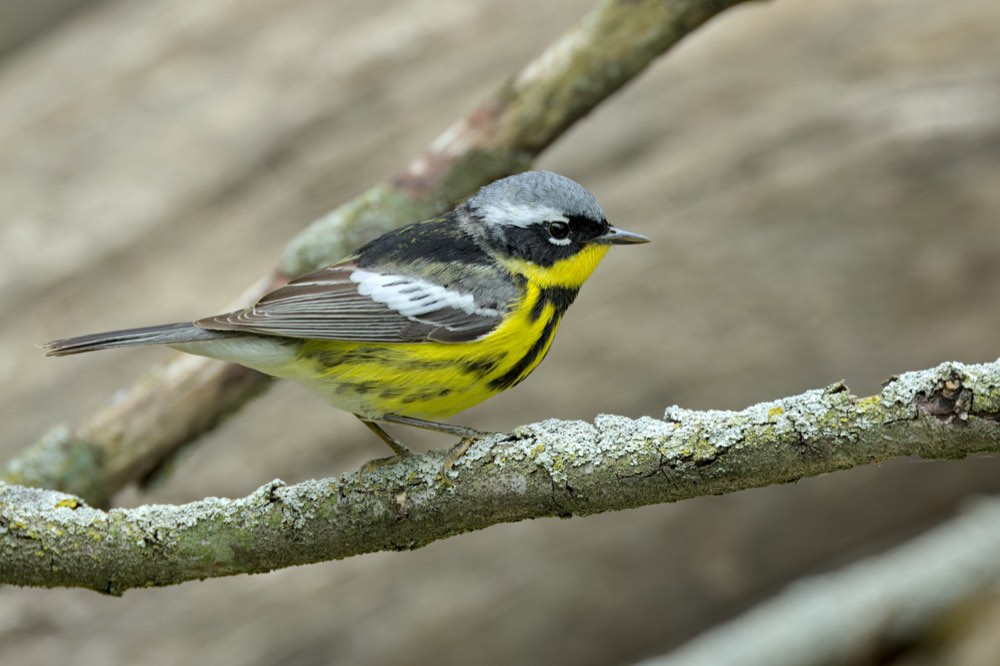
Gray crown, black mask, yellow underparts with thick black streaks forming a necklace, and big white wing patches.
Female
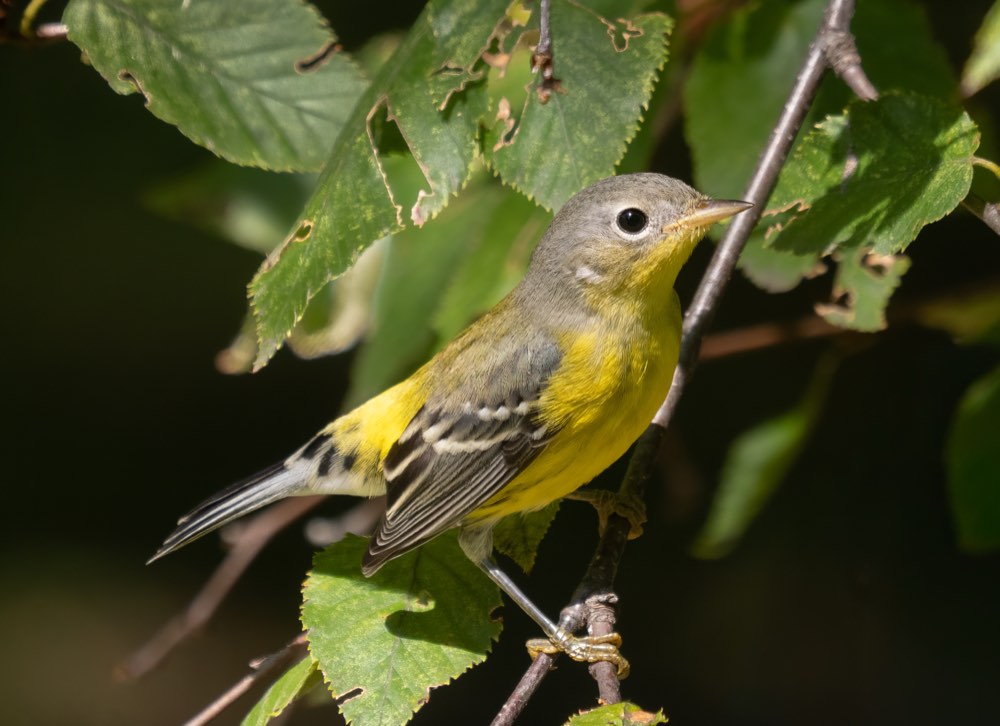
Softer version of the male with thinner streaking and two white wingbars instead of a solid patch.
Male photo: AMMuench / Wikimedia, CC BY 4.0 · Second photo: Rhododendrites / Wikimedia, CC BY-SA 4.0
Field marks
- Broad white band across the middle of the tail, seen from below
- Heavy black streaks on bright yellow underparts
- Yellow rump
- White eye-ring or eyebrow depending on age
Similar species
What it sounds like
A short, sweet, rising "weeta-weeta-WEET-see" of only a few notes.
Behaviour that gives it away
Feeds low in young conifers, much closer to eye level than most canopy warblers, which makes it one of the easier migrants to see well.
Habitat & range
Young conifer forest in summer; all kinds of woodland and thickets on migration.
When you'll see it
Depending on where in northern, eastern and central North America you are, it is a summer visitor that arrives to breed and a passage migrant, seen mainly in spring and autumn.
What it eats
Caterpillars, beetles and other small insects.
Did you know?
It was named after a single migrant shot in a magnolia tree, despite having almost nothing to do with magnolias.
Spot one yourself?
Point your camera at any bird and Aviarist identifies it in seconds — then logs it to your life list.
Get Aviarist on Google Play
More backyard birds

.jpg)
Other apps we make