How to Identify aChestnut-sided Warbler
Setophaga pensylvanica · 4.3–5.1 in (11–13 cm)
Male vs. female
Male
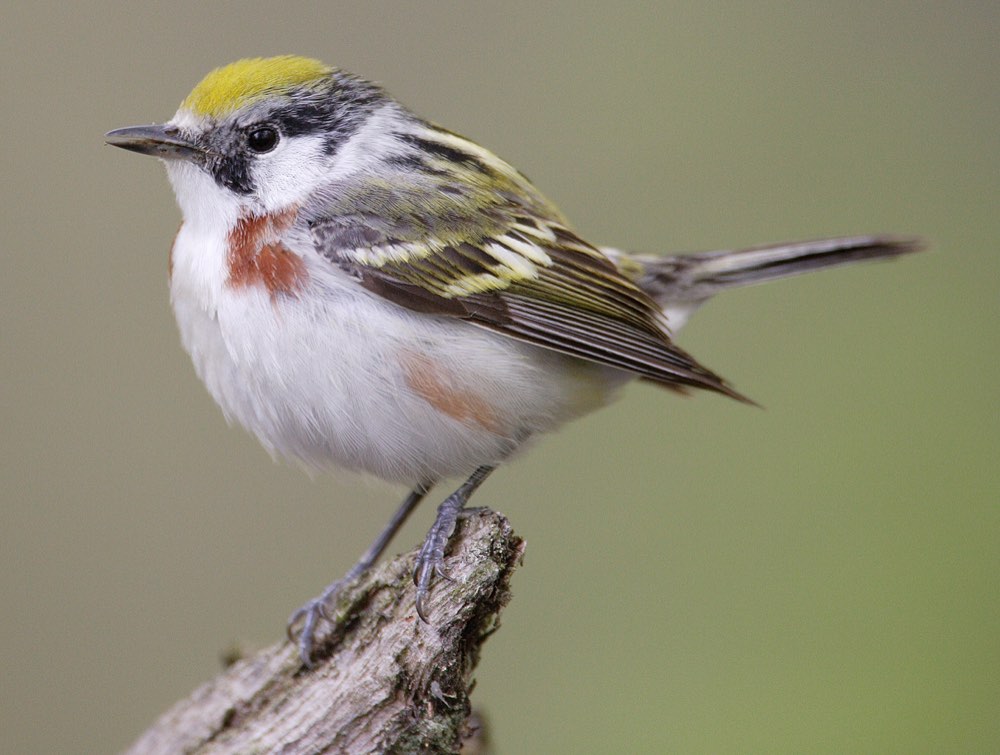
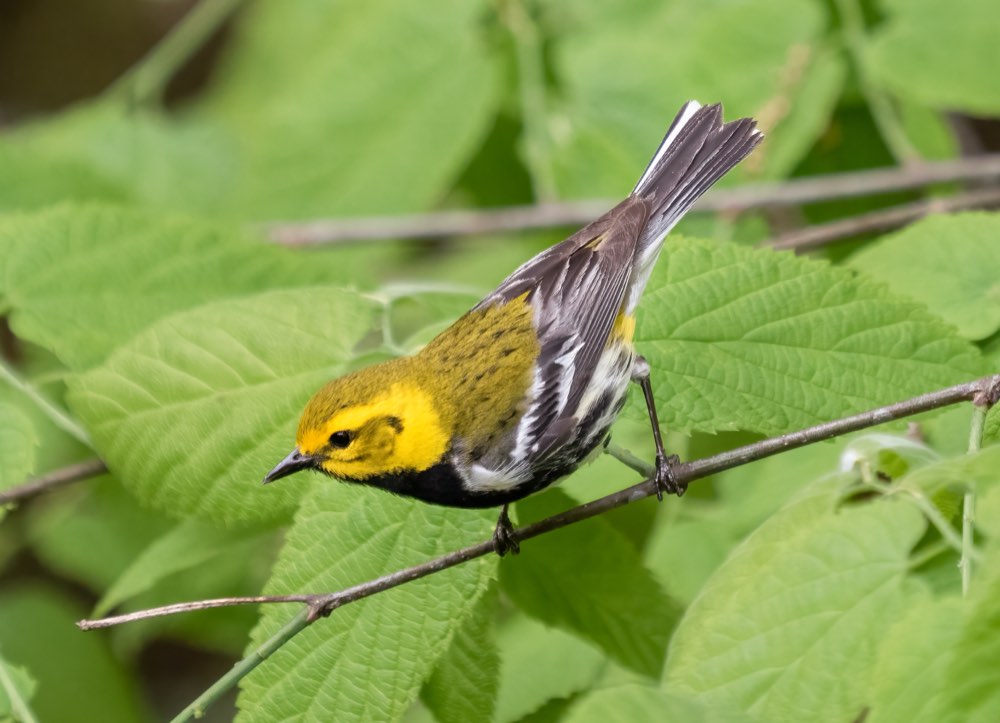
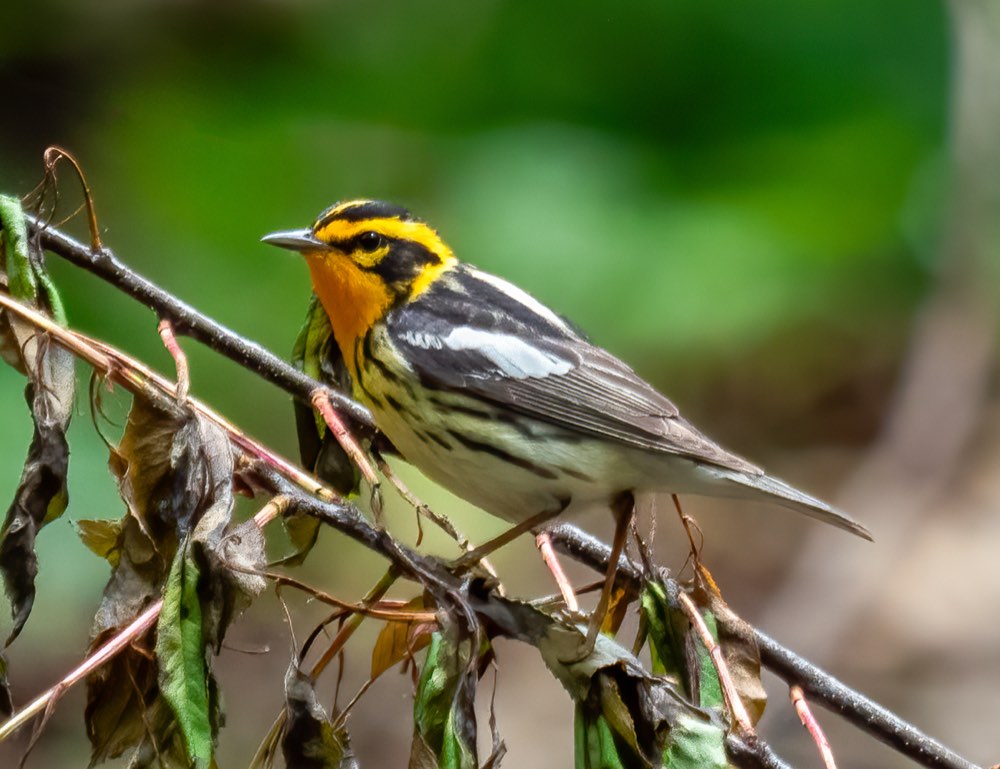
Bright yellow crown, black face mask and moustache, white underparts and rich chestnut flanks.
Female
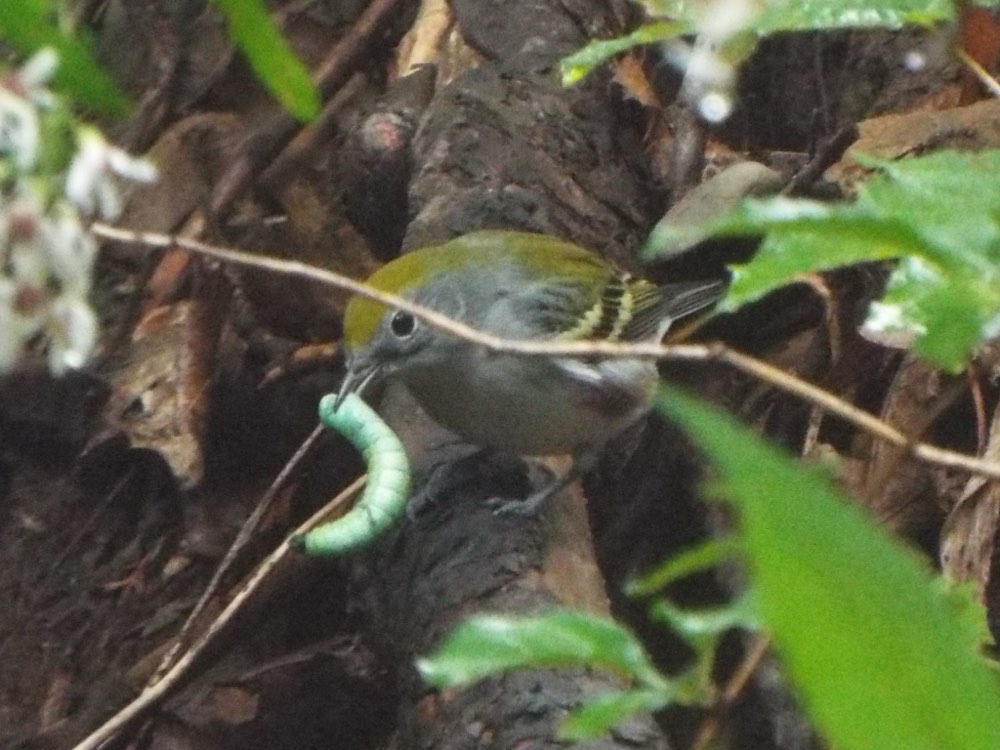
Similar but duller, with less chestnut and a softer face pattern.
Male photo: Mdf / Wikimedia, CC BY-SA 3.0 · Second photo: (c) Jonathan Layman, some rights reserved (CC BY) / Wikimedia, CC BY 4.0
Field marks
- Chestnut stripe along the flanks
- Lemon-yellow crown
- Clean white underparts and throat
- Two yellowish wingbars
Similar species
What it sounds like
An emphatic "pleased-pleased-pleased-to-MEETcha", with the accented ending falling away.
Behaviour that gives it away
Cocks its tail up and droops its wings while foraging, giving it a distinctly jaunty posture.
Habitat & range
Young second-growth woodland, powerline cuts and regenerating clearcuts across the Northeast.
When you'll see it
Depending on where in eastern, northern and central North America you are, it is a summer visitor that arrives to breed and a passage migrant, seen mainly in spring and autumn.
What it eats
Caterpillars and other insects taken from low shrubs and saplings.
Did you know?
Audubon saw it only once in his life; forest clearing since then has made it one of the commoner eastern warblers.
Spot one yourself?
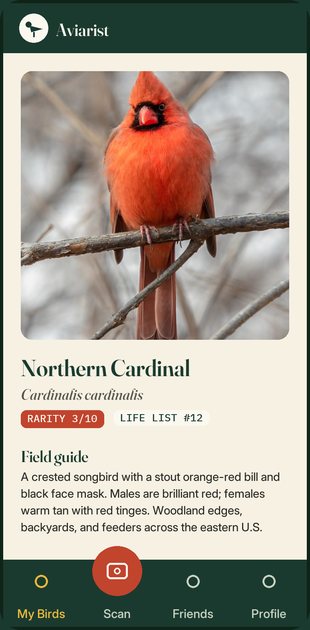
Point your camera at any bird and Aviarist identifies it in seconds — then logs it to your life list.
Get Aviarist on Google Play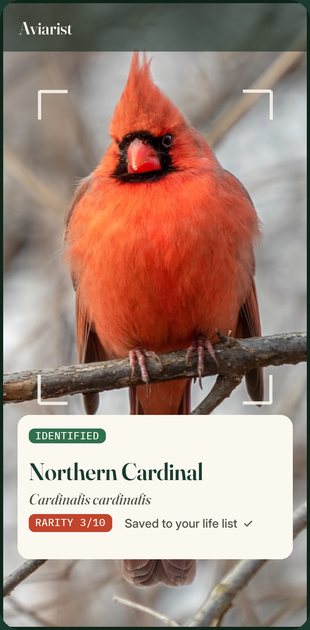
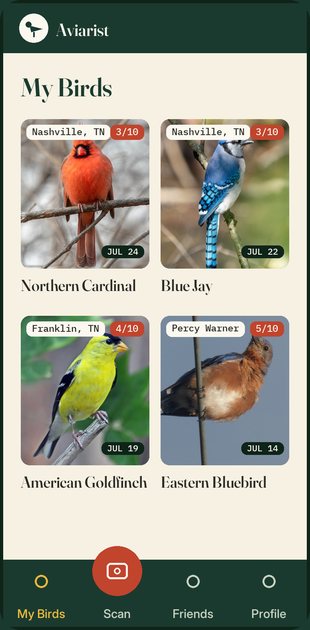
More backyard birds


Other apps we make