How to Identify aBlack-throated Blue Warbler
Setophaga caerulescens · 4.3–5.1 in (11–13 cm)
Male vs. female
Male
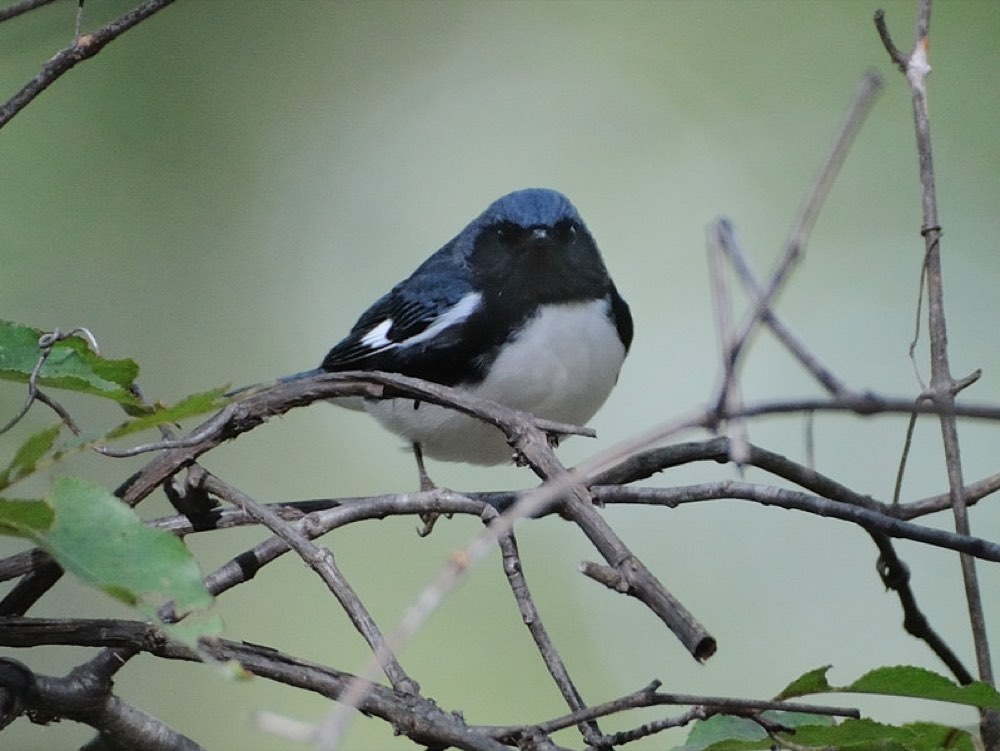
Midnight-blue above with a black face, throat and flanks and a clean white belly, plus a small white wing square.
Female
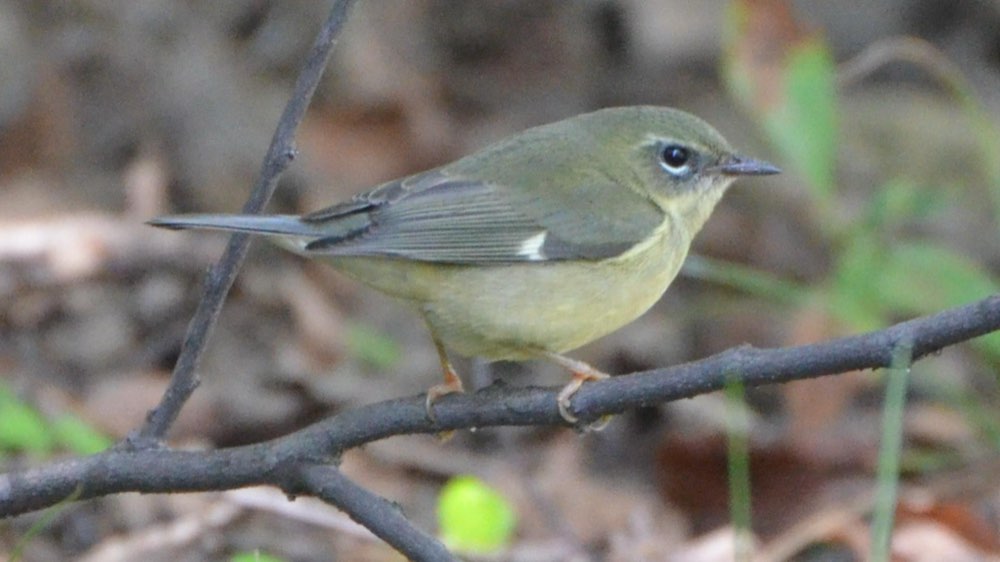
Plain olive-brown with a pale eyebrow and, crucially, the same small white square at the base of the primaries.
Male photo: Gary Irwin / Wikimedia, CC BY-SA 2.0 · Female photo: Andy Reago & Chrissy McClarren / Wikimedia, CC BY 2.0
Field marks
- Small white square at the base of the wing on both sexes
- Male deep blue above with a black throat and flanks
- Female uniformly olive-brown with a pale eyebrow
- Clean white belly on the male
Similar species
What it sounds like
A husky, rising, drawn-out "zoo-zee-zee-zeee", the last note pushed upward.
Behaviour that gives it away
Forages deliberately in the shrub layer of mature forest, staying low where most warblers work the canopy.
Habitat & range
Mature deciduous and mixed forest with dense shrubby understorey in the Northeast and Appalachians.
When you'll see it
Depending on where in eastern and northern North America you are, it is a summer visitor that arrives to breed and a passage migrant, seen mainly in spring and autumn.
What it eats
Caterpillars, spiders and insects taken from the shrub layer.
Did you know?
Males and females look so unalike that early ornithologists catalogued them as separate species.
Spot one yourself?
Point your camera at any bird and Aviarist identifies it in seconds — then logs it to your life list.
Get Aviarist on Google Play
More backyard birds

.jpg)
Other apps we make