How to Identify aEastern Screech-Owl
Megascops asio · 6.3–9.8 in (16–25 cm)
Male vs. female
Male
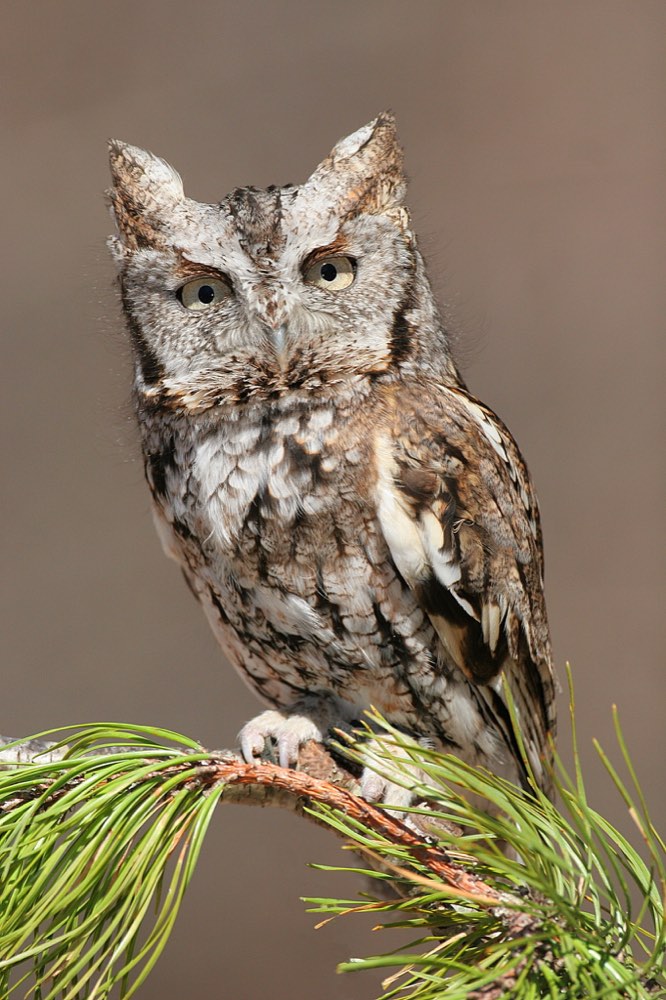
Either gray or rufous overall — both occur in the same population — heavily patterned to match bark, with yellow eyes. Sexes look alike.
Female
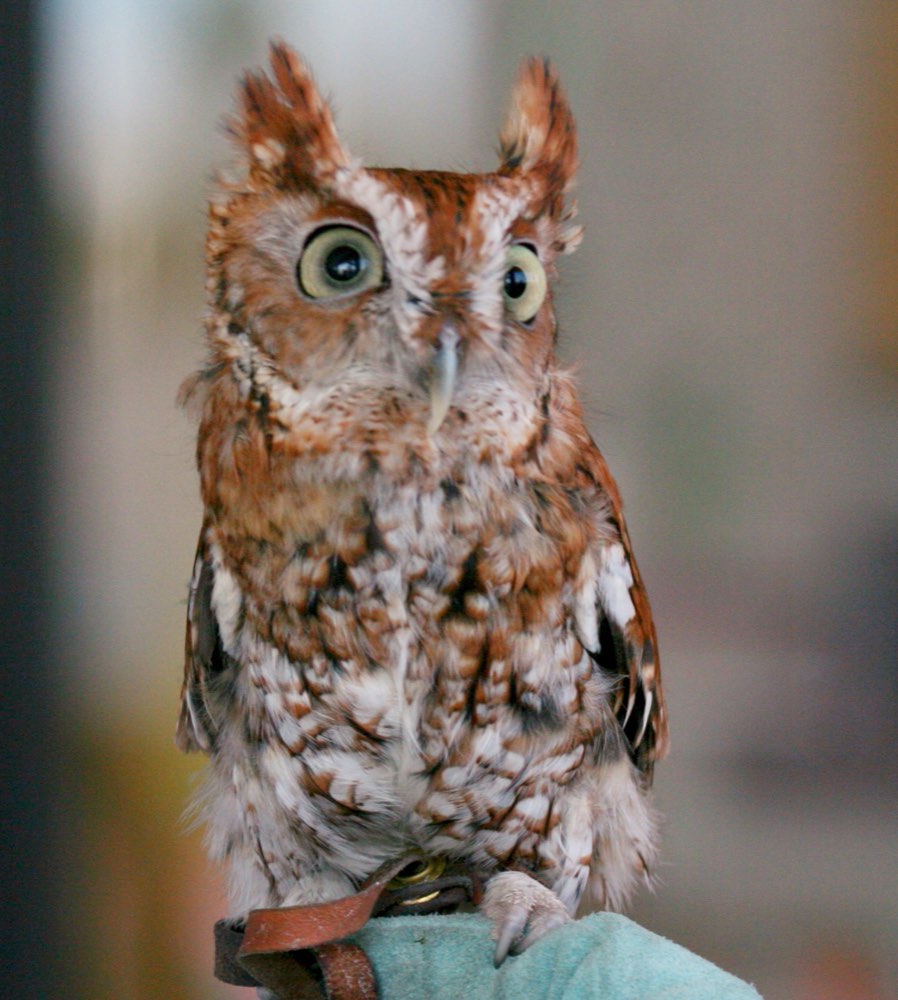
Identical in plumage but slightly larger.
Male photo: Wolfgang Wander / Wikimedia, CC BY-SA 3.0 · Second photo: Dick Daniels (http://theworldbirds.org/) / Wikimedia, CC BY-SA 3.0
Field marks
- Very small — barely larger than a robin
- Occurs in distinct gray and rusty-red colour forms
- Short ear tufts, often flattened out of sight
- Intricate bark-like streaking and yellow eyes
Similar species
What it sounds like
A descending whinny like a small horse, and a long even trill on one pitch — never an actual screech.
Behaviour that gives it away
Roosts by day in a cavity or pressed against a trunk with its tufts raised and eyes narrowed, becoming almost invisible.
Habitat & range
Woodland, orchards, parks and leafy suburbs across the eastern United States, often nesting in boxes.
When you'll see it
Present all year in eastern, central and southeastern North America.
What it eats
Large insects, small mammals, songbirds, earthworms and crayfish.
Did you know?
Gray and rusty-red birds occur in the same broods, and the two colour forms are simply inherited variations rather than different species.
Spot one yourself?
Point your camera at any bird and Aviarist identifies it in seconds — then logs it to your life list.
Get Aviarist on Google Play
More backyard birds


_RWD.jpg)
Other apps we make