How to Identify aGreat Horned Owl
Bubo virginianus · 18–25 in (46–64 cm)
Male vs. female
Male
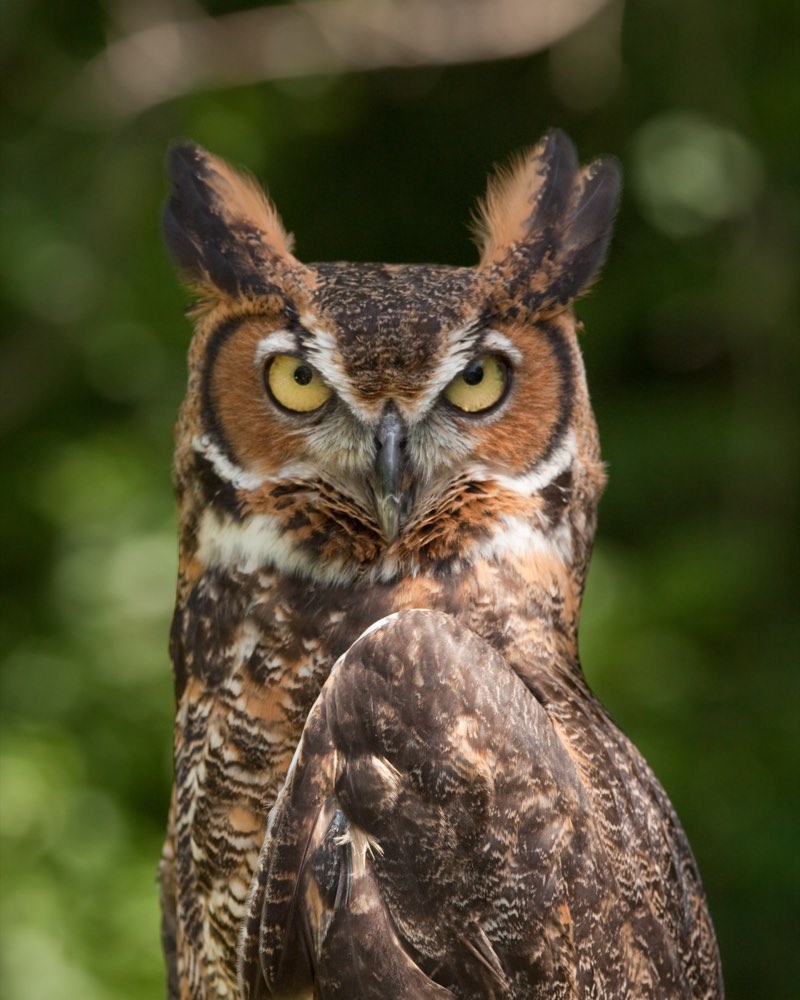
Mottled gray-brown with dense fine barring below, prominent ear tufts and a white bib. Sexes look alike.
Female
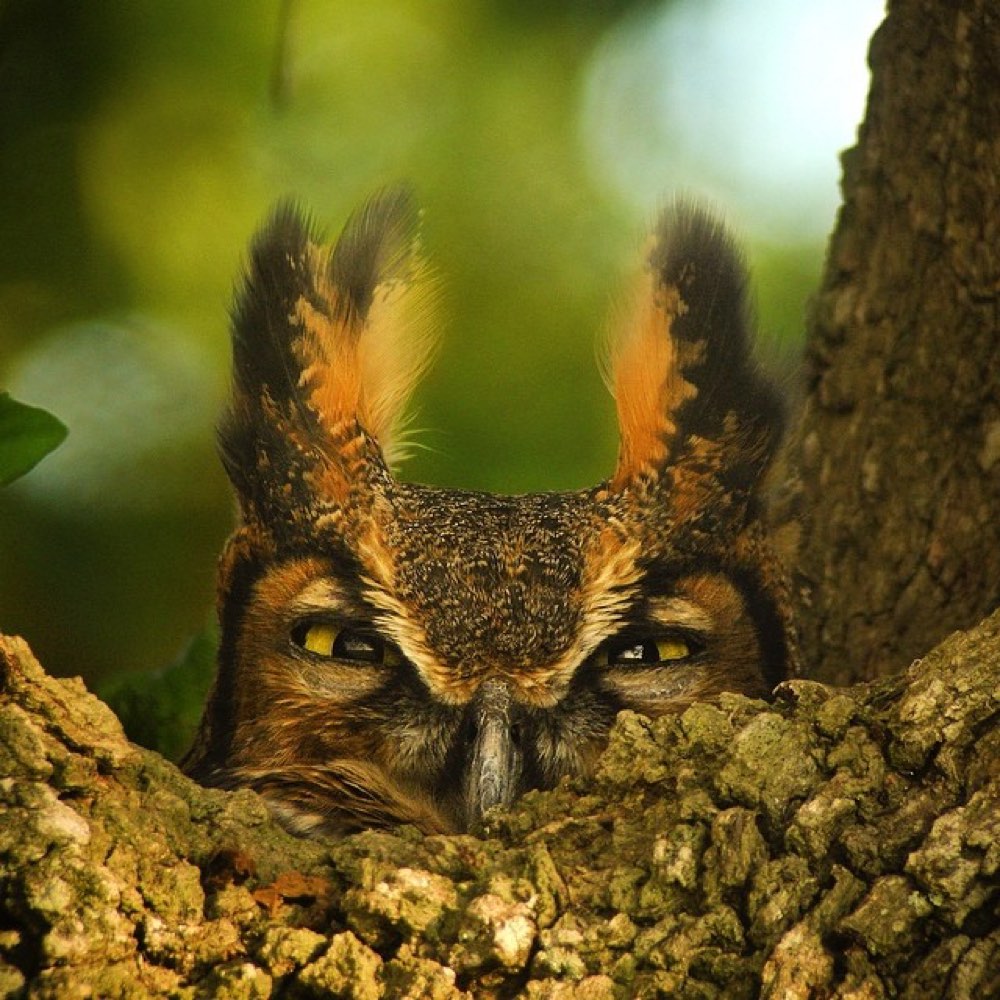
Identical in plumage but larger, with a deeper voice.
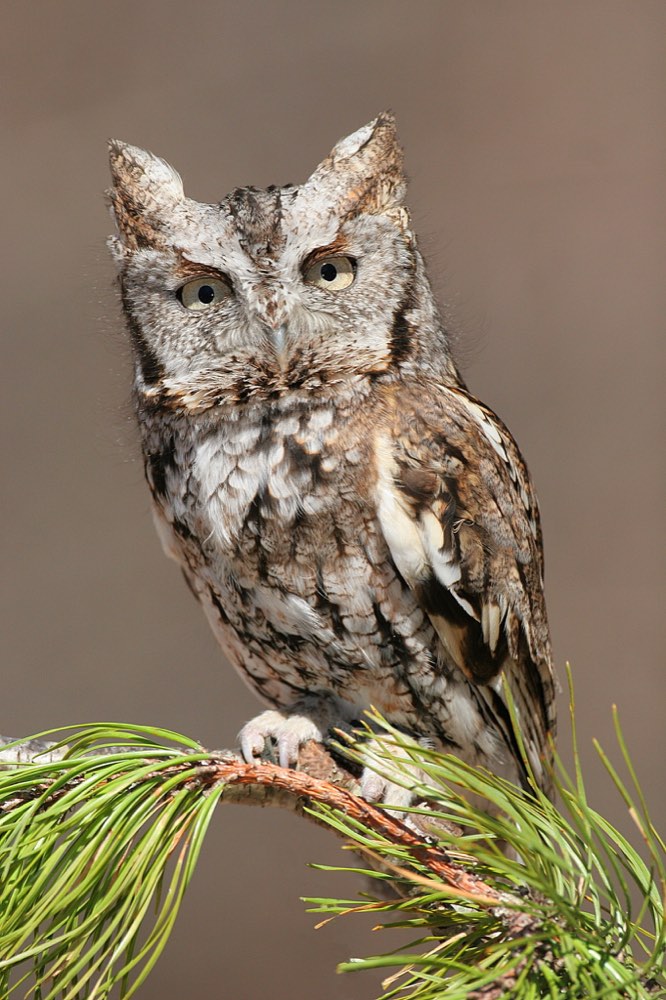
Male photo: Greg Hume / Wikimedia, CC BY-SA 3.0 · Second photo: Dennis Demcheck, USGS / Wikimedia, Public domain
Field marks
- Widely spaced ear tufts giving a horned silhouette
- Bright yellow eyes
- White throat patch, conspicuous when calling
- Heavy barrel-shaped body and broad rounded wings
Similar species
What it sounds like
A deep, soft, resonant series of hoots — typically "hoo-h’HOO-hoo-hoo" — carrying far on still nights.
Behaviour that gives it away
Does not build a nest, instead taking over old hawk, heron or squirrel nests, and often begins nesting in midwinter.
Habitat & range
Nearly every wooded and semi-open habitat in North America, including city parks and suburbs.
When you'll see it
Present all year in North America.
What it eats
Mammals up to rabbit size, plus birds, reptiles and amphibians; one of few predators that regularly takes skunks.
Did you know?
It is among the earliest nesting birds in North America, often incubating eggs in January while snow is still on the nest.
Spot one yourself?
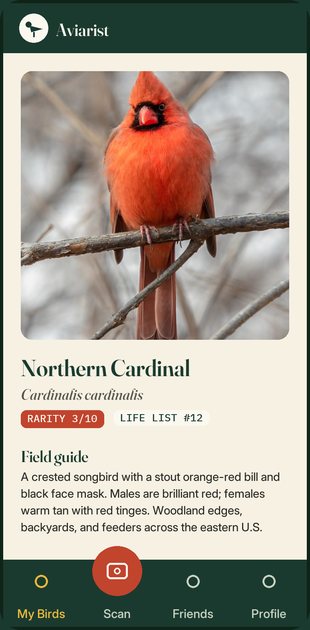
Point your camera at any bird and Aviarist identifies it in seconds — then logs it to your life list.
Get Aviarist on Google Play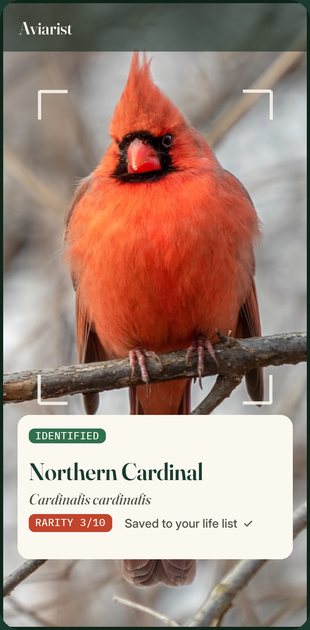
More backyard birds


Other apps we make