How to Identify aWild Turkey
Meleagris gallopavo · 43–45 in (110–115 cm)
Male vs. female
Male
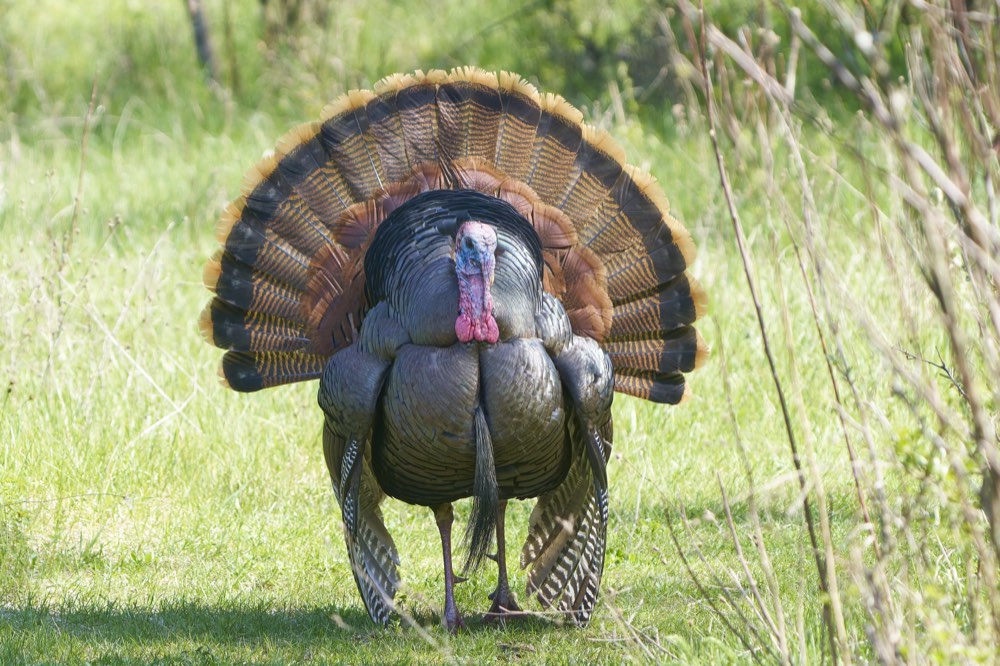
Iridescent bronze and green with a bare red-and-blue head, a hanging fleshy snood, spurred legs and a bristly breast tuft.
Female
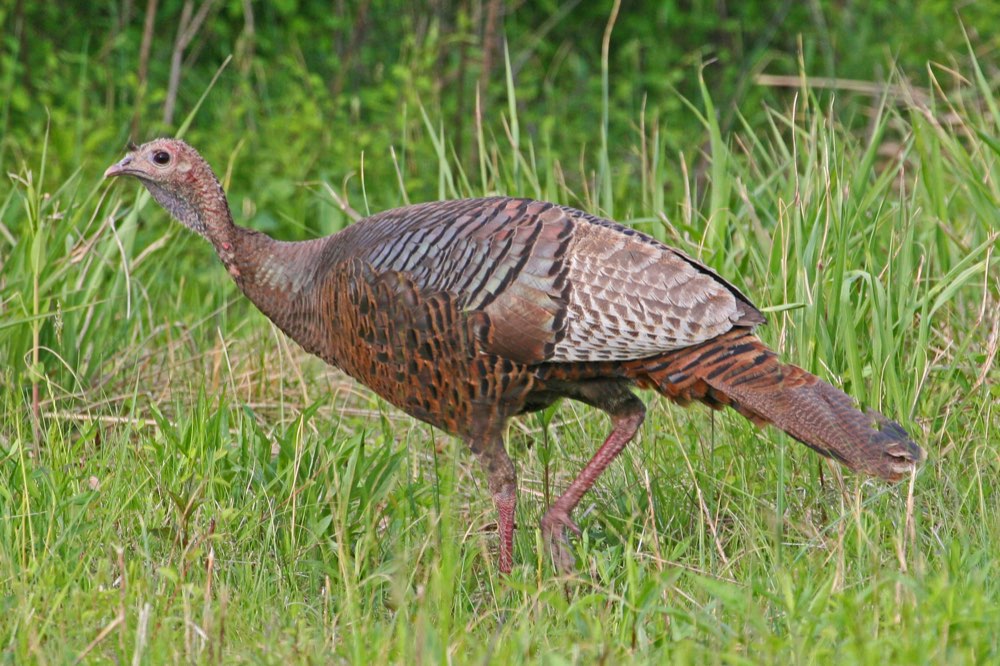
Smaller and duller brown with a grayer, less ornamented head and usually no breast tuft.
Male photo: Paul Danese / Wikimedia, CC BY-SA 4.0 · Female photo: Judy Gallagher / Wikimedia, CC BY 2.0
Field marks
- Very large, long-legged ground bird
- Bare, warty blue-and-red head
- Iridescent bronze body feathers with dark barring
- Broad tail fanned in display by males
Similar species
What it sounds like
The familiar loud gobble of the male, plus clucks, yelps and purrs from both sexes.
Behaviour that gives it away
Feeds on the ground by day but roosts high in trees at night, flying up heavily at dusk.
Habitat & range
Mature woodland with clearings, farmland edges and wooded suburbs across most of the United States.
When you'll see it
Present all year in North America.
What it eats
Acorns, nuts, seeds, fruits, insects and small reptiles taken from the ground.
Did you know?
Hunted to near-extinction by the early 1900s, it was restored by trap-and-transfer programmes and now numbers in the millions.
Spot one yourself?
Point your camera at any bird and Aviarist identifies it in seconds — then logs it to your life list.
Get Aviarist on Google Play
More backyard birds

_-_Meleagris_gallopavo,_Occoquan_Bay_National_Wildlife_Refuge,_Woodbridge,_Virginia.jpg)
Other apps we make