How to Identify aScarlet Tanager
Piranga olivacea · 6.3–7.5 in (16–19 cm)
Male vs. female
Male
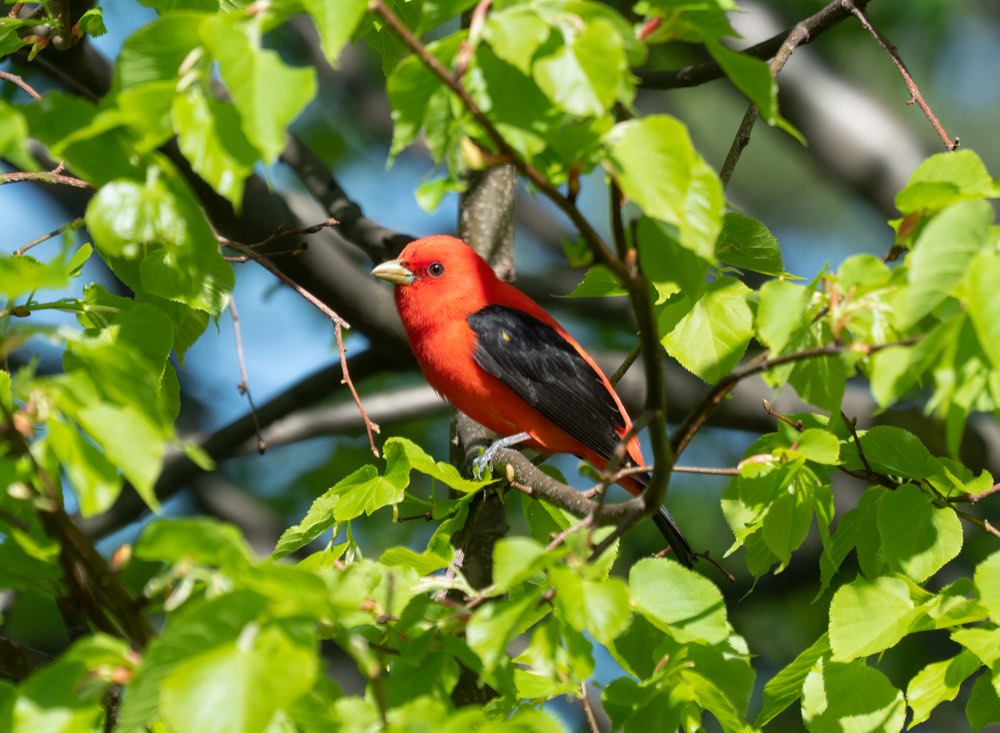
Brilliant scarlet body with contrasting solid black wings and tail, and a pale stout bill.
Female
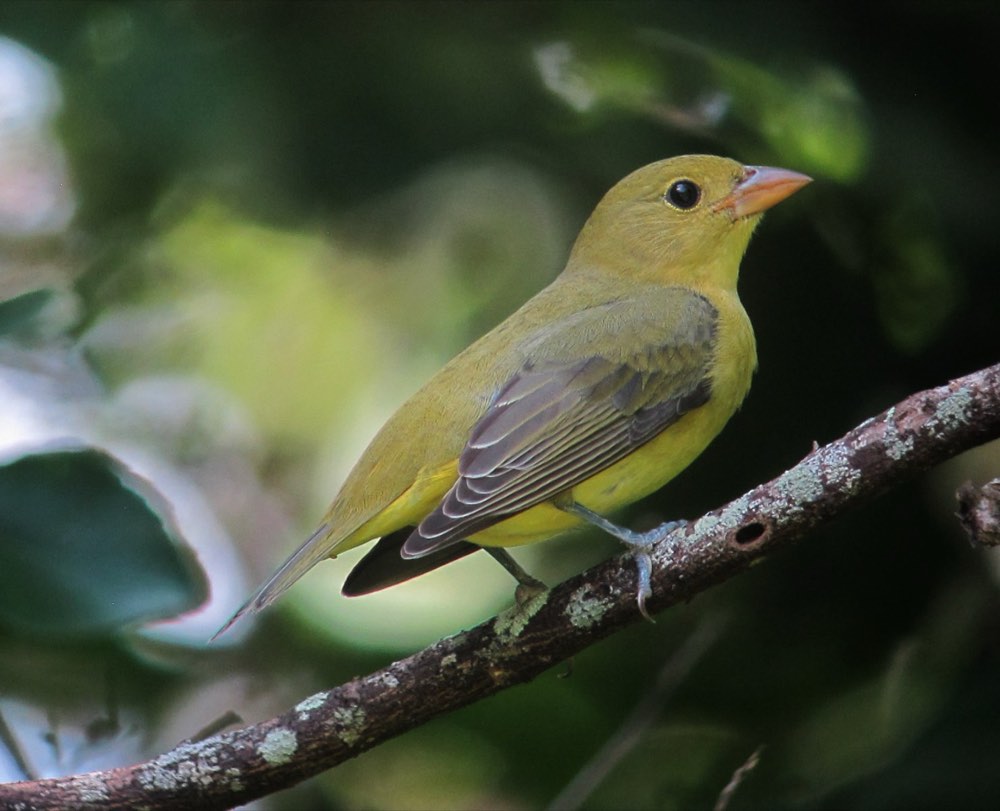
Olive-yellow overall with darker olive wings — no red at all, and much plainer than the male.
Male photo: Rhododendrites / Wikimedia, CC BY-SA 4.0 · Second photo: Félix Uribe from Rionegro, Antioquia, Colombia / Wikimedia, CC BY-SA 2.0
Field marks
- Solid black wings against a scarlet body on the male
- No crest and no black face mask
- Pale, thick, blunt-tipped bill
- Females uniformly olive-yellow with dusky wings
Similar species
What it sounds like
A burry, hoarse robin-like song often described as a robin with a sore throat, and a distinctive "chick-burr" call.
Behaviour that gives it away
Stays high in the canopy and moves deliberately, so it is far more often heard than seen despite the colour.
Habitat & range
Mature deciduous forest, especially oak, across the eastern United States in summer.
When you'll see it
A summer visitor that arrives to breed in eastern and central North America.
What it eats
Insects, particularly caterpillars and beetles taken in the canopy, plus fruit in late summer.
Did you know?
The male moults out of scarlet after breeding, spending the winter in South America in olive-green plumage much like the female’s.
Spot one yourself?
Point your camera at any bird and Aviarist identifies it in seconds — then logs it to your life list.
Get Aviarist on Google Play
More backyard birds
.jpg)
.jpg)
Other apps we make