How to Identify aCactus Wren
Campylorhynchus brunneicapillus · 7.1–7.5 in (18–19 cm)
Male vs. female
Male
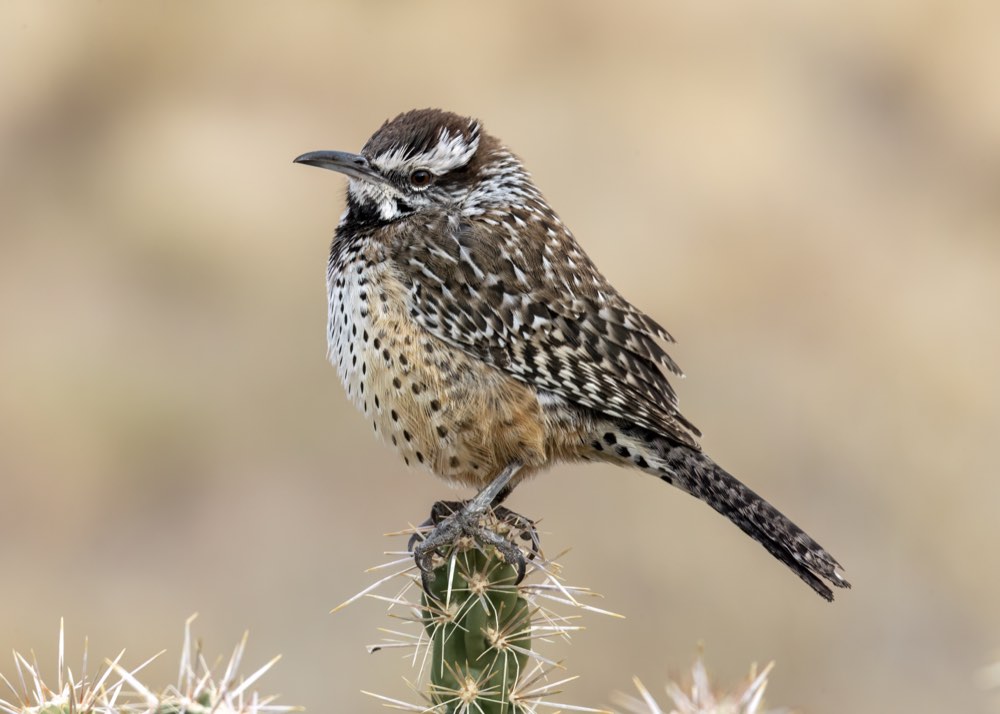
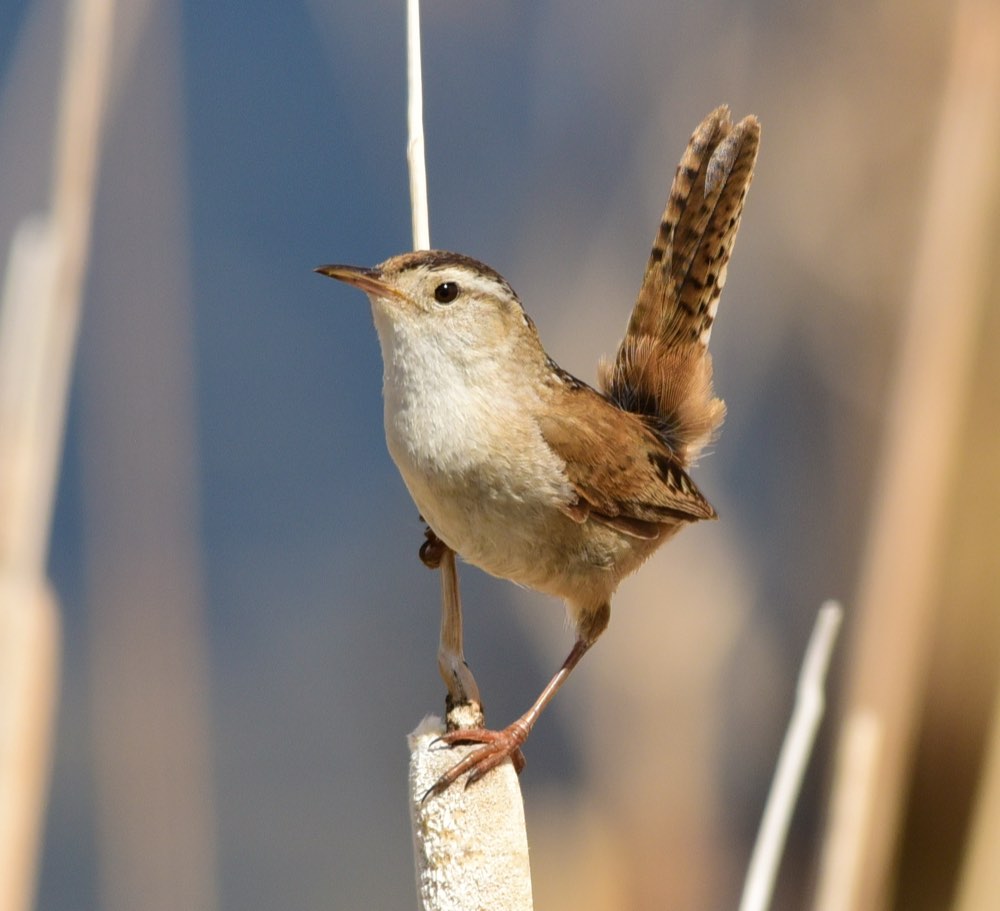
Brown above with white spotting, a bold white eyebrow, and white underparts densely spotted black, heaviest on the chest. Sexes look alike.
Female
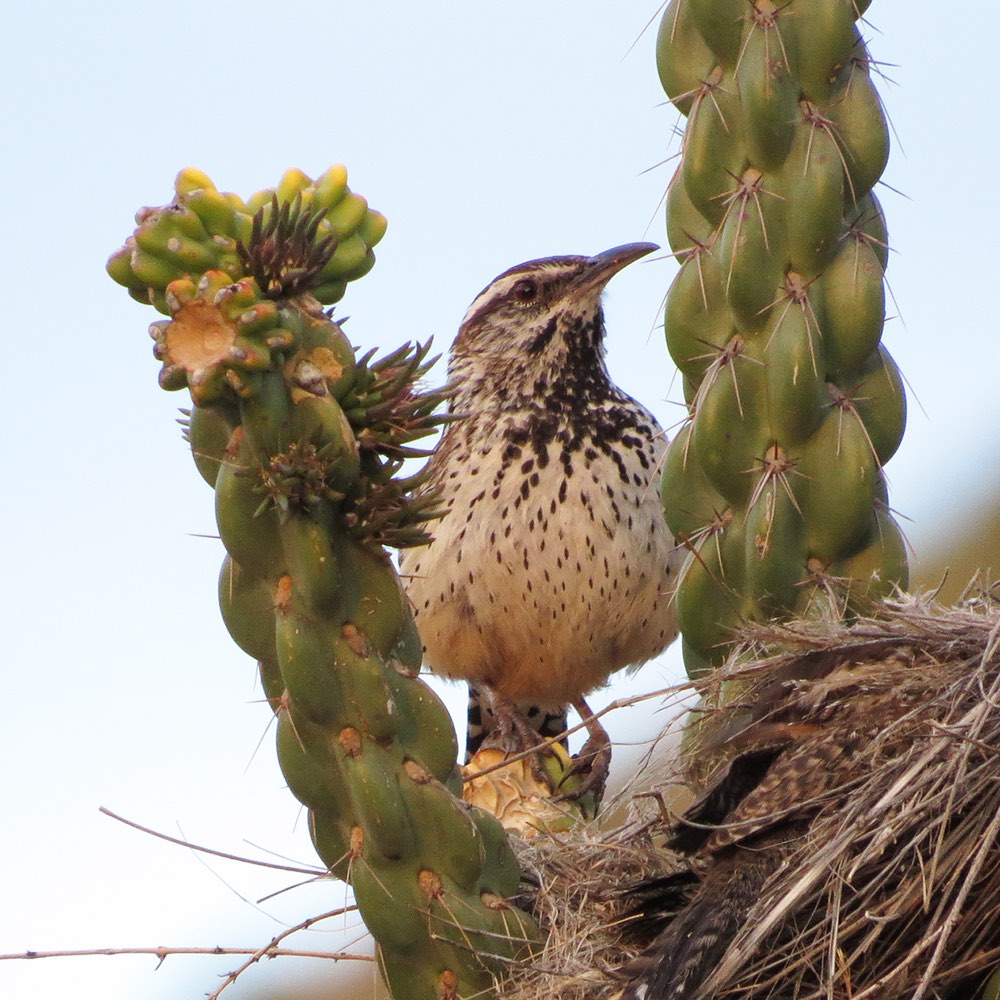
Identical to the male in the field.
Male photo: Polinova / Wikimedia, CC BY-SA 4.0 · Second photo: Don Faulkner / Wikimedia, CC BY-SA 2.0
Field marks
- Much larger than any other wren
- Dense black spotting concentrated on the chest
- Broad white eyebrow
- Barred tail, often held down rather than cocked
Similar species
What it sounds like
A low, harsh, unmusical "chug-chug-chug-chug", often compared to a car that will not start.
Behaviour that gives it away
Builds football-shaped nests deep among cholla spines, and constructs extra dummy nests for roosting year-round.
Habitat & range
Desert scrub with cholla and prickly pear, and desert-edge suburbs of the Southwest.
When you'll see it
Present all year in southwestern North America.
What it eats
Insects, spiders, plus cactus fruit and seeds.
Did you know?
It nests inside cholla cactus, where the spines that make it nearly unapproachable also keep predators out.
Spot one yourself?
Point your camera at any bird and Aviarist identifies it in seconds — then logs it to your life list.
Get Aviarist on Google Play
More backyard birds

.jpg)
Other apps we make