How to Identify aRufous Hummingbird
Selasphorus rufus · 2.8–3.5 in (7–9 cm)
Male vs. female
Male
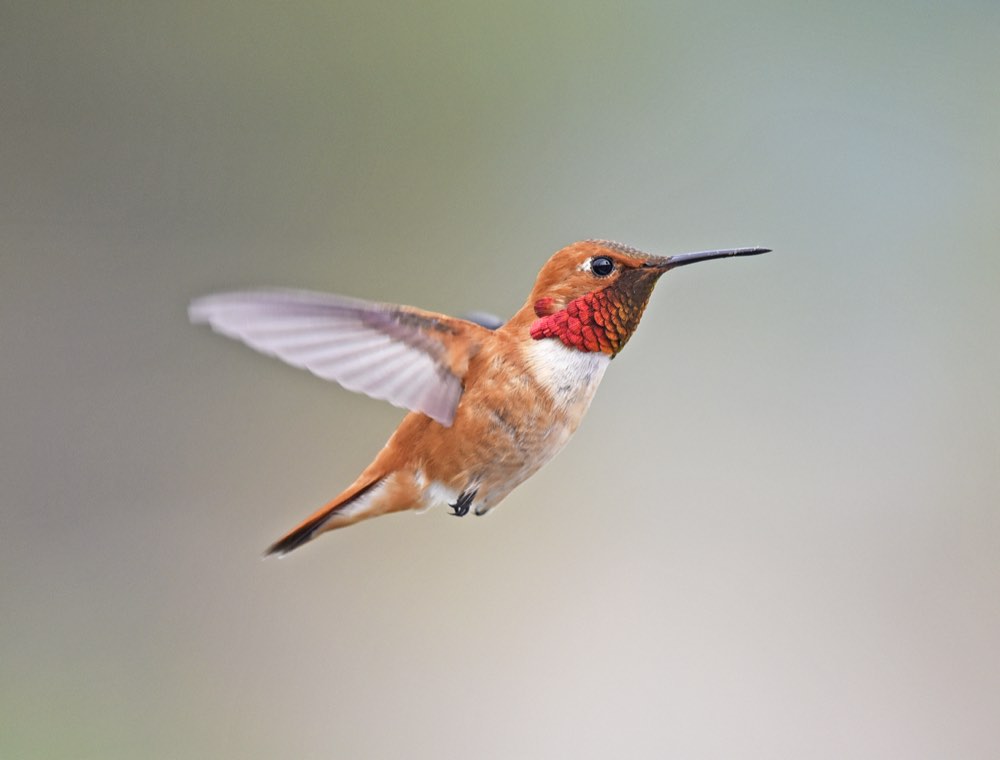
Bright rufous-orange back, flanks and tail with an iridescent orange-red throat.
Female
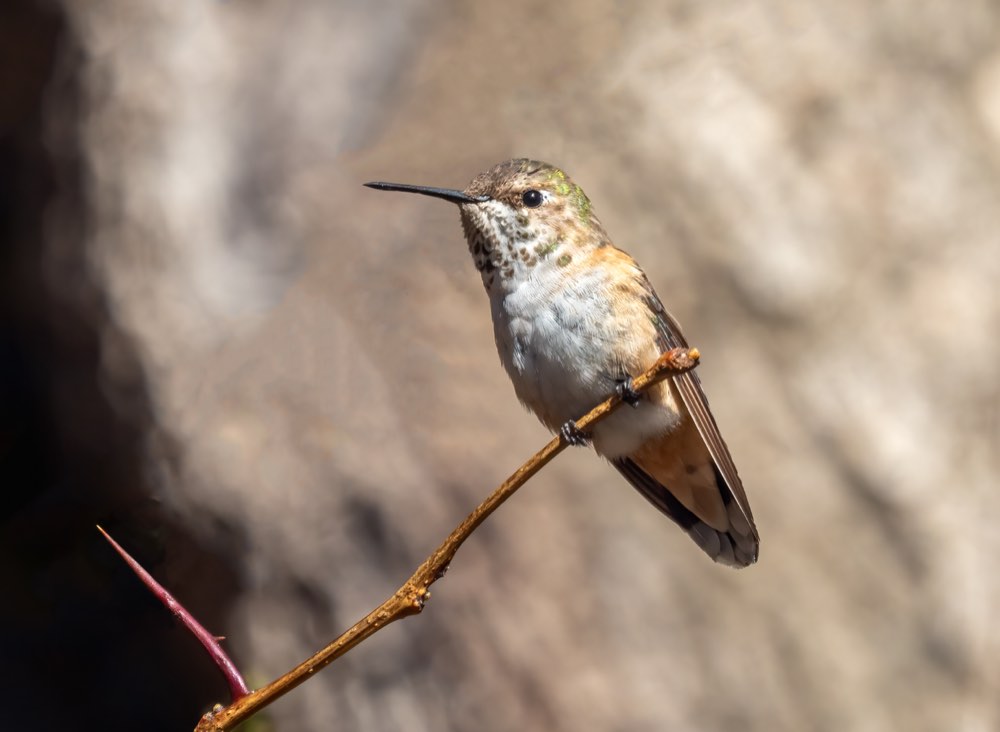
Green above with rufous flanks and tail base, and a small patch of red flecks in the throat.
Male photo: VJAnderson / Wikimedia, CC BY-SA 4.0 · Second photo: Rhododendrites / Wikimedia, CC BY-SA 4.0
Field marks
- Solid coppery-orange back on the male
- Orange-red rather than pink or purple gorget
- Rufous in the tail on both sexes
- Very small and compact
Similar species
What it sounds like
A hard "chip" and an excited buzzy chattering during chases.
Behaviour that gives it away
Extremely aggressive for its size, driving much larger hummingbirds and even chipmunks away from a feeder.
Habitat & range
Mountain meadows, forest edges and gardens; migrates the length of the West.
When you'll see it
Depending on where in western and northern North America you are, it is a summer visitor that arrives to breed and a passage migrant, seen mainly in spring and autumn.
What it eats
Nectar, small insects and spiders, plus sugar water.
Did you know?
It makes one of the longest migrations of any bird relative to body size, travelling from Alaska to Mexico in a clockwise loop.
Spot one yourself?
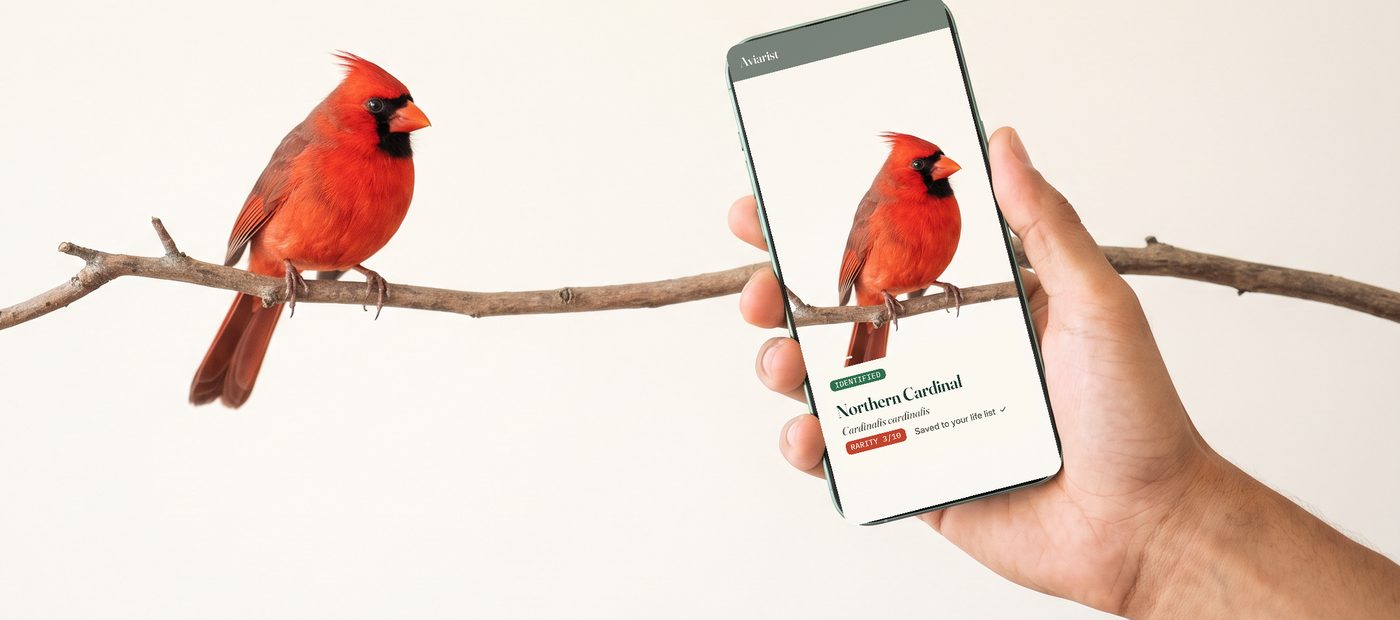
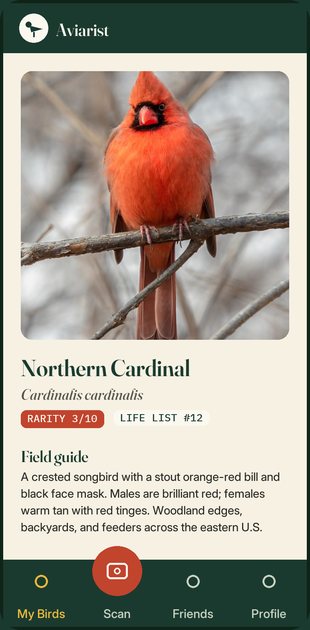
Point your camera at any bird and Aviarist identifies it in seconds — then logs it to your life list.
Get Aviarist on Google Play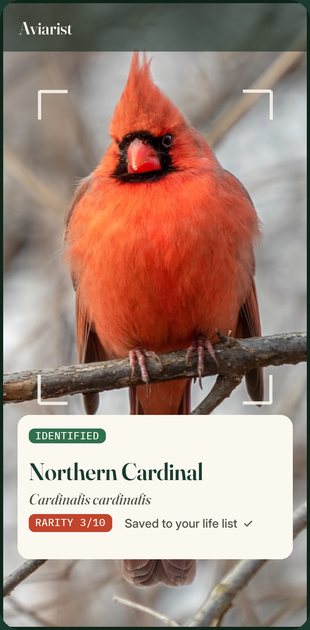
More backyard birds

.jpg)
Other apps we make