How to Identify aWestern Tanager
Piranga ludoviciana · 6.3–7.5 in (16–19 cm)
Male vs. female
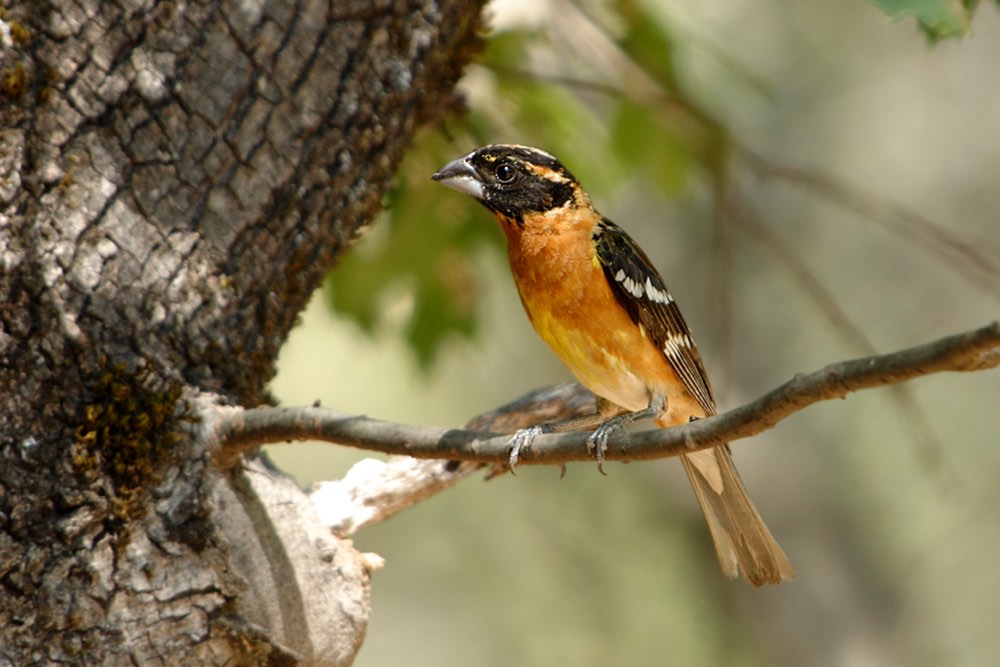
Male
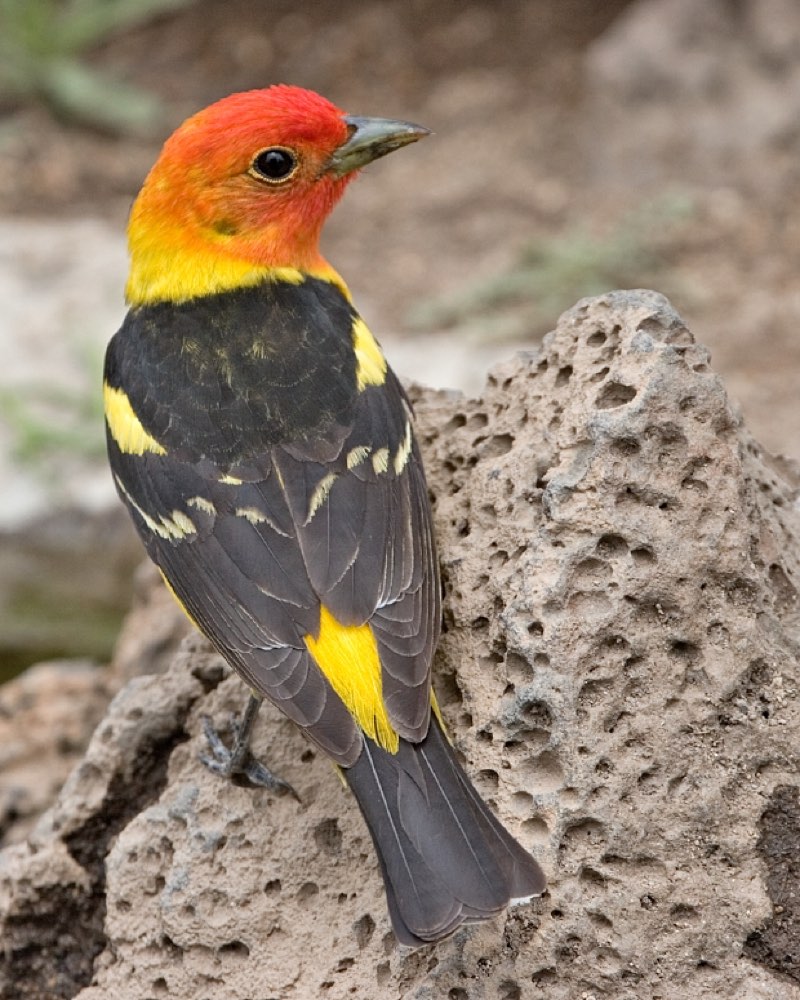
Bright yellow body, jet-black back, wings and tail, two wingbars, and a fiery red-orange head.
Female
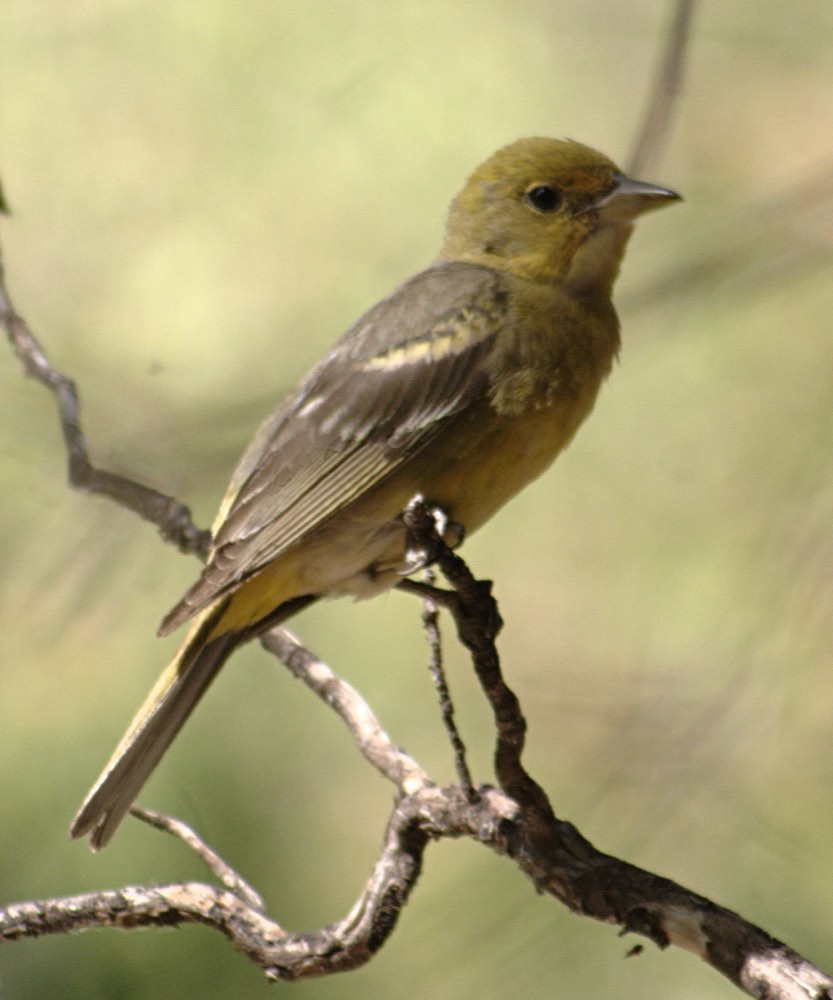
Yellow-green overall with grayer wings and two pale wingbars, and no red.
Male photo: http://www.naturespicsonline.com/ / Wikimedia, CC BY-SA 3.0 · Female photo: JerryFriedman / Wikimedia, CC BY-SA 3.0
Field marks
- Red-orange head on a yellow body
- Black back and wings with two wingbars
- Pale stout bill
- Wingbars — Scarlet and Summer Tanagers have none
Similar species
What it sounds like
A burry, hoarse, robin-like song, plus a rising "pit-er-ick" call.
Behaviour that gives it away
Gets the red pigment in its head from its insect food rather than making it, since it cannot synthesise the pigment itself.
Habitat & range
Open conifer and mixed forest across the western mountains in summer.
When you'll see it
A summer visitor that arrives to breed in western, southwestern and northern North America.
What it eats
Insects taken in the canopy, plus fruit in late summer.
Did you know?
It cannot make its own red pigment and obtains it entirely from insects in its diet, most likely from eating other insects that ate plants.
Spot one yourself?
Point your camera at any bird and Aviarist identifies it in seconds — then logs it to your life list.
Get Aviarist on Google Play
More backyard birds
.jpg)

Other apps we make